
Table of Contents
Which Type of Lift Is Safe for a Home?
Selecting which type of lift is safe for a home requires a deep understanding of structural load capacities, backup rescue systems, and machine engineering. For families across Telangana, home elevators provide necessary multi-generational mobility rather than just a luxury upgrade. The optimal residential transit system must feature multiple built-in safety mechanisms, run on energy-efficient power systems, and comply fully with national domestic construction codes.
In our fifteen years of vertical transportation field experience in Hyderabad, we have designed and audited hundreds of residential villa lift networks. We often see homeowners make the mistake of choosing uncertified, low-cost commercial cargo platforms for their houses. These unregulated lifts lack essential passenger safety layers like automatic rescue devices and infrared door sensors. This engineering analysis provides the design data, regulatory frameworks, and installation methods needed to identify the safest elevator type for your property.

Defining Home Elevator Safety Parameters
Which type of lift is safe for a home?
A hydraulic elevator equipped with an automatic rescue device, a gearless traction lift featuring progressive safety gears, and an eco-friendly pneumatic vacuum elevator represent the safest options for a private residence, provided they carry certifications from the Bureau of Indian Standards and undergo regular technical testing.
+-----------------------------------------------------------------------+
|                    RESIDENTIAL LIFT SAFETY MATRIX                     |
+-----------------------------------------------------------------------+
|  UNREGULATED CARGO LIFTS            |  CERTIFIED RESIDENTIAL ELEVATORS|
|  - Open mesh platforms without walls |  - Fully enclosed cabin shell   |
|  - High failure rate during blackouts|  - Integrated ARD battery rescue|
|  - Missing infrared light curtains  |  - Complete IS 14665 compliance |
+-----------------------------------------------------------------------+
Modern residential elevators utilize specialized control engineering to keep family environments completely secure. When evaluating which type of lift is safe for a home, property developers must look past basic appearance. The ideal domestic system relies on closed loop control setups, mechanical overspeed governors, and low-voltage electrical safety loops. These features protect occupants from operational errors and keep the system highly reliable.
Why Residential Lift Safety Matters in Hyderabad
The rapid expansion of high-end gated communities and multi-floor villas across Jubilee Hills, Gachibowli, and Gandipet has driven a major surge in home elevator installations. Unlike commercial office buildings with dedicated on-site engineering crews, residential properties need systems that operate flawlessly without constant manual supervision. These lifts must handle local climate challenges, including intense summer heat waves and seasonal voltage sags from the municipal power grid.
Domestic building designs must satisfy specific state safety guidelines. Your residential elevator configuration should follow the National Building Code (NBC) and the technical parameters outlined in the Telangana Lifts, Escalators and Moving Walkways Act. Additionally, private buildings registered under the Telangana State Real Estate Regulatory Authority (TSRERA) must maintain verified equipment logs to ensure their structures remain fully code-compliant.
Technical data published by vertical transit engineering firms like Exfol Friends Elevators Pvt. Ltd. shows that more than 52% of residential passenger entrapments happen because owners install lifts without a functional Automatic Rescue Device (ARD). When the local power grid fails during monsoon storms, a certified residential system must automatically bring the elevator cabin to the nearest landing and open the doors safely. This industry reality shows why builders need to choose systems designed specifically for home environments.
How Field Engineers Install and Calibrate a Safe Home Lift
Installing a reliable residential elevator requires following a highly structured engineering sequence to align components precisely.
Phase 1: Pit Check
1.Verify Structural Shaft Dimensions:Phase 1: Pit Check.
Field engineers check the elevator pit depth and clear overhead space using high-precision laser measures. This verification ensures the hoistway meets the structural tolerances required for your specific lift mechanism.
Phase 2: Frame Setup
2.Mount Guide Rails and Car Frames:Phase 2: Frame Setup.
The installation crew secures the solid steel guide rails directly into the shaft walls using heavy-duty anchor bolts. This robust framework guides the passenger cabin smoothly up and down, preventing sway or vibration.
Phase 3: Brake Tuning
3.Install Mechanical Overspeed Governors:Phase 3: Brake Tuning.
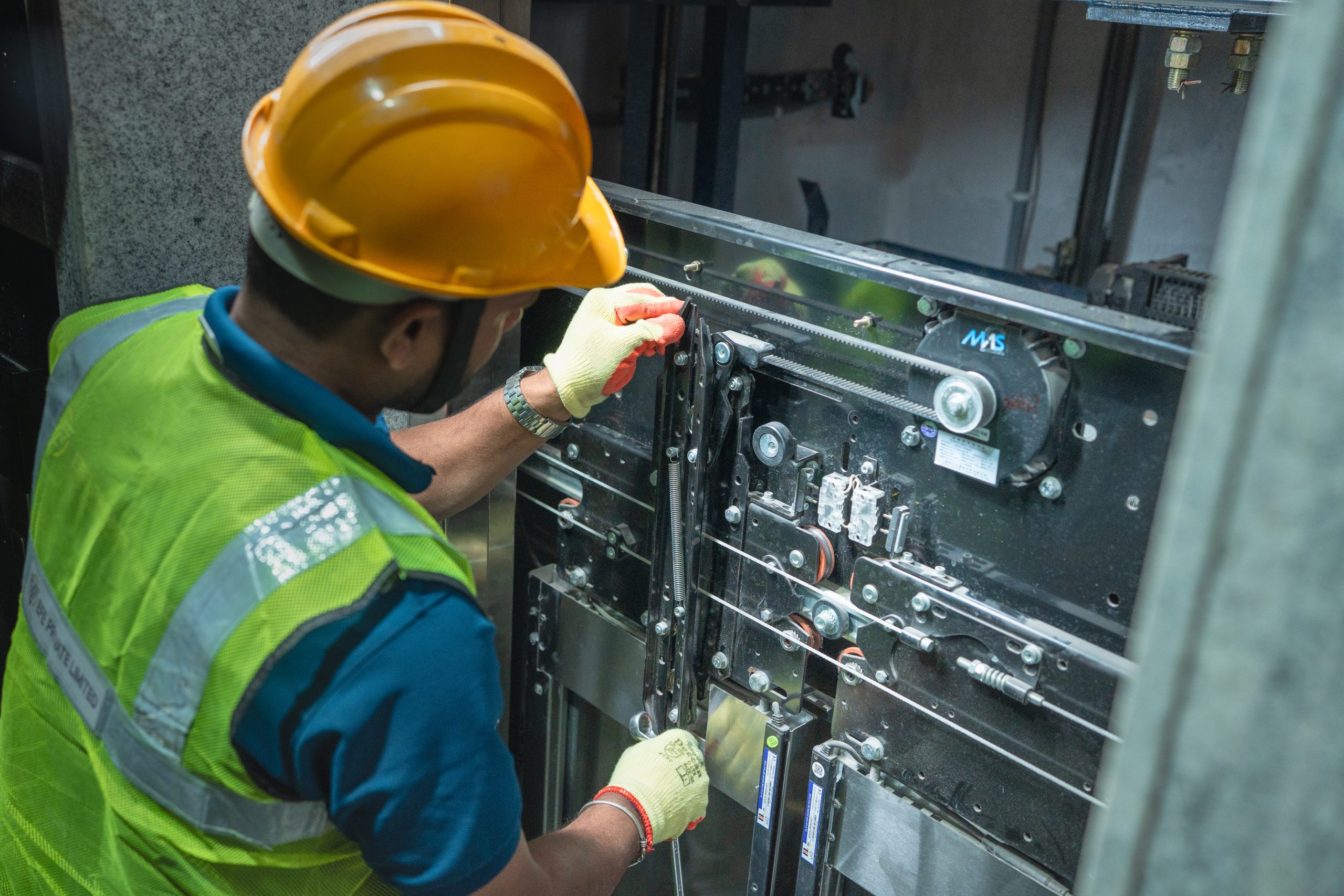
Technicians mount the mechanical governor wheel at the top of the shaft and connect it to the safety gear under the car. This system automatically locks the cabin to the guide rails if the platform ever exceeds its rated travel speed.
Phase 4: Power Wiring
4.Integrate Automatic Rescue Devices:Phase 4: Power Wiring.
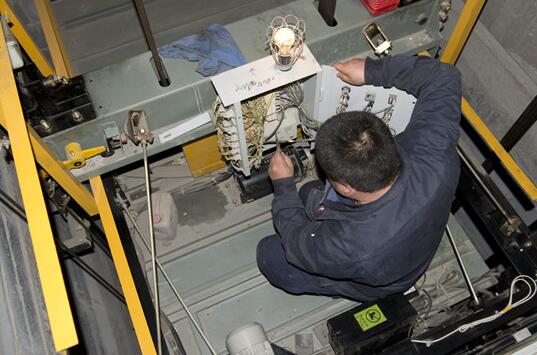
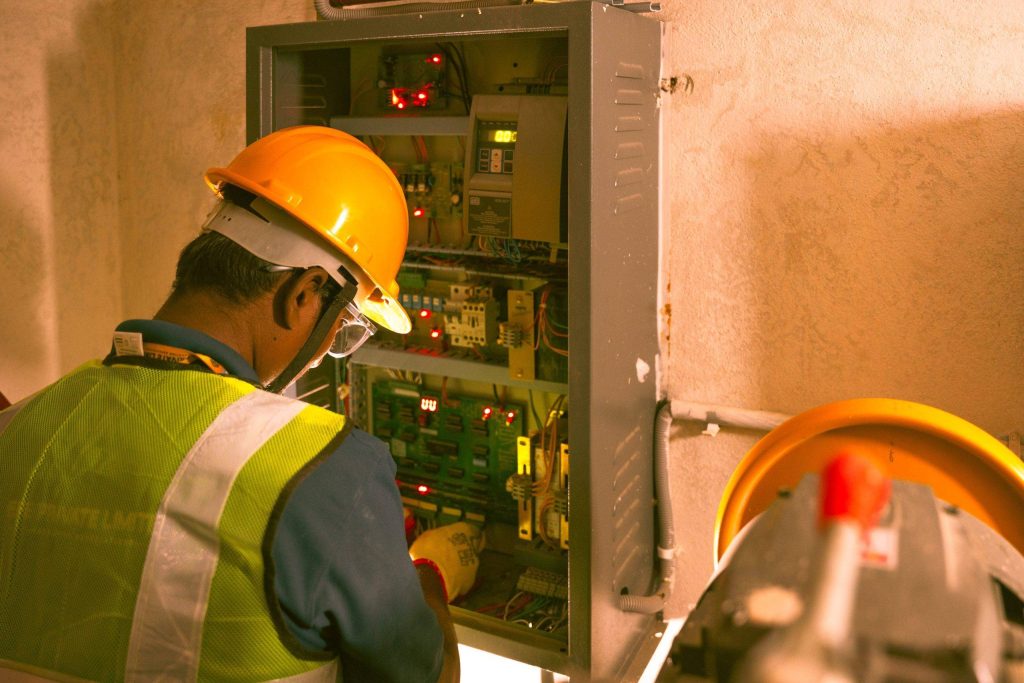
Electricians connect the primary power lines to the main control panel and wire in the backup battery bank for the ARD. They test this system by cutting the main power to confirm the lift automatically moves to the next floor and opens its doors.
Phase 5: Light Curtain
5.Calibrate Infrared Safety Door Curtains:Phase 5: Light Curtain.
The crew mounts full-height infrared light sensors along the leading edge of the elevator doors. This setup projects a dense grid of protective beams across the entrance, instantly reopening the doors if it detects an obstruction.
Phase 6: Final Test
6.Execute Full-Load Leveling Tests:Phase 6: Final Test.
Engineers place test weights inside the cabin to verify the system can stop smoothly within a precise 2 mm margin of each floor landing. This step ensures the elevator levels correctly under all loading conditions before family members use it.
Comparison of Safe Residential Elevator Technologies
Different home layouts and structural designs require specific elevator engineering types.
| Elevator Technology Type | Primary Mechanical Drive | Major Built-in Safety Features | Ideal Home Application |
|---|---|---|---|
| Hydraulic Drive System | Oil piston pump cylinder. | Manual descent valve; rupture valve lock. | 2 to 4 Floors; low pit layouts. |
| Gearless Traction System | Permanent magnet motor. | Double electromagnetic brakes; governor. | 3 to 6 Floors; high travel speeds. |
| Pneumatic Vacuum Lift | Air pressure differential. | Mechanical falling locks; automatic drop. | Retrofit villas; tight interior spaces. |
Hydraulic Drive Systems
Hydraulic drive lifts offer exceptional structural safety for low-rise homes. The elevator car sits securely on a heavy-duty hydraulic piston or is lifted by a reinforced chain setup driven by a remote fluid pump. If the home suffers a total power outage, the technician or homeowner can operate a simple manual descent valve in the machine cabinet to lower the cabin safely to the ground floor without electricity.
Gearless Traction Systems
Modern gearless traction lifts are perfect for taller residences with up to six floors. These systems use a highly efficient permanent magnet motor combined with counterweights to move the cabin smoothly along steel rails. They feature double electromagnetic brakes and progressive safety gears that work together to prevent any uncontrolled movement, providing a remarkably quiet and stable ride.
Pneumatic Vacuum Lifts
Pneumatic elevators utilize advanced air pressure engineering, making them an excellent choice for retrofitting existing homes. A high-efficiency suction fan creates a vacuum above the cabin to lift it smoothly up, while controlled air release allows it to descend gently. Because they use mechanical locking pins at every landing, the cabin cannot fall even if the building loses power completely. Instead, it slowly glides down to the ground floor on a cushion of air.
Core Safety Advantages of Specialized Home Elevators
- Integrated Backup Power Systems: Purpose-built residential lifts include a factory-installed Automatic Rescue Device. This system ensures passengers never get stuck in the dark between floors during sudden grid blackouts.
- Low-Voltage Internal Controls: Home elevators operate their internal buttons and door sensors on safe 24 V DC control circuits. This low-voltage setup prevents any risk of electrical shocks if components ever get wet.
- Advanced Door Interlocks: Certified domestic lifts feature electromechanical gate locks that keep the shaft doors securely closed unless the cabin is parked perfectly at that floor, removing the risk of falls.
- Smart Overload Protection: Built-in electronic weight sensors calculate the cabin load before every trip. If the weight exceeds the safe limit, the system alerts passengers with a chime and remains stationary to prevent strain.
Common Misconceptions About Domestic Elevator Safety
Can you safely install a standard commercial chain hoist platform for home passenger use?
No. Installing a commercial cargo platform or warehouse material hoist for domestic passenger use to save on upfront costs is a major safety hazard. These industrial platforms lack critical structural safety loops, speed governors, and enclosed passenger cabins, creating real risks for family members.
       [ Builder Installs Cheap Commercial Cargo Hoist ]
                              |
                              v
       [ System Suffers Sudden Mechanical Chain Slip ]
                              |
                              v
       [ Platform Falls Rapidly Without Safety Brakes ]
                              |
                              v
       [ Catastrophic Injury and Severe Legal Liability ]
In our field inspections, we regularly find situations where builders have installed basic cargo lifts in private homes to cut corners. These platforms do not meet the strict safety metrics required by the Bureau of Indian Standards and expose property owners to severe legal liability. Working with qualified professionals ensures your family remains completely safe.
Real-World Home Lift Scenarios in Hyderabad
Residential Villa Integration: Jubilee Hills
A premium multi-generation family villa in Jubilee Hills needed a safe elevator option for elderly family members who used wheelchairs. The home’s design could not accommodate a deep elevator pit due to hard underlying granite rock layers.
+-----------------------------------------------------------------------+
|                 HYDRAULIC RESCUE CRITERIA DIAGRAM                     |
+-----------------------------------------------------------------------+
| Sudden Substation Power Grid Blackout on Site                         |
|                      |                                                |
|                      v                                                |
| Battery Backup Powers Low-Voltage Down Valve Circuit                   |
|                      |                                                |
|                      v                                                |
| Hydraulic Oil Flows Safely Back into Reservoir Tank                   |
|                      |                                                |
|                      v                                                |
| Elevator Cabin Lowers Gently to Ground Floor for Passenger Exit      |
+-----------------------------------------------------------------------+
Our field team audited the property and recommended a premium hydraulic villa lift, which requires a pit depth of only 100 mm. We equipped the system with a specialized emergency down valve and an automated backup power unit. When a monsoon storm caused a major local power failure a few weeks later, the lift safely lowered the family members to the ground floor within seconds, ensuring complete peace of mind.
Retrofit Duplex Modernization: Kondapur
A homeowner in Kondapur wanted to add an elevator to an existing three-story duplex house, but the property did not have a pre-built concrete lift shaft. The family needed a safe solution that would not require major structural demolition work.
We installed a self-supporting panoramic pneumatic vacuum lift right through a circular opening in the common hallway ceiling. Because this advanced design uses air pressure differentials rather than heavy overhead cables or pistons, it did not require a deep pit or a separate machine room. The clean installation added modern accessibility to the home while providing the family with multiple layers of mechanical safety protection.
Frequently Asked Questions
1. How can I confirm that a home lift satisfies the best lift safety guidelines near me?
Check that the elevator system carries certified verification labels showing it complies with the IS 14665 or IS 17900 standards set by the Bureau of Indian Standards.
2. What happens if a pneumatic vacuum elevator loses power completely mid-travel?
The pneumatic cabin safely releases its internal vacuum pressure, allowing the lift to glide down gently to the ground floor using gravity, where it opens its doors mechanically.
3. How often do residential villa elevators require safety inspections in Hyderabad?
According to standard vertical transit maintenance guidelines, home elevators should receive professional preventative safety checks at least once every calendar month.
4. Why is an Automatic Rescue Device mandatory under the Telangana Lifts Act?
The ARD acts as an essential electronic backup system that automatically moves an elevator to the nearest floor during a blackout, keeping passengers from getting trapped.
5. Can a hydraulic lift leak oil inside a residential home shaft?
High-quality hydraulic systems use double-sealed piston cylinders and eco-friendly fluids contained within a sealed machine cabinet, eliminating any risk of leaks or odors.
6. What is the maximum passenger weight capacity for a standard 3-passenger home lift?
A standard three-passenger residential elevator is engineered to carry a maximum structural load capacity of 250 kg to 300 kg per trip.
7. Do gearless traction elevators make a lot of noise inside a quiet home?
No. Modern gearless permanent magnet motors operate at very quiet noise levels—usually under 50 dB—making them whisper-quiet next to residential living spaces.
8. Why do home elevator installation costs vary between manufacturing brands?
Price differences reflect the quality of the safety components used, the type of drive technology, and the level of customization required for your home’s layout.
Ensuring Long-Term Protection for Your Family
Selecting a safe, code-compliant elevator system requires expert technical guidance. While low-cost cargo hoists or uncertified platforms may look like an easy way to save money, their patchwork designs often lead to frequent breakdowns, expensive secondary damage, and real safety risks. Investing in professional engineering care keeps your home running smoothly and protects your family.
Property owners, builders, and developers across Telangana should work with certified residential elevator specialists who carry proper state licenses and liability coverage. Senior industry practitioners, including the design teams at Exfol Friends Elevators Pvt. Ltd., recommend keeping a detailed log of all monthly safety inspections and battery load tests. Partnering with a qualified service provider ensures your home elevator network remains safe, efficient, and fully compliant for years to come.


Leave a Comment