
Table of Contents
How Much Does It Cost to Get a Lift Fixed?
Determining how much does it cost to get a lift fixed requires evaluating several interdependent mechanical, electrical, and regulatory variables. In the Indian market, minor sensor re-calibrations or safety door interlock replacements typically cost between ₹5,000 and ₹15,000. However, resolving major system failures—such as replacing a burned variable frequency drive or overhauling a gearless traction motor—can push expenses from ₹45,000 to over ₹2,50,000.
In our fifteen years of vertical transportation field experience in Hyderabad, we have analyzed hundreds of property maintenance sheets. We often see developers focus exclusively on initial troubleshooting service call fees while ignoring the broader systemic issues that trigger recurring breakdowns. This technical guide outlines real component pricing matrices, localized engineering variables, and regulatory codes to help you budget accurately.

Understanding Elevator Repair Cost Elements
How much does it cost to get a lift fixed?
The cost to fix a lift ranges from ₹5,000 for minor sensor replacements to over ₹2,50,000 for major motor overhauls. The final invoice depends on the lift’s drive mechanism, the price of certified factory replacement parts, diagnostic labor times, and state safety certification compliance fees under the Telangana Lifts Act.
+-----------------------------------------------------------------------+
|                    ELEVATOR REPAIR COST SUMMARY                       |
+-----------------------------------------------------------------------+
|  MINOR FIXES (Sensors / Shoe Pads)   |  MAJOR SYSTEMS (VFD / Motors)   |
|  - Price: ₹5,000 - ₹15,000           |  - Price: ₹45,000 - ₹2,50,000+  |
|  - Time: 1 - 3 Hours                 |  - Time: 12 - 36 Hours          |
+-----------------------------------------------------------------------+
A comprehensive repair calculation includes more than just the immediate physical hardware components. Field engineers must calculate high-precision alignment labor, electrical system balancing, and testing under the Bureau of Indian Standards (BIS) guidelines.
Fixing a lift properly requires returning the machine to its original structural design parameters to ensure passenger safety.
Why Repair Cost Management Matters in Hyderabad
The rapid vertical growth of Hyderabad has changed the operational profile of local building utilities. Commercial high-rises in Hitech City, dense residential developments in Kondapur, and luxury properties in Gachibowli run their elevators almost constantly. High passenger loads combined with intense local summer heat accelerate the wear patterns of electrical and mechanical systems.
Furthermore, state regulatory parameters strictly dictate vertical transit repair steps. Property owners must ensure all maintenance work complies with the National Building Code (NBC) and the legal mandates of the Telangana Lifts, Escalators and Moving Walkways Act. Additionally, properties regulated under the Telangana State Real Estate Regulatory Authority (TSRERA) must maintain verified equipment service records to retain their valid building fitness certificates.
Technical maintenance data published by local engineering authorities like Exfol Friends Elevators Pvt. Ltd. indicates that nearly 38% of major elevator drive failures stem from uncertified mechanics performing poor repairs. When building owners choose cheap, temporary fixes instead of replacing worn parts with genuine components, they risk damaging connected electrical assemblies. Using verified data helps you avoid these unexpected compounding outlays.
How Field Engineers Diagnostic and Fix a Broken Lift
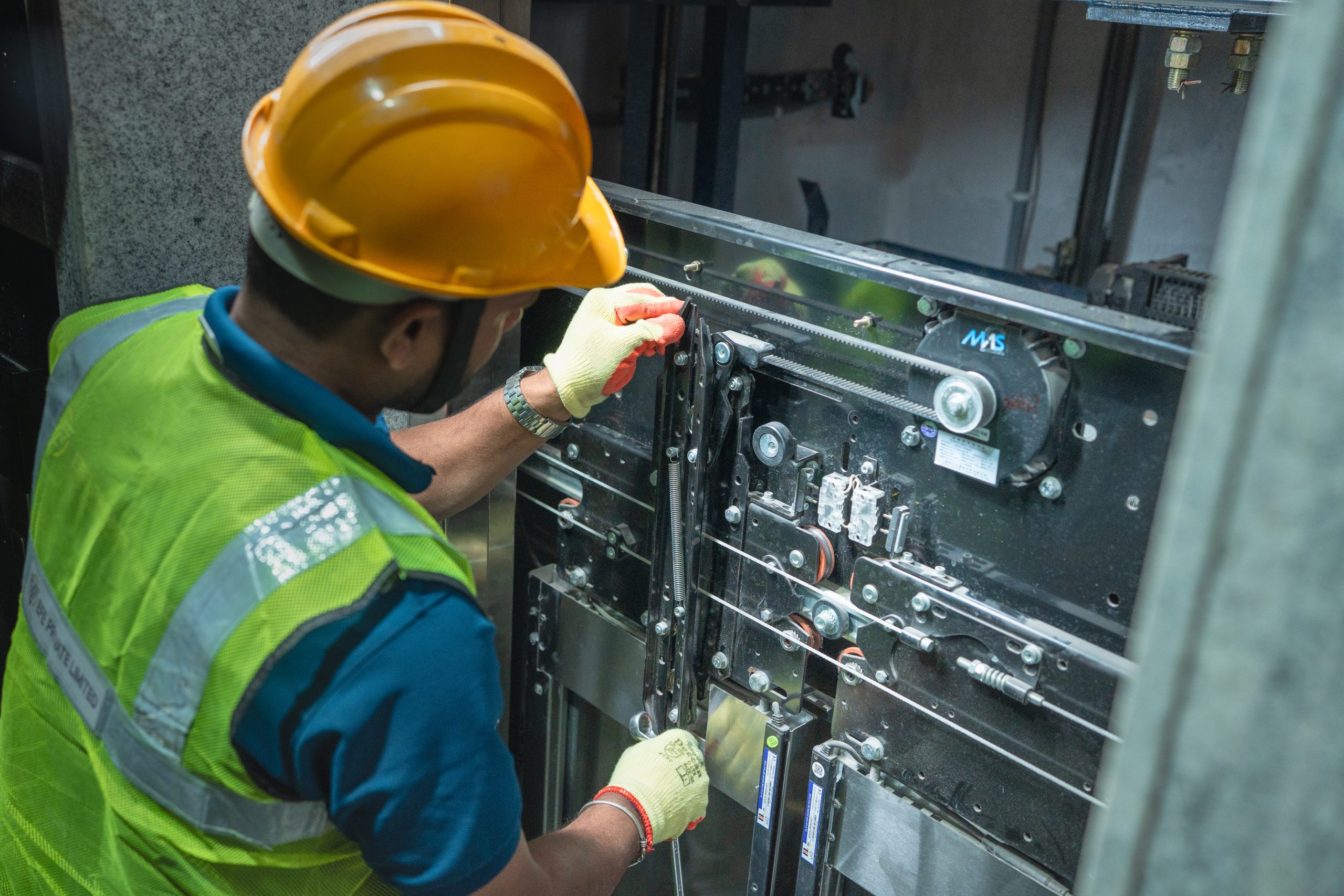
Fixing a damaged vertical transportation system requires matching precise mechanical metrics with systematic troubleshooting phases.
1.Secure Hoistway and Entry Loops:Phase 1: Isolation.
Field engineers set up high-visibility safety barriers at every landing door and switch the lift car to inspection mode. This step isolates the control panel, preventing accidental cabin movement while technicians work inside the shaft.
2.Analyze Controller Fault Codes:Phase 2: Diagnostics.
The repair crew connects digital terminal equipment directly to the central microprocessor board. They read the active error logs to identify the specific root issue, such as safety string interruptions or variable drive failures.
3.Trace Safety Line Continuity:Phase 3: Circuit Audit.
Technicians use digital multimeters to trace the low-voltage safety loop line step by step. They test every mechanical limit switch, door contact interlock, and emergency pit button to locate the exact break in the circuit.
4.Execute Component Swaps:Phase 4: Physical Work.
The crew removes the damaged components and installs genuine factory replacement parts with matching serial numbers. They avoid using unbranded parts to ensure the lift’s original safety certifications remain fully valid.
5.Calibrate Motion and Leveling Settings:Phase 5: Drive Tuning.
Electricians program the movement software within the Variable Voltage Variable Frequency (VVVF) drive. They adjust the acceleration curves and slow-down parameters to ensure the cabin levels safely within a tight 2 mm margin of each floor.
Cost Breakdown by Lift Drive and Part Type
The propulsion technology of your lift and the specific component that fails directly shape your final repair bill and required site labor.
| Component Repair Category | Average Price Range | System Structural Requirements | Average On-Site Labor Time |
| Safety Light Curtain Upgrade | ₹12,000 – ₹22,000 | Multi-beam infrared header paths; standard wiring. | 2 to 4 Hours |
| VVVF Control Drive Replacement | ₹48,00,0 – ₹95,000 | Microprocessor recalibration; electrical phase balancing. | 4 to 8 Hours |
| Traction Sheave / Rope Overhaul | ₹65,000 – ₹1,80,000 | High-tensile cable tensioning; weight recalibration. | 12 to 24 Hours |

Safety Light Curtain Upgrades
Door systems face constant mechanical wear and tear, making them a common source of lift issues. Upgrading from old mechanical safety edges to modern full-height infrared light curtains helps protect passengers from closing doors and prevents future system failures.
VVVF Control Drive Replacements
The Variable Voltage Variable Frequency drive functions as the main processing engine for your lift’s motor. When power surges or extreme summer heat damage this controller, specialized technicians must install a replacement unit and program the acceleration settings to match your specific building layout.
Traction Sheave and Rope Overhauls
Suspension ropes and drive sheaves handle heavy physical loads daily. Over time, the steel cables wear grooves into the drive sheave, which can cause vibrations or slippage. Replacing these parts requires high-tensile tensioning tools to balance the cabin’s structural counterweights safely.
Core Financial Drivers of Elevator Repair Bills
- Proprietary Software Systems: Elevators with closed control systems require specialized diagnostic software, which can raise troubleshooting labor fees compared to open-source control panels.
- Landing Stop Counts: Taller buildings require longer travel cables, extra door interlock sensors, and more shaft wiring, which increases the total cost of parts and labor.
- Component Origin and Certifications: Imported European or Japanese mechanical components provide exceptional performance but cost more than locally manufactured parts.
- Emergency Scheduling: Arranging emergency field interventions during holidays or midnight hours involves premium labor rates compared to booking standard weekday maintenance calls.
Common Mistakes in Elevator Repair Planning
What is the most costly error in elevator repair procurement?
The most costly error in elevator repair procurement is using unbranded, non-certified generic components or hiring unlicensed local mechanics to avoid factory service fees. This approach frequently damages connected electronic controllers, voids existing warranties, and leads to system compliance failures.
       [ Initial Choice: Uncertified Local Repair ]
                            |
                            v
       [ Patchwork Repair Overloads Microprocessor ]
                            |
                            v
       [ Main Controller Burns Out Entirely ]
                            |
                            v
       [ Severe Cost Inflation & Safety Violations ]
In our field inspections, we often find situations where uncertified mechanics have bypassed broken safety switches to get a lift running quickly. This dangerous practice can cause catastrophic structural failures and exposes building owners to severe legal liability under the Telangana Lifts Act. Working with certified experts ensures your system’s safety layers remain fully operational.
Real-World Technical Repair Scenarios in Hyderabad
Commercial Complex Intervention: Hitech City
A busy commercial office building in Hitech City dealt with frequent afternoon lift shutdowns, which trapped commuters and disrupted business operations. The building’s maintenance crew struggled to find the cause, as the lifts would stop randomly between floors.
Our engineering team analyzed the digital controller logs and monitored the power lines. We discovered that the main lift controller was overheating because the machine room lacked adequate ventilation during peak summer hours. We replaced the damaged control module, re-routed the wiring loops, and installed a dedicated cooling system, which completely eliminated the afternoon shutdowns.
Apartment Society Restoration: Kondapur
A residential housing society in Kondapur was experiencing major floor leveling problems. The lift cabin regularly stopped up to 45 mm away from the landing levels, creating a serious tripping hazard for residents.
We inspected the installation and found that the old mechanical leveling flags were warped and covered in dust, which confused the position sensors. Our technicians installed high-precision magnetic sensors and updated the deceleration software within the VVVF drive. This adjustment restored leveling accuracy to within a 2 mm margin, ensuring safe operation for the building’s residents.
Frequently Asked Questions
1. Why does it cost more to fix a lift with a proprietary control panel?
Proprietary systems require factory-specific diagnostic software and specialized tools, which limits service options and raises repair costs compared to open-source setups.
2. Can building owners skip installing an Automatic Rescue Device to save money?
No. The National Building Code and the Telangana Lifts Act mandate functional automatic rescue systems in multi-unit buildings to prevent passenger entrapment during power outages.
3. What is the typical lifespan of steel traction ropes in Hyderabad?
High-tensile steel ropes generally last 5 to 8 years in standard conditions. This lifespan can shrink if the shaft guide rails are misaligned or if the lift is regularly overloaded.
4. How much does it cost to replace a standard lift door lock interlock?
Replacing a single mechanical door interlock typically costs between ₹4,50,000 and ₹12,000, including the certified replacement part and expert field labor.
5. Why do elevator repair costs increase after a building suffers a lightning strike?
Lightning strikes create high-voltage surges that can burn out sensitive electronic components, including the main microprocessor board, the VVVF drive, and the floor indicators.
6. Is a separate safety inspection required after major elevator repairs in Telangana?
Yes. Major mechanical or structural changes require technical verification and approval from the Telangana Chief Electrical Inspectorate to keep your operating license valid.
7. What causes a traction motor to make a loud humming sound during travel?
Continuous humming sounds usually point to worn internal motor bearings, electrical phase imbalances, or alignment shifts within the gearless motor.
8. How can property managers lower their long-term elevator repair expenses?
The most effective way to minimize large repair bills is by maintaining a comprehensive Annual Maintenance Contract (AMC) that includes monthly safety checks and regular system lubrication.
Maintaining Long-Term Value in Vertical Infrastructure
Keeping your building’s vertical transit system safe and reliable requires skilled technical support. While low-cost, uncertified repair options may seem attractive, their patchwork fixes often lead to repeated breakdowns, expensive secondary damage, and real safety risks. Investing in professional engineering services keeps your property running smoothly and protects your occupants.
Property managers, residential associations, and commercial building owners throughout Telangana should work with certified vertical transit professionals who carry proper state licenses and liability coverage. Senior practitioners and industry experts, including the diagnostic teams at Exfol Friends Elevators Pvt. Ltd., recommend keeping a detailed log of all electronic controller faults and mechanical inspections. Partnering with a qualified repair service ensures your elevator systems remain safe, efficient, and fully compliant for years to come.


Leave a Comment