

Table of Contents
Ensuring Vertical Reliability: Understanding Monthly Maintenance of Lift
For property owners and facility managers in Hyderabad’s burgeoning real estate market, a lift is more than a convenience; it is a critical lifeline. From the high-rise IT corridors of Gachibowli to the premium residential villas in Jubilee Hills, the longevity of these systems depends entirely on consistent technical oversight. A common question we encounter is: What is the monthly maintenance of a lift? In professional terms, this is a proactive service protocol designed to identify mechanical fatigue before it results in a breakdown.
Monthly maintenance involves a rigorous inspection of safety circuits, lubrication of moving parts, and calibration of the control system. In our experience, neglecting this routine is the primary cause of entrapments and expensive motor failures. Whether you are managing a small apartment block or a large commercial complex, monthly servicing ensures compliance with the Telangana Lifts Act and maintains the manufacturer’s warranty.
At Exfol Friends Elevators Pvt. Ltd., we view monthly maintenance as “preventative engineering.” By investing in a structured Annual Maintenance Contract (AMC), stakeholders transition from reactive repairs to a predictable, safety-first operational model. This guide provides a comprehensive breakdown of what happens during a standard service visit and why it is indispensable for your building’s infrastructure.
What is Monthly Lift Maintenance?
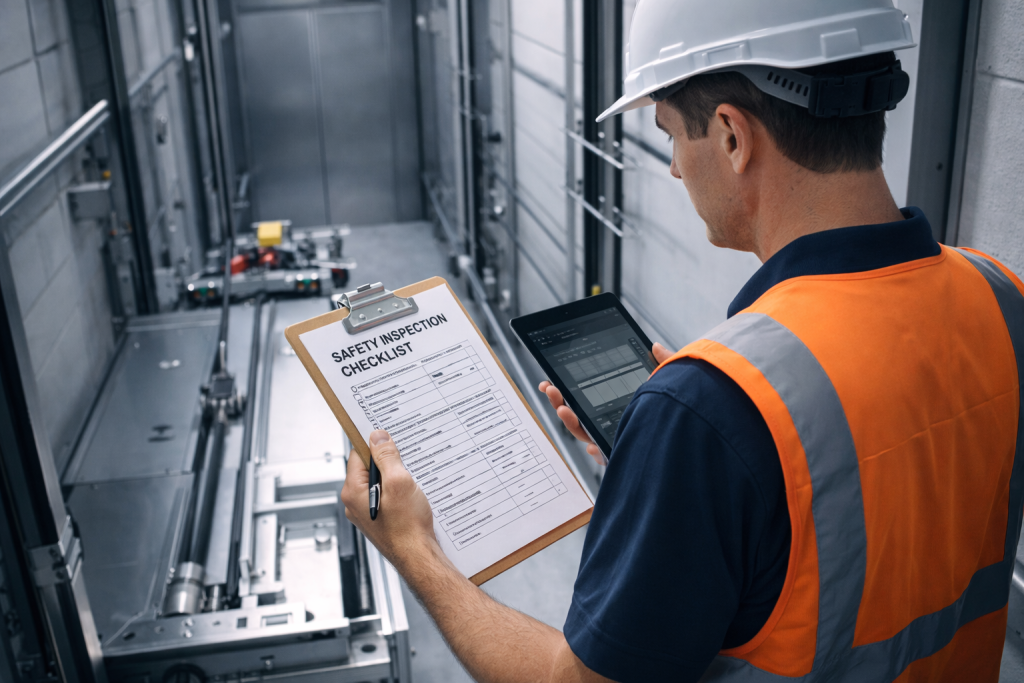
Monthly Lift Maintenance: A systematic preventative service performed by certified technicians to ensure an elevator’s mechanical and electrical systems operate safely. It includes cleaning, lubrication, and adjustment (CLA) of components such as door interlocks, brake liners, and safety gears, alongside a thorough audit of the microprocessor-based controller to prevent unexpected downtime.
Why is Monthly Maintenance Important in Hyderabad?
In the context of Hyderabad’s specific environment, monthly servicing addresses several localized challenges that can degrade lift performance.
1. Environmental Factors: Dust and Heat
Hyderabad’s climate can be unforgiving. During the dry summer months, dust accumulation in the lift shaft and on the guide rails can cause friction, leading to “jerky” movements. Furthermore, high ambient temperatures in machine rooms can stress the VVVF (Variable Voltage Variable Frequency) drives. Monthly checks allow us to clean filters and ensure cooling systems are functional.
2. Voltage Fluctuations and Power Quality
While Hyderabad’s infrastructure is improving, voltage surges remain a reality. Monthly maintenance includes a check of the Automatic Rescue Device (ARD) batteries and the health of electrical contactors. This ensures that during a sudden power cut, the lift successfully levels at the nearest floor to release passengers.
3. Statutory Compliance and Liability
According to the Telangana Lifts, Escalators and Passenger Conveyors Act, building owners are legally responsible for the safety of their vertical transportation. A documented monthly service log is the first thing insurance companies and government inspectors look for in the event of an audit or an accident.
How Does a Monthly Service Visit Work?
A professional service visit follows a logical sequence to ensure no safety component is overlooked. Here is our field-tested step-by-step process:
Step 1: User Feedback and Initial Run
The technician begins by consulting the lift operator or facility manager about any unusual noises, leveling issues, or “phantom” calls reported by residents. A test run is performed to feel the ride quality.
Step 2: Machine Room Audit
We inspect the traction machine, checking oil levels in geared units and verifying the brake gap. We also clean the controller cabinet of any carbon dust which can cause short circuits in the PCBs.
Step 3: Shaft and Pit Inspection
The technician travels on top of the car in “Inspection Mode” to lubricate the guide rails and check the tension of the steel ropes or polyurethane belts. In the pit, we check for water seepage and ensure the buffers are clear of debris.
Step 4: Safety Circuit Testing
We manually trigger the emergency stop, the alarm, and the infrared door sensors to ensure they respond instantly. This includes checking the mechanical interlocks on every floor.
Step 5: Door System Calibration
Since the majority of lift faults involve the doors, we spend significant time cleaning the sills and adjusting the door operator’s speed and torque.
Step 6: Levelling and Final Documentation
We run the lift to every floor, ensuring the car floor aligns perfectly with the landing sill to prevent tripping hazards. The visit concludes with a signed service report.
Types of Maintenance Variations
Maintenance needs vary based on the lift’s drive system and usage intensity:
- Traction Lift Maintenance: Focuses on rope tension, sheave wear, and brake lining adjustments.
- Hydraulic Lift Maintenance: Prioritizes oil levels, seal integrity, and valve block adjustments to prevent “creeping” (sinking from the floor level).
- MRL (Machine Room-Less) Maintenance: Requires specialized access to the motor inside the shaft, focusing on compact electronics and belt health.
Benefits of Monthly Maintenance
1. Extended Equipment Lifespan
A lift is a major capital expenditure. Regular lubrication and tension adjustments prevent the premature wearing of expensive traction sheaves and motors, potentially adding 10 to 15 years to the system’s life.
2. Enhanced Passenger Safety
The primary goal of maintenance is the prevention of accidents. By testing the over-speed governor and safety gears every month, we ensure that the mechanical “fail-safes” are ready to engage if needed.
3. Lower Energy Consumption
A poorly maintained lift draws more current. Friction in the rails or a dragging brake forces the motor to work harder. Proper calibration ensures the system runs at peak efficiency, reflecting positively on the building’s common electricity bill.
Common Mistakes and Misconceptions
Mistake 1: “The lift is working fine, so skip the service.”
Maintenance is about prevention, not just repair. By the time a lift stops working, the damage is often already done. Skipping a month can allow a minor adjustment issue to become a major mechanical failure.
Mistake 2: Hiring Uncertified Local Mechanics
While independent technicians might offer lower rates, they often lack the diagnostic tools for proprietary microprocessor controllers. In the long run, incorrect troubleshooting can lead to PCB burnouts.
Mistake 3: Neglecting the Lift Pit
Many owners treat the pit as a trash can. Water seepage or debris in the pit can rust the buffers and trigger the bottom limit switches, causing the lift to shut down unexpectedly.
Real-World Scenarios
Residential: The Kondapur Apartment Complex
In a 10-year-old apartment in Kondapur, residents complained of the lift shaking. Our monthly audit revealed that the guide-shoe liners had worn down. Replacing them during the routine visit cost a few hundred rupees and prevented the guide rails from being damaged.
Commercial: The HITEC City Office Block
A commercial building experienced frequent “lock-outs” during peak hours. Our technicians found that the door headers were clogged with construction dust from a nearby renovation. A monthly deep-cleaning protocol resolved the issue, ensuring zero downtime for the corporate tenants.
Frequently Asked Questions
1. How much does monthly lift maintenance cost in Hyderabad? For a standard G+4 residential lift, a non-comprehensive AMC typically ranges from ₹2,500 to ₹4,500 per month. Comprehensive plans are higher.
2. Does the technician provide a report after every visit? Yes. A professional service always ends with a signed service report detailing the work performed and the status of safety components.
3. What happens if the lift breaks down between service visits? Most AMC contracts include 24/7 breakdown support. A technician should ideally reach a Hyderabad site within 2 to 4 hours of the complaint.
4. How long does a monthly service visit take? A thorough inspection usually takes between 60 to 90 minutes, depending on the number of floors and the lift’s condition.
5. Is ARD testing part of monthly maintenance? Absolutely. We simulate a power failure every month to ensure the Automatic Rescue Device (ARD) can bring the car to the nearest floor.
6. Can maintenance prevent all breakdowns? While it significantly reduces the probability, electronic components can fail without warning. However, 90% of mechanical failures are preventable through monthly care.
7. Who is responsible for lift maintenance in a gated community? The Facility Manager or the Residents’ Welfare Association (RWA) is responsible for ensuring a valid AMC is in place.
8. Do new lifts need monthly maintenance? Yes. Even under warranty, manufacturers require monthly servicing to keep the warranty valid and ensure the system settles correctly after installation.
Conclusion: Investing in Peace of Mind
Understanding what is the monthly maintenance of a lift is the first step toward responsible property management. In a dynamic city like Hyderabad, where infrastructure is constantly scaling, the reliability of your elevator defines the comfort and safety of your building’s occupants. Monthly maintenance is not an optional expense; it is a vital investment that protects your capital and ensures your vertical transit remains seamless.
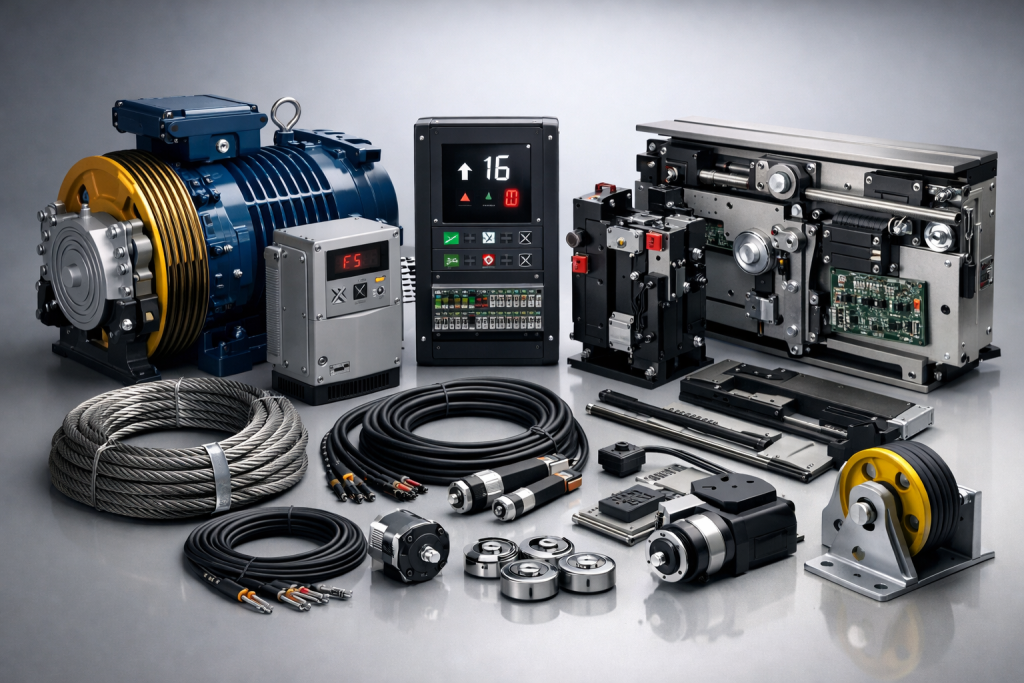
At Exfol Friends Elevators Pvt. Ltd., we pride ourselves on a “safety-first” culture. Our technicians are trained to look beyond the obvious, ensuring every pulley, rope, and circuit board is in peak condition.


Leave a Comment