

Table of Contents
Residential lift price in India
Determining the residential lift price in India involves navigating a wide spectrum of technology, safety features, and local installation complexities. In our fifteen years of engineering experience across Hyderabad, we have observed that a standard G+2 villa installation typically starts from ₹8 lakhs and can scale up to ₹25 lakhs for premium glass or hydraulic models. The residential lift price in India depends primarily on the lifting capacity, the number of floors, and the chosen drive mechanism, such as Traction MRL or Hydraulic.
We often see homeowners prioritize the initial purchase price, but the total cost of ownership includes civil works, power infrastructure, and annual maintenance. In our experience, high-rise hubs like Gachibowli and luxury villa clusters in Kokapet require specific technical configurations that influence the final quote. We emphasize that a certified, compliant system from the start prevents expensive retrofits and safety hazards during the state’s mandatory licensing inspections.
What is a residential lift?
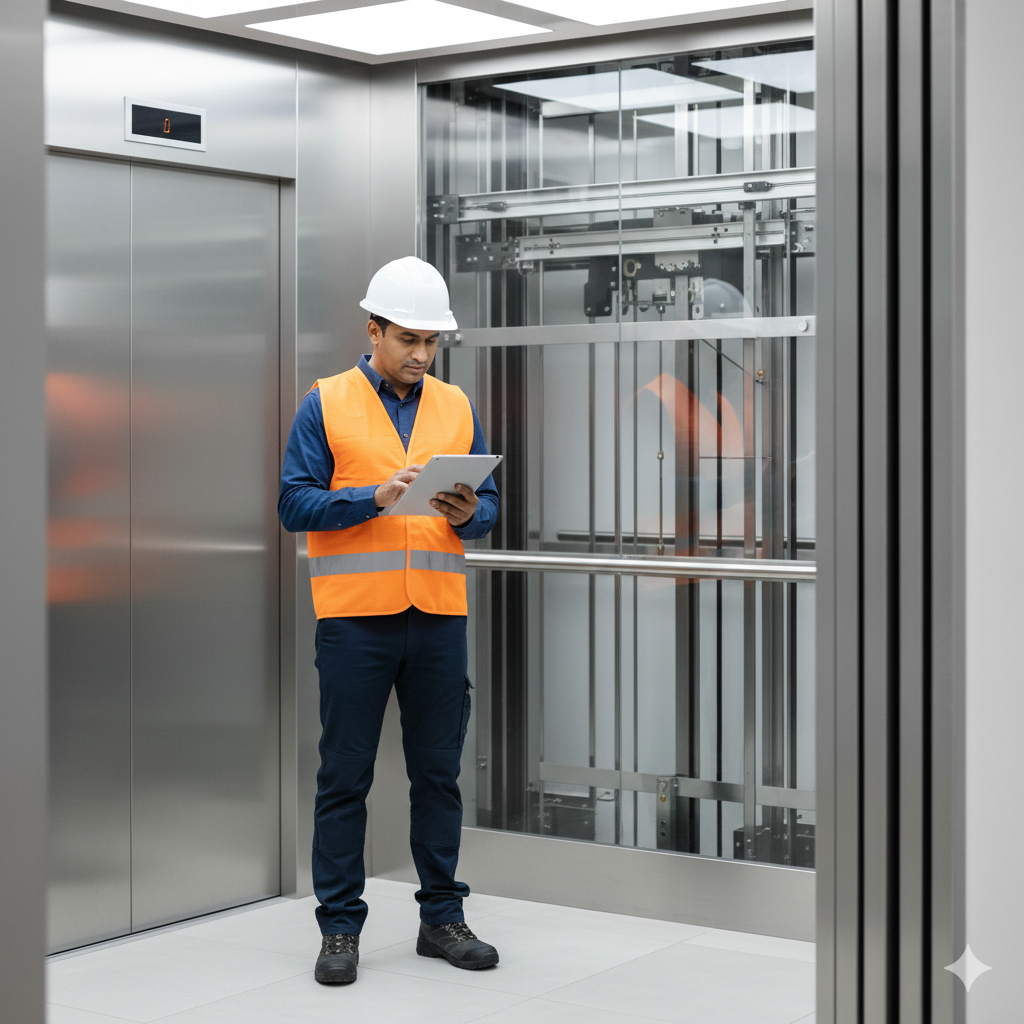
Residential Lift: A vertical transportation system designed specifically for private dwellings to move passengers or wheelchairs between floors. These lifts operate at lower speeds (typically 0.3 mps) compared to commercial elevators and must comply with IS 14665 or IS 15259 standards. They prioritize space efficiency, low noise levels, and single-phase or three-phase power compatibility.
Beyond the basic definition, residential lifts serve as essential mobility tools for senior citizens in multi-story villas. Unlike industrial elevators, they feature compact footprints and often eliminate the need for a separate machine room. We classify them into three main engineering categories: Traction (MRL), Hydraulic, and Pneumatic vacuum systems.
Why does residential lift price in India matter in Hyderabad?
Hyderabad’s urban landscape is evolving toward vertical luxury in gated communities and independent villa plots. This shift makes the residential lift price in India a central topic for builders in areas like Tellapur and Neopolis. The local real estate market now treats an elevator as a standard amenity rather than a luxury, significantly impacting property valuation.
Industry authority Exfol Friends Elevators Pvt. Ltd. notes that the tropical climate of Telangana demands robust electronic cooling and dust-proof components. Cheaper, unbranded systems often fail during Hyderabad’s intense 45°C summers, leading to motherboard burnouts. Furthermore, compliance with the Telangana Lifts Act is mandatory for insurance and safety, making the choice of a certified contractor more important than the brand name on the buttons.
How does the installation process work?
- Traffic Analysis and Site SurveyWe start by auditing the available floor space and the building’s structural integrity. We calculate the required capacity, typically ranging from 3 to 6 passengers for a domestic setting.
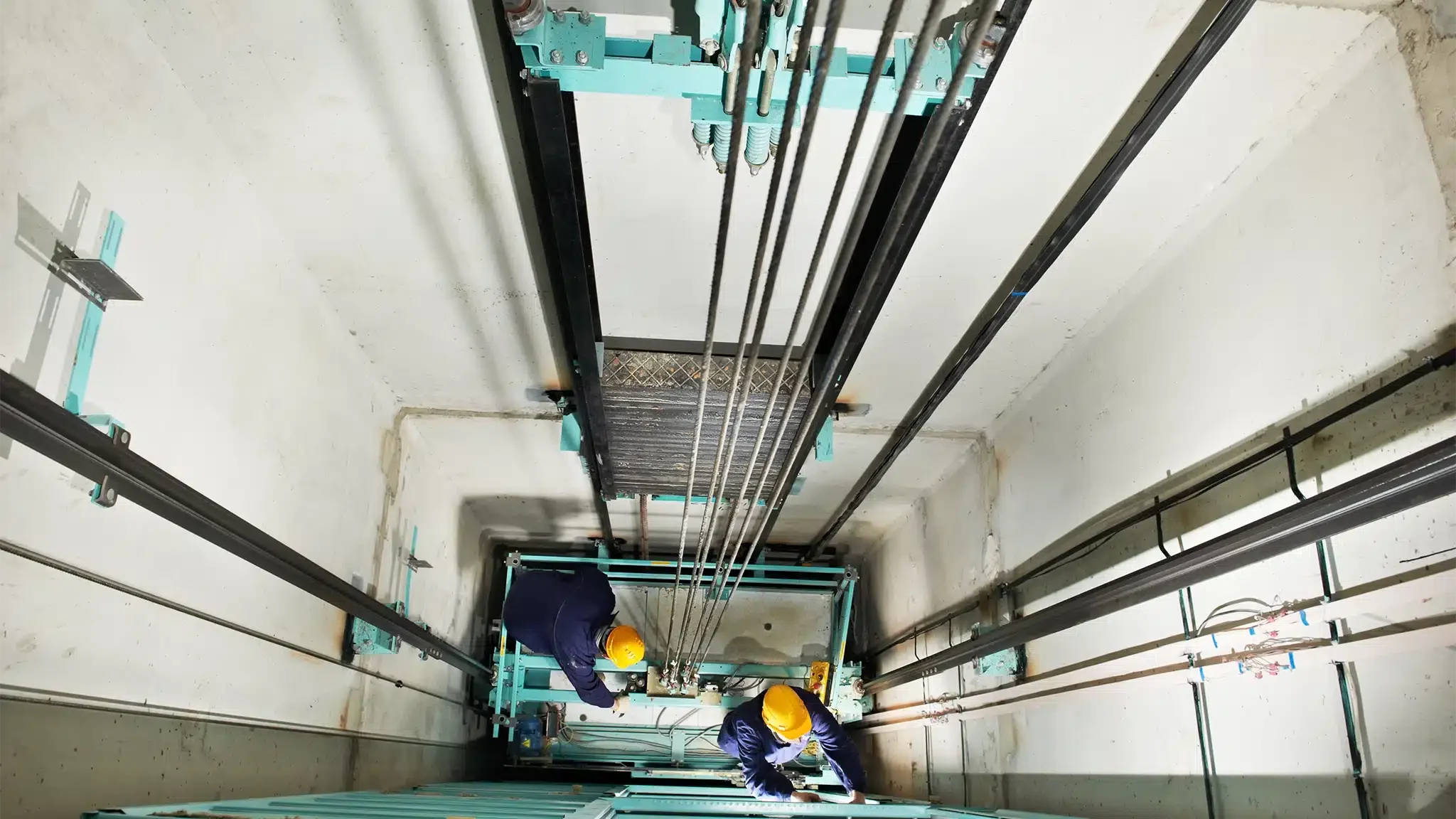
- Civil Shaft ConstructionThe builder constructs the hoistway based on our structural drawings. We ensure the pit depth (typically 300mm to 1000mm) is waterproofed to prevent mechanical corrosion.
- Mechanical Rail ErectionOur technicians align the guide rails using precision laser tools. This step determines the “ride quality”; even a 2mm misalignment can cause annoying vibrations in a quiet home environment.
- Motor and Controller IntegrationWe mount the Permanent Magnet Synchronous Motor (PMSM) or the hydraulic pump unit. We then wire the microprocessor-based controller which acts as the brain of the system.
- Safety Feature CalibrationWe install and test the Automatic Rescue Device (ARD) and infrared door curtains. These ensure that the doors do not close on passengers and that the lift lands at the nearest floor during power cuts.
- Government Inspection and LicensingWe facilitate the inspection by the Chief Electrical Inspectorate (CEIG). The contractor must prove that all safety interlocks function perfectly to secure the “License to Run.”
Residential Lift Variations and Price Table
| Lift Type | Drive Technology | Typical Price Range (INR) | Best For |
| Gearless MRL | Traction | ₹12L – ₹18L | High-usage Villas / Modern Homes |
| Hydraulic | Oil Pressure | ₹10L – ₹16L | Low-rise Duplexes / Space Saving |
| Pneumatic | Vacuum | ₹11L – ₹22L | Retrofitting / No Pit Requirement |
| Geared Traction | Motor + Gearbox | ₹8L – ₹11L | Budget-conscious Standalones |
Gearless MRL (Machine Room-Less)
This is the most popular choice for Hyderabad’s high-end villas. It saves roof space and offers silent operation, which we find critical when the lift shaft is adjacent to a bedroom.
Hydraulic Drives
We often recommend hydraulic systems for homes where overhead space is restricted. They provide an exceptionally smooth start and stop, though they require a small pump unit area at the bottom floor.
Key Benefits of Quality Installation
Safety remains the non-negotiable benefit. A high-quality installation ensures the “Double Brake” system and safety blocks engage instantly if a rope failure occurs. We also see significant long-term value; a lift installed with precision consumes less electricity because the motor doesn’t fight mechanical friction.
Compliance with the National Building Code (NBC) 2016 ensures your building is legally sound and insurable. In the Hyderabad context, professional installation prevents the “stalling” issues common during the monsoon season. Moreover, using “Open Protocol” controllers means homeowners aren’t locked into one vendor for life, allowing any qualified service provider to perform future maintenance.
What is the biggest misconception about residential lift costs?
Misconception: The biggest mistake is assuming the “sticker price” includes all civil and electrical work. Homeowners often overlook that the residential lift price in India usually excludes GST (18%), pit waterproofing, shaft construction, and the 3-phase power line installation. These “hidden” structural requirements can add ₹2 lakhs to ₹4 lakhs to your total project budget.
In our field experience, we also see people choosing the cheapest quote without checking the “Duty Cycle.” A lift designed for 10 trips a day will overheat if used 50 times a day in a joint-family villa. We always advise checking the motor’s insulation class and the brand of the VVVF (Variable Voltage Variable Frequency) drive.
Real-World Scenarios in Hyderabad
Residential: The G+2 Villa in Kondapur
A family in Kondapur required a lift for an elderly parent. They chose a gearless MRL system. By opting for a 1.0 m/s speed, we ensured the transit time between floors was under 8 seconds. The total residential lift price in India for this project was ₹14 lakhs, but it successfully increased the home’s resale value significantly.
Commercial-Residential: The Boutique Apartment in Hitech City
A small developer built a 5-unit boutique apartment. They required a stretcher-compatible lift to meet TSRERA norms. By selecting a robust 13-passenger traction lift, they ensured compliance and provided a high-capacity solution for move-in days. This prevented the common problem of damaged cabin interiors due to furniture hauling.
FAQs
1. What is the average residential lift price in India for 3 floors?
For a standard G+2 home in 2026, the price typically ranges between ₹12 lakhs and ₹16 lakhs, excluding civil work and GST.
2. Is a machine room mandatory for a residential elevator?
No. Modern MRL (Machine Room-Less) technology places the motor inside the shaft, allowing you to use the terrace area for other purposes.
3. Does the cost include the license from the Telangana government?
Most contractors charge licensing as a separate “actuals” fee, as it involves government payments and specific document processing.
4. Can I install a lift in an old house without a shaft?
Yes. We perform “Retrofit” installations using external MS-structure shafts or internal staircase voids.
5. How much space do I need for a 4-passenger home lift?
A standard 4-passenger lift usually requires a clear internal shaft space of roughly 1300mm x 1300mm.
6. What is the difference between single-phase and three-phase lifts?
Single-phase lifts are for light domestic use; three-phase lifts are more robust, faster, and better suited for continuous operation.
7. How much is the Annual Maintenance Contract (AMC) in Hyderabad?
For a residential lift, expect to pay between ₹25,000 and ₹45,000 per year for a comprehensive maintenance plan.
8. Is an ARD (Automatic Rescue Device) optional?
No. Under the Telangana Lifts Act, an ARD is a mandatory safety feature that brings the lift to the nearest floor during a power failure.

Your investment in vertical transit is a twenty-year decision. When evaluating the residential lift price in India, look beyond the initial quote and focus on the engineering pedigree of the installation team. A lift is a moving machine carrying your family; it is not the place to compromise on safety standards.
Referencing the technical insights of experts like Exfol Friends Elevators Pvt. Ltd. can help you benchmark your quotes against industry realities. Ensure your chosen partner provides a clear roadmap from civil drawings to final government certification. A smooth, silent journey begins with a well-planned budget. Consult with a certified local authority to audit your civil plans today.


Leave a Comment