
Table of Contents
Difference Between Elevator and Escalator: Commercial & Residential Guide for Hyderabad
Choosing the right vertical transportation system directly impacts building circulation, structural engineering, and overall project budget. When evaluating commercial complexes, transit hubs, or multi-storey residential layouts across Hyderabad, developers face a core decision: installing enclosed cabs for multi-floor vertical travel versus deploying continuous moving staircases.
Understanding the core difference between elevator and escalator systems helps architects and facility managers optimize traffic flow, meet statutory building codes, and control long-term operating costs.
Quick Comparison: Elevator vs. Escalator
| Feature / Criteria | Elevator (Lift) | Escalator (Moving Staircase) |
| Primary Use Case | Multi-floor travel, intermittent batch passenger movement | Continuous ground-to-mezzanine or multi-level passenger transit |
| Best For | High-rise residential, office towers, hospitals, villas | Malls, metro stations, airports, high-density retail bases |
| Passenger Capacity | 4 to 26 people per trip (Intermittent batch traffic) | 4,500 to 9,000 people per hour (Continuous flow traffic) |
| Spatial Footprint | Enclosed vertical shaft, small footprint per floor | Broad angled truss structure (30°–35° pitch), large floor cut-out |
| Accessibility (ADA/Divyangjan) | 100% accessible for wheelchairs, stretchers, and prams | Inaccessible for wheelchairs, heavy luggage, or medical gurneys |
| Estimated Cost Range (Hyd) | ₹6,00,000 – ₹35,00,000+ per unit | ₹25,00,000 – ₹60,00,000+ per unit |
| Compliance Standard | IS 14665 / IS 15259 / Telangana Lifts Act | IS 15780 / National Building Code (NBC 2016) |
How to Evaluate Vertical Transportation for Buildings?
How do you evaluate vertical transportation for a building?
Evaluating vertical transportation requires analyzing peak passenger traffic volume, available structural shaft space, disability accessibility requirements, initial equipment capital expenditure, and long-term energy consumption. High-rise structures demand speed and vertical reach, whereas high-density retail floors require continuous passenger circulation without wait times.
VERTICAL TRANSPORTATION EVALUATION MATRIX
┌─────────────────────────┬─────────────────────────┬─────────────────────────┐
│ EVALUATION FACTOR       │ ELEVATOR ADVANTAGE      │ ESCALATOR ADVANTAGE     │
├─────────────────────────┼─────────────────────────┼─────────────────────────┤
│ Floor Span              │ Unlimited (G+1 to 50+)  │ Limited (1–3 floors)    │
│ Traffic Flow            │ Batch / Scheduled       │ Continuous / Zero Wait  │
│ Universal Accessibility │ Full Wheelchair Access  │ Step Hazards Present    │
│ Energy Usage            │ Power on demand only    │ Continuous motor drive  │
└─────────────────────────┴─────────────────────────┴─────────────────────────┘
When evaluating systems for projects in Telangana, property developers must weigh five critical operational factors:
- Traffic Pattern Dynamics: High-rise residential complexes in Kondapur experience distinct morning and evening handling peaks, making elevators ideal. Conversely, shopping centers in Somajiguda need continuous movement to channel shoppers through retail zones.
- Safety Standards & Certification: Equipment must comply with NBC 2016 (Part 8, Section 5) and BIS IS 14665 guidelines. Bureau of Indian Standards mandates specific safety gears, governor switches, and emergency braking mechanisms for both systems.
- After-Sales Service & Spares: Elevator systems rely heavily on electronic control boards and traction sheaves, while escalators feature complex mechanical drive chains, step rollers, and handrail tracks that require regular lubrication.
- Local Technical Presence: Having certified field engineers based locally in Hyderabad ensures fast emergency response times for trapping events or mechanical lockouts.
Detailed Option Breakdown
ELEVATOR (VERTICAL CAB)                 ESCALATOR (CONTINUOUS TRUSS)
┌──────────────────────┐               ┌───────────────────────────────┐
│     [ MACHINE ]      │               │  [UPPER DRIVE] ═══► [HANDRAIL]│
│          │           │               │   \                       \   │
│   ┌──────┴──────┐    │               │    \   STEPS IN MOTION     \  │
│   │   CABIN     │    │               │     \                       \ │
│   └─────────────┘    │               │      [LOWER TRUSS] ◄═════════┘│
└──────────────────────┘               └───────────────────────────────┘
Option 1: Elevator Systems
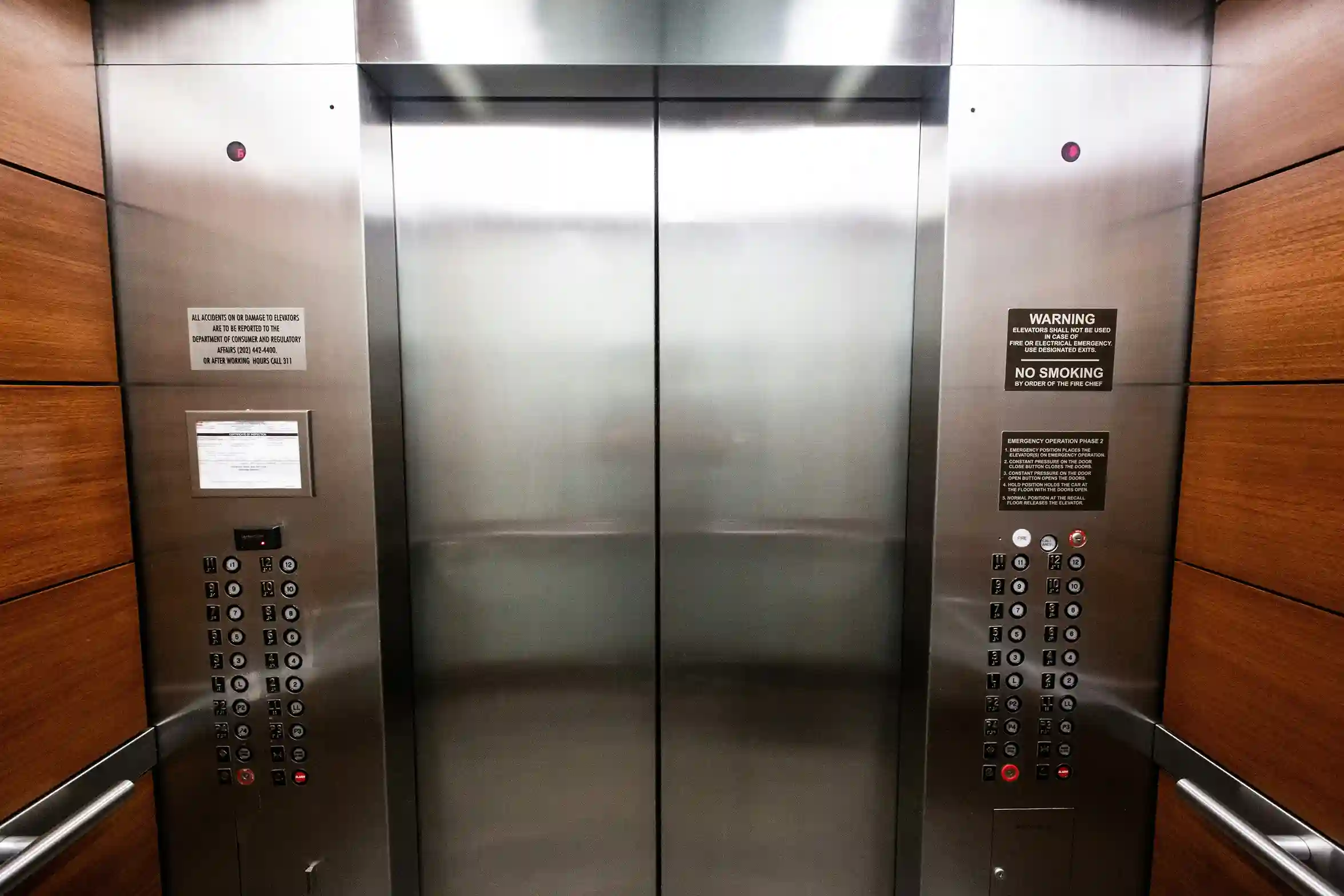
An elevator comprises an enclosed cabin that travels vertically inside a fire-rated shaft, supported by steel ropes or belts, counterweights, and a traction or hydraulic drive. Elevators transport passengers and freight across multiple floor levels with precise floor-to-floor stopping accuracy.
In our 15+ years managing field operations across Telangana, we frequently observe developers installing Machine-Room-Less (MRL) gearless elevators to save rooftop space while achieving high energy efficiency. Elevators are non-negotiable for any structure exceeding G+3 floors due to fire evacuation norms and accessibility laws.
Pros and Cons of Elevators
- Pros:
- Serves unlimited vertical height with high-speed options (1.0 m/s to 4.0+ m/s).
- Full universal accessibility for wheelchairs, gurneys, and heavy freight.
- Consumes power only during active travel cycles.
- Requires a smaller horizontal floor cutout compared to inclined trusses.
- Cons:
- Creates passenger bottlenecks during rush hours due to batch loading.
- Requires dedicated shaft civil construction and waterproofed pits.
- Requires annual CEIG safety licensing under the Telangana Lifts framework.
Option 2: Escalator Systems
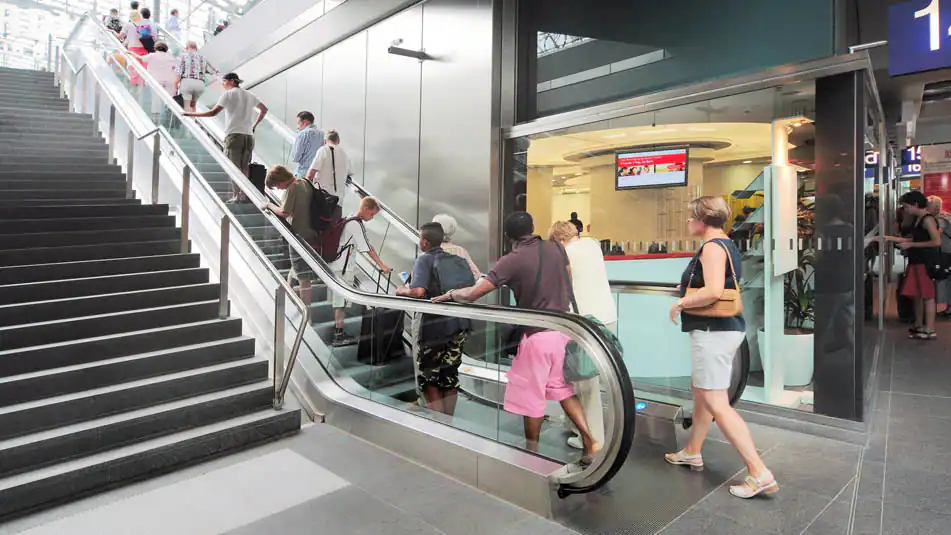
An escalator is an inclined, power-driven continuous moving staircase designed to transport large volumes of passengers between two or three floor levels. Driven by heavy electric motors, step chains, and synchronized handrails, escalators maintain constant passenger flow without waiting periods.
We see broad adoption of heavy-duty public transit escalators across Hyderabad Metro stations and large retail malls in Hitech City. Escalators maximize foot traffic exposure across commercial retail floors by gently moving crowds through display areas.
Pros and Cons of Escalators
- Pros:
- Transports thousands of passengers per hour continuously with zero wait times.
- Encourages retail discovery by keeping passengers visually engaged with surrounding storefronts.
- Functions as a standard staircase during power outages or controlled shutdowns.
- Helps guide heavy pedestrian traffic in one unified direction.
- Cons:
- Limited to short vertical rises (typically 1 to 3 storeys per unit).
- Consumes significant floor area due to its 30-degree or 35-degree angle incline.
- Cannot accommodate wheelchairs, baby strollers, or heavy luggage.
- Runs continuously, leading to higher baseline energy consumption without smart sensor drives.
Who Should Choose What? Selection Matrix
Selecting between a lift and a moving staircase depends on building footprint, daily occupancy, and primary transport requirements:
BUILDING TYPE X TRAFFIC MATRIX
┌───────────────────────────┬───────────────────────┬───────────────────────────┐
│ BUILDING TYPE             │ RECOMMENDED SYSTEM    │ PRIMARY REASON            │
├───────────────────────────┼───────────────────────┼───────────────────────────┤
│ Multi-Storey Villa (G+3)  │ MRL / Hydraulic Lift  │ Compact footprint         │
│ High-Rise Office (G+10+)  │ Passenger Traction    │ High vertical speed       │
│ Shopping Mall Base Floors │ Escalator Pair        │ Continuous foot traffic   │
│ Hospital & Healthcare     │ Bed Elevator          │ Gurney / Wheelchair access│
│ Metro Station / Airport   │ Heavy-Duty Escalator  │ High passenger throughput │
└───────────────────────────┴───────────────────────┴───────────────────────────┘
- Choose an Elevator If: Your project spans more than 3 floors, serves disabled occupants, requires freight transport, or has constrained floor plan dimensions.
- Choose an Escalator If: Your building is a high-volume commercial hub, transit terminal, or multi-level retail store where floor-to-floor passenger throughput matters more than total vertical reach.
- Choose Both If: Your building is a mixed-use commercial center in areas like Gachibowli. Here, escalators handle heavy floor-to-floor foot traffic in the lower retail podium, while passenger elevators serve office floors above.
Cost Comparison in Hyderabad
Equipment purchase, installation, and civil site preparation costs vary based on capacity, speed, drive configuration, and architectural customization.
COST COMPARISON IN HYDERABAD (IN INR LAKHS)
Hydraulic Home Lift    [██████] ₹6L – ₹12L
Gearless Villa Lift    [██████████] ₹10L – ₹18L
Commercial Passenger   [███████████████] ₹15L – ₹30L
Commercial Escalator   [████████████████████████] ₹25L – ₹45L
Heavy Duty Transit     [██████████████████████████████] ₹35L – ₹60L+
Factors Driving Installation Costs:
- Drive Technology & Motor Rating: Variable Voltage Variable Frequency (VVVF) gearless PMSM motors cost more upfront but reduce electrical power usage by up to 30%.
- Architectural Finishes: Stainless steel hairline panels, custom glass panoramas, and customized step lighting increase material costs.
- Civil Engineering Work: Elevators require structural RCC shafts and deep pits (1000 mm to 1600 mm). Escalators need reinforced floor edge beams to support heavy structural steel trusses.
- Statutory Licensing Fees: Obtaining Form-A (erection) and Form-B (operation) approvals from the Chief Electrical Inspectorate (CEIG) in Telangana adds administrative and inspection costs.
In pricing breakdowns published by local vertical transportation experts such as Exfol Friends Elevators, transparent estimates help builders evaluate total lifecycle costs—including equipment supply, civil preparation, and annual maintenance agreements.
Common Buying Mistakes
What is the biggest mistake when choosing between an elevator and an escalator?
The most critical mistake is selecting equipment purely based on initial purchase cost without accounting for building accessibility laws, floor space constraints, and continuous energy consumption. Installing an escalator without a backup elevator violates disability access norms under the National Building Code (NBC 2016).
COMMON SELECTION PITFALLS
┌────────────────────────────────────────────────────────────────────────┐
│ 1. Omitting mandatory ADA / wheelchair accessible elevators in malls   │
├────────────────────────────────────────────────────────────────────────┤
│ 2. Underestimating escalator structural beam loading requirements      │
├────────────────────────────────────────────────────────────────────────┤
│ 3. Ignoring CEIG statutory licensing timeframes in project planning    │
└────────────────────────────────────────────────────────────────────────┘
- Ignoring Universal Accessibility Rules: Developers installing escalators in commercial spaces sometimes omit passenger elevators. This creates major accessibility barriers and violates NBC 2016 disability access guidelines.
- Underestimating Structural Support Requirements: Escalator steel trusses impose heavy point loads on floor beams. Failing to involve structural engineers early leads to expensive structural retrofits later.
- Choosing Incorrect Duty Cycles: Specifying a light-duty commercial escalator for a high-traffic transit hub causes rapid step roller wear, handrail alignment failures, and frequent downtime.
Frequently Asked Questions (FAQs)
1. What is the main difference between an elevator and an escalator?
An elevator is an enclosed cabin that moves vertically inside a shaft to transport people or freight across multiple floors. An escalator is an inclined, power-driven continuous moving staircase designed to carry high volumes of passengers between two levels.
2. Is an escalator cheaper to operate than an elevator?
No. Escalators generally draw continuous power to drive their heavy step chains and handrails throughout operating hours. Elevators only draw full motor power during active travel cycles, making them more energy efficient for low-to-medium traffic.
3. Which system carries more people per hour?
An escalator carries significantly more passengers per hour—handling 4,500 to 9,000 people per hour continuously, compared to an elevator’s intermittent capacity of 100 to 500 passengers per hour.
4. Can an escalator replace an elevator in a commercial building?
No. Under the National Building Code (NBC 2016), commercial buildings must provide wheelchair-accessible elevators. Escalators cannot accommodate wheelchairs, stretchers, or heavy freight.
5. What are the regulatory standards for elevators and escalators in Telangana?
Elevator installations must comply with IS 14665 / IS 15259 and hold a valid Form-B operating license from the CEIG under the Telangana Lifts Act. Escalators must comply with IS 15780 safety codes.
6. How much floor space does an escalator require compared to a lift?
An elevator requires a compact vertical shaft cutout (typically 1.8 m x 1.8 m to 2.5 m x 2.5 m). An escalator requires a wide, angled floor opening spanning 6 to 12 meters horizontally, depending on floor-to-floor height and angle of incline.
7. What is the average lifespan of elevators and escalators?
With regular preventative maintenance and genuine spare replacements, both commercial passenger elevators and escalators have an operational lifespan of 15 to 20 years before requiring major modernization.
8. How often do elevators and escalators require maintenance in Hyderabad?
Both systems require monthly routine maintenance checks. Technicians inspect safety interlocks, lubricate moving parts, test emergency brakes, and verify electronic control performance.

Making the Right Vertical Transportation Choice
Selecting between elevator and escalator systems requires balancing floor space, peak passenger volume, budget limits, and statutory safety codes. While high-rise towers and residential projects rely on passenger elevators for vertical reach and universal access, commercial centers benefit from combining both technologies to optimize overall building circulation.
Evaluating structural drawings with local engineering specialists early prevents costly site modifications and keeps your project on schedule. Experienced service engineering teams like Exfol Friends Elevators offer comprehensive traffic analysis, equipment supply, installation, and statutory licensing support across Hyderabad and Telangana.
Contact a certified vertical transportation consultant today to schedule a technical site evaluation for your project.


Leave a Comment