

Table of Contents
Navigating Home Elevators: What is the Cost of a Residential Lift in Hyderabad?
Investing in a private elevator is no longer just an optional luxury for high-end properties. In our fifteen years of field experience managing vertical transportation projects across Telangana, we have watched home lifts transform into essential infrastructure. They support multi-generational living, provide independent mobility for senior family members, and maximize spatial efficiency in premium high-density developments.
When property developers, luxury villa owners, and corporate builders approach us at site inspections, their first question is almost universally the same: What is the cost of a residential lift?
In the Hyderabad and broader Telangana residential real estate markets, the baseline equipment cost for a standard, code-compliant residential lift typically spans from ₹8,00,000 to ₹18,00,000 for a typical G+2 or G+3 structure. However, evaluating this investment simply based on the manufacturer’s base quotation is a critical error. The true total cost of ownership encompasses civil engineering works, electrical shaft modifications, structural waterproofing, Bureau of Indian Standards (BIS) safety integrations, and mandatory statutory compliance fees. This comprehensive technical guide breaks down the pricing matrices, regional engineering constraints, and regulatory codes that govern residential elevator installations.
What is a Residential Lift?
A residential lift is a specialized vertical transit system engineered specifically for private, low-rise domestic dwellings to safely transport passengers across multiple floor levels without the intensive structural footprint or high power consumption of commercial passenger elevators.
Needs Vertical Mobility ──> selects Drive System (MRL Traction / Hydraulic / Vacuum)
│
┌─────────────────┴─────────────────┐
▼ ▼
[Structural Impact] [Financial Allocation]
Civil Shaft, Pit & Headroom Base Equipment, GST, Testing,
Required vs Pitless Government Licensing & AMC
Unlike heavy-duty commercial elevators built for high-traffic public facilities, standard residential elevators prioritize compact structural efficiency, quiet operational mechanisms, and highly refined interior architectural finishes. These residential cabins typically feature maximum rated lifting capacities ranging from 250 kg to 400 kg, which comfortably accommodates three to five adult passengers or a standard wheelchair user with an accompanying caregiver. Modern domestic lift systems leverage advanced single-phase or three-phase power drives that draw minimal standby energy, often utilizing sophisticated Machine Room-Less (MRL) layouts or low-impact hydraulic pumps to eliminate the need for a dedicated concrete machine room overhead.
Why Does What is the Cost of a Residential Lift Matter in Hyderabad?
The rapid vertical expansion of Hyderabad’s premium residential sectors—specifically across localized growth corridors like Gachibowli, Jubilee Hills, Financial District, and Kompally—has driven a steep rise in multi-floor villa constructions and standalone multi-family low-rises. In these premium developments, understanding exactly what is the cost of a residential lift is central to baseline feasibility planning. Escalating land values across Telangana necessitate vertical architectural footprints; hence, G+2, G+3, and G+4 floor configurations have quickly become the default structural standards for modern luxury residences.
┌────────────────────────────────────────────────────────────────────────┐
│ HYDERABAD INFRASTRUCTURE IMPACT │
├───────────────────────────────────────┬────────────────────────────────┤
│ High Land Costs (Gachibowli/Hitech) │ Drives Vertical Villa Growth │
├───────────────────────────────────────┼────────────────────────────────┤
│ Multi-Generational Domestic Living │ Requires Mandatory Accessibility│
├───────────────────────────────────────┼────────────────────────────────┤
│ Strict Telangana Lifts Act Enforcement│ Demands Accredited Engineering │
└───────────────────────────────────────┴────────────────────────────────┘
Furthermore, local regulatory frameworks have tightened. Independent field assessments from industry authorities like Exfol Friends Elevators Pvt. Ltd. emphasize that structural deviations or cut-rate equipment acquisitions consistently result in project stalls during regulatory alignment check-points. In our regular interactions with local architectural firms, we note that failing to account for the financial implications of structural engineering—such as reinforced RCC concrete shafts, pit floor waterproofing, and mandatory three-phase electrical runs—can blow out an initial residential lift installation budget by an unexpected ₹2,00,000 to ₹4,00,000. In Hyderabad’s highly competitive real estate market, a certified, code-compliant private elevator installation instantly boosts a premium villa’s net asset valuation while ensuring structural longevity.
How Does the Installation Process Work?
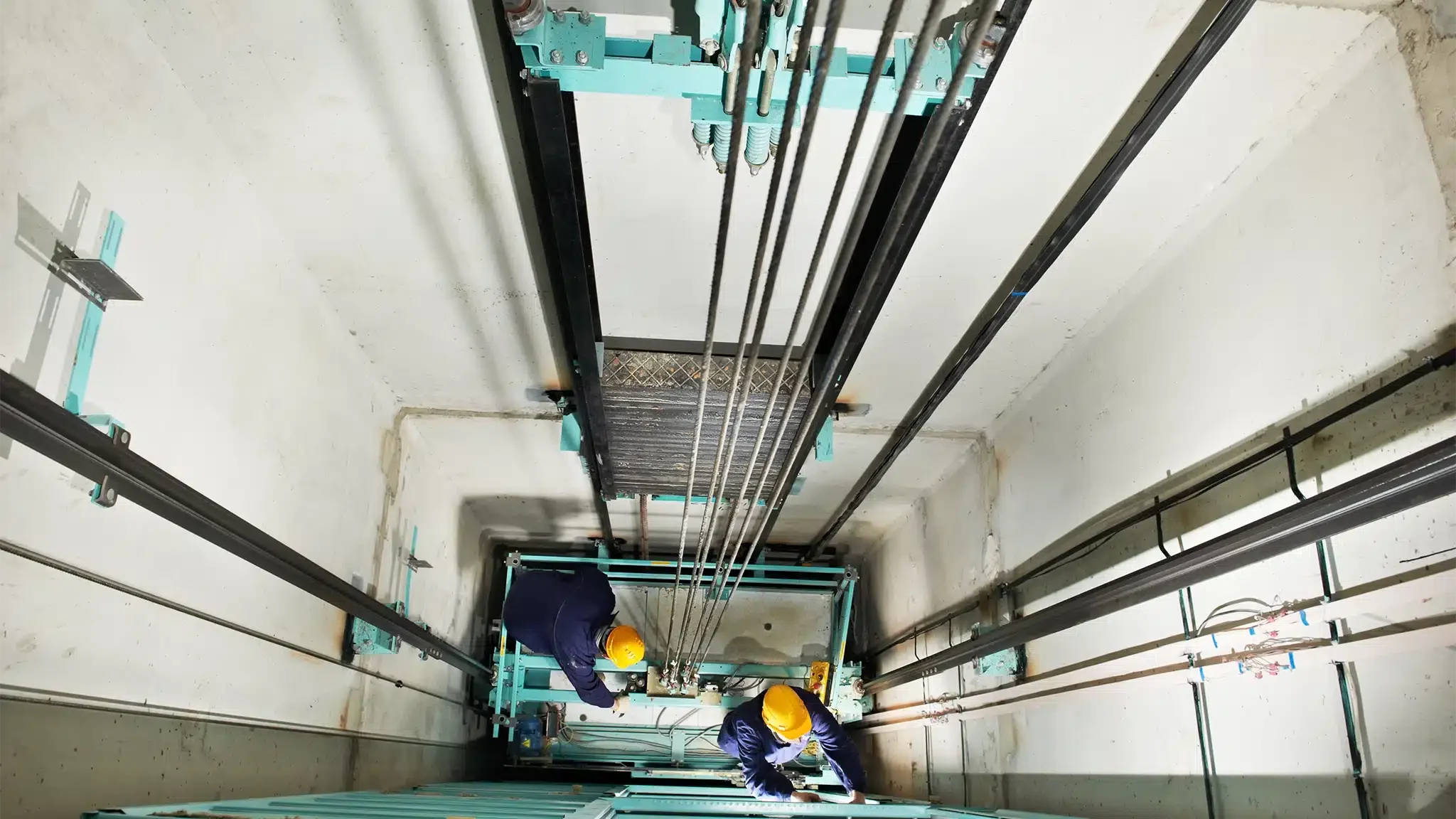
Executing a flawless residential lift deployment requires systematic collaboration between your chosen elevator engineering partner, civil contractors, and municipal electrical supervisors. Below is the step-by-step installation methodology implemented by senior field engineers in Telangana:
1.Engineering Site Audit and Shaft Analysis:Week 1.
Field engineers inspect the residential structural site to measure the raw hoistway dimensions, plumb alignment, pit depth, and overhead vertical clearance. Technical drawings are drafted to establish precise civil requirements for the building team.
2.Civil Shaft Preparation and Structural Waterproofing:Weeks 2–4.
The primary contractor casts the reinforced concrete lift shaft or builds a structural steel frame. Engineers enforce meticulous waterproofing along the base pit floor to eliminate groundwater seepage from damaging bottom-mounted buffer components.
3.Mechanical Rail and Bracket Alignment:Week 5.
Installation crews fix solid steel guide rails vertically along the hoistway walls using heavy-duty anchor brackets. Plumb lines are measured via high-precision laser levels to prevent operational cabin vibrations and early roller guide wear.
4.Drive Motor and Cabin Assembly Placement:Week 6.
Engineers mount the primary drive system—such as an energy-efficient gearless MRL traction motor or a hydraulic cylinder assembly—along with the structural counterweights. The passenger cabin frame is assembled directly within the guide paths.
5.Electrical Wiring, Safety Logic Integration, and ARD Setup:Week 7.
Technicians complete the wiring for the microprocessor controller panel, cabin operating panels (COP), and landing hall indicators. This stage integrates the mandatory Automatic Rescue Device (ARD) battery backup backup system.
6.Static Load Testing and Statutory Licensing Approval:Week 8.
The completed system undergoes rigorous dynamic weight tests, overspeed governor trips, and emergency brake evaluations. A comprehensive technical file is filed with the local Telangana lift inspectorate to secure the official “License to Run”.
Technical Types and Price Variations
The drive technology chosen is the single largest determinant of the eventual residential lift price in India. Each mechanical methodology carries unique structural requirements and spatial footprints.
| Elevator Technology | Primary Drive Mechanism | Standard Price Range (INR) | Best Suited Structural Profile |
| Gearless MRL Traction | Synchronous Permanent Magnet Motor + Counterweights | ₹12,00,000 – ₹18,00,000 | Multi-floor premium villas (G+3 to G+5) with high utilization |
| Hydraulic Drive | Central Hydraulic Oil Piston + Fluid Pressure Pump | ₹10,00,000 – ₹16,00,000 | Low-rise duplexes (G+1/G+2) with highly restricted overhead roof clearance |
| Pneumatic / Vacuum | Controlled Air Pressure Differentials within Sealed Tube | ₹11,00,000 – ₹22,00,000 | Retrofitting into existing heritage homes where civil excavation is prohibited |
| Traditional Geared Traction | Induction Motor + Worm-and-Gear Reduction Gearbox | ₹8,00,000 – ₹11,00,000 | Budget-conscious standalone residential apartments or simple row houses |
Gearless MRL Traction Elevators
Gearless Machine Room-Less (MRL) configurations represent the gold standard for high-end modern residential architectures. By utilizing a high-efficiency permanent magnet synchronous motor mounted directly inside the upper bounds of the shaft cavity, they eliminate the need for an independent rooftop brick room. This system provides unparalleled ride smoothness, operational acoustics under 50 dB, and up to 40% reduction in monthly power draws compared to traditional geared platforms.
Hydraulic Home Lifts
Hydraulic lift models operate by pushing a mechanical piston inside an oil-filled chamber via an electronic pressure pump unit. This design transfers the direct vertical weight of the carriage assembly down into the solid concrete floor foundation of the pit, rather than suspending it from overhead structural walls. This mechanical layout makes hydraulics a stellar choice for G+2 villas that cannot support heavy overhead structural loads or lack standard top-floor headroom clearances.
Pneumatic Vacuum Lifts
Pneumatic home elevators rely on turbine blowers to exhaust air from the upper chamber of a self-supporting panoramic glass or polycarbonate tube cylinder. The resulting pressure differential smoothly draws the specialized coaxial cabin piston upward. Because this entire assembly demands zero pit depth excavation and zero overhead construction, it represents the absolute least invasive option for pre-existing finished homes.

Key Benefits of Quality Residential Lift Installation
- Guaranteed Multi-Generational Accessibility: Installing a fully compliant residential elevator completely neutralizes vertical mobility barriers within the household. Senior family members managing severe arthritis or mechanical knee replacements can move between bedroom suites and ground-floor common spaces freely, preserving long-term family cohesion.
- Full Statutory Compliance with Regional Laws: Partnering with an engineering team that respects the technical provisions of the National Building Code (NBC) and the Telangana Lifts Act prevents costly municipal penalties and forced operational shutdowns. Licensed vertical transit systems give peace of mind regarding standard insurance coverages and local safety parameters.
- Enhanced Asset Liquidity and Valuation: In prime residential zones such as Kondapur or Jubilee Hills, high-end homebuyers actively look for homes with professionally integrated vertical transit systems. A modern, certified elevator increases a property’s market resale valuation while significantly reducing its average time spent listed on the active real estate market.
- Advanced Life Safety Integrations: High-caliber residential lift installations always feature critical fail-safe hardware. This includes safety gears that lock onto the guide rails during overspeed events, automatic rescue loops, light curtains to protect fingers from closing doors, and direct intercom terminals to handle unexpected structural power blackouts safely.
Common Mistakes or Misconceptions
Is the lowest upfront quotation always the safest option for a home lift?
No. Selecting an exceptionally low-cost residential elevator quote often means sacrificing vital safety components like the Automatic Rescue Device (ARD), using non-certified local control panels, or working with unaccredited installation teams who bypass standard Indian Standard (IS) structural engineering protocols.
Cut-Rate Elevator Quote (Low Cost)
│
▼
[Hidden Compromises Installed]
├── Non-Certified Generic Microcontrollers
├── Missing Automatic Rescue Device (ARD)
└── Thin Structural Cabin Sheet Metals
│
▼
[Long-Term Operational Failure]
├── Frequent Emergency Trappings
├── Skyrocketing Component Replacement Costs
└── Complete Rejection of Local Lift Licensing
In our field evaluations across Hyderabad, we frequently meet homeowners who are forced to completely strip out cut-rate, uncertified elevator mechanisms within just 24 to 36 months of operation due to frequent mechanical component failures, loud operational noise profiles, or a total lack of replacement parts. A reliable residential elevator is intended to function smoothly as a twenty-year asset. Sacrificing long-term engineering reliability for a lower upfront price point introduces severe liability, puts family safety at risk, and ultimately leads to much higher aggregate repair and maintenance costs down the road.
Real-World Residential and Commercial Scenarios
Scenario A: The Luxury Villa Retrofit in Gachibowli
A prominent business family occupying a pre-existing 3-story luxury villa in Gachibowli required immediate vertical accessibility due to a medical emergency affecting an elderly parent. Because the building was already structurally finished and lacked a pre-constructed internal concrete hoistway, the engineering challenge was retrofitting a system without compromising the foundation.
[Gachibowli Villa Structural Deficit] ──> No Concrete Hoistway Available
                                                     │
                                                     ▼
                                 [Accredited Engineering Remediation]
                                  Self-Supporting Glass & Steel Shaft
                                                     │
                                                     ▼
                                 [Total Investment Profile Analyzed]
                                  Base Equipment: ₹13,50,000
                                  Steel Frame & Glass Enclosure: ₹3,50,000
                                  Telangana Licensing & Taxes: Included
                                  Total Capital Outlay: ₹17,00,000
The engineering squad deployed a premium customized hydraulic glass lift wrapped inside an independent, self-supporting structural steel framework. The entire architectural intervention demanded a minimal pit layout, completely bypassing the need to disturb heavy structural foundation beams. The complete investment breakdown for this specific Gachibowli villa project came to ₹13,50,000 for the primary elevator mechanism, alongside ₹3,50,000 for the customized external panoramic glass enclosure and site preparations. This implementation successfully resolved the family’s mobility issue without altering the home’s primary masonry footprint.
Scenario B: The Standalone Commercial-Residential Mix in Hitech City
An independent real estate developer constructing a premium G+4 mixed-use boutique building near Hitech City needed a durable, high-speed vertical transit solution to serve ground-floor commercial offices and upper-level luxury duplex residences. The lift had to withstand constant use cycles while keeping long-term power bills minimal for the tenants.
[Hitech City High-Duty Requirement] ──> Constant Passenger Cross-Traffic
│
▼
[Accredited Engineering Remediation]
High-Speed Gearless MRL Traction Drive
│
▼
[Total Investment Profile Analyzed]
Base Gearless Mechanism: ₹11,00,000
3-Phase Power System Integration: ₹80,000
RCC Hoistway Alignment Check: Built-in
Total Capital Outlay: ₹11,80,000
The project specs called for a high-performance, 6-passenger Gearless Machine Room-Less (MRL) traction lift system. The core machinery cost was optimized at ₹11,00,000. Because the developer correctly integrated the exact hoistway coordinates directly into their initial structural blueprints, the civil team cast a perfectly plumb reinforced concrete shaft during early framing stages. This eliminated any corrective masonry fees during the final mechanics install, allowing the developer to smoothly secure the required state safety certifications on schedule.
Frequently Asked Questions
What is the starting price for a certified home lift in Hyderabad?
For a standard G+2 residential structure in Hyderabad, a basic, code-compliant 4-passenger residential elevator typically starts around ₹8,00,000, excluding civil masonry tasks and applicable GST. Premium customizable glass profiles or imported vacuum technology packages can range between ₹14,00,000 and ₹22,00,000 based on finish choices.
Does a residential lift require a dedicated 3-phase power connection?
Modern gearless MRL traction and advanced hydraulic home lift lines can be configured to run on standard domestic 230V single-phase power connections. However, for structures exceeding four floors or utilizing heavy-capacity panoramic cabins, installing a dedicated 3-phase power connection is highly recommended to distribute electrical loads evenly and prevent voltage drops.
How much space is required to install a standard 4-passenger home lift?
A standard 4-passenger residential elevator requires a clear internal shaft dimension of roughly 1300 mm width by 1300 mm depth. This spatial footprint accommodates a comfortable 300 kg passenger car configuration while leaving sufficient side tolerances for the mechanical guide rails and cabin safety shoes.
Is an automatic rescue device (ARD) mandatory for lifts in Telangana?
Yes. Under the clear statutory regulations of the Telangana Lifts Act, an operational Automatic Rescue Device (ARD) is a mandatory safety requirement for all residential and commercial elevator installations. The ARD monitors power input and automatically guides the passenger cabin to the closest floor landing during blackouts, safely opening the car doors to prevent trapping.
What is the annual maintenance price for a residential elevator?
A standard Annual Maintenance Contract (AMC) for a private residential lift in Hyderabad generally scales between ₹20,000 and ₹45,000 per year. This price range varies depending on whether you opt for a basic periodic check-up structure or a comprehensive parts-inclusive protection package.
Can a private elevator be installed in an old house without an existing shaft?
Yes. Pre-existing residences can be retrofitted by either fabricating an internal structural steel frame through slab cut-outs or constructing an external weather-proof concrete or glass hoistway tower attached directly to the exterior facade of the building.
How long does the on-site elevator installation process take from start to finish?
Once the primary lift shaft is delivered by the civil contractor in a perfectly square and plumb state, the mechanical assembly, wiring configuration, safety adjustments, and initial testing phases take between 3 to 5 weeks on-site.
Are panoramic glass lifts more expensive than standard stainless steel models?
Yes. Opting for a panoramic glass elevator cabin combined with a glass-enclosed viewing shaft typically adds a 20% to 40% premium over standard hairline-finish stainless steel cabins, due to the high cost of specialized laminated safety glass and precision framing materials.

Conclusion
Calculating what is the cost of a residential lift requires a holistic perspective that balances initial equipment outlays against decades of safe, low-maintenance operation. Prioritizing certified engineering methods, rigid safety code adherence, and robust build standards over cheap, non-compliant alternatives protects your home’s structural value and ensures family safety. For accurate budgeting and technical planning, consult established, industry-recognized elevator engineering authorities such as Exfol Friends Elevators Pvt. Ltd. to secure comprehensive site audits and transparent, itemized engineering estimates tailored to your specific architectural layout.

Leave a Comment