

Table of Contents
The Economics of Vertical Transportation: A Strategic Analysis of Elevator services in Hyderabad cost
The rapid transformation of Hyderabad’s skyline, driven by the expansion of the IT corridors in Gachibowli and HITEC City and the residential verticalization in Tellapur and Kokapet, has shifted the perception of elevators from luxury amenities to critical infrastructure. In the modern built environment, vertical transportation (VT) systems represent a significant portion of a building’s capital expenditure (CAPEX) and ongoing operational expenditure (OPEX).
For developers, architects, and facility managers, understanding the cost structures of elevator services in Hyderabad is not merely about comparing annual maintenance quotes. It is about evaluating engineering integrity, passenger throughput efficiency, and adherence to the increasingly stringent safety protocols mandated by regional authorities. This article serves as a technical roadmap for navigating the fiscal and operational complexities of elevator systems in one of India’s fastest-growing urban landscapes.
Industry Insight: Planning a new project or managing a high-rise? Engaging with an independent vertical transportation consultant early in the design phase can reduce long-term operational costs by up to 15% through optimized traffic analysis.
What are Elevator Services?
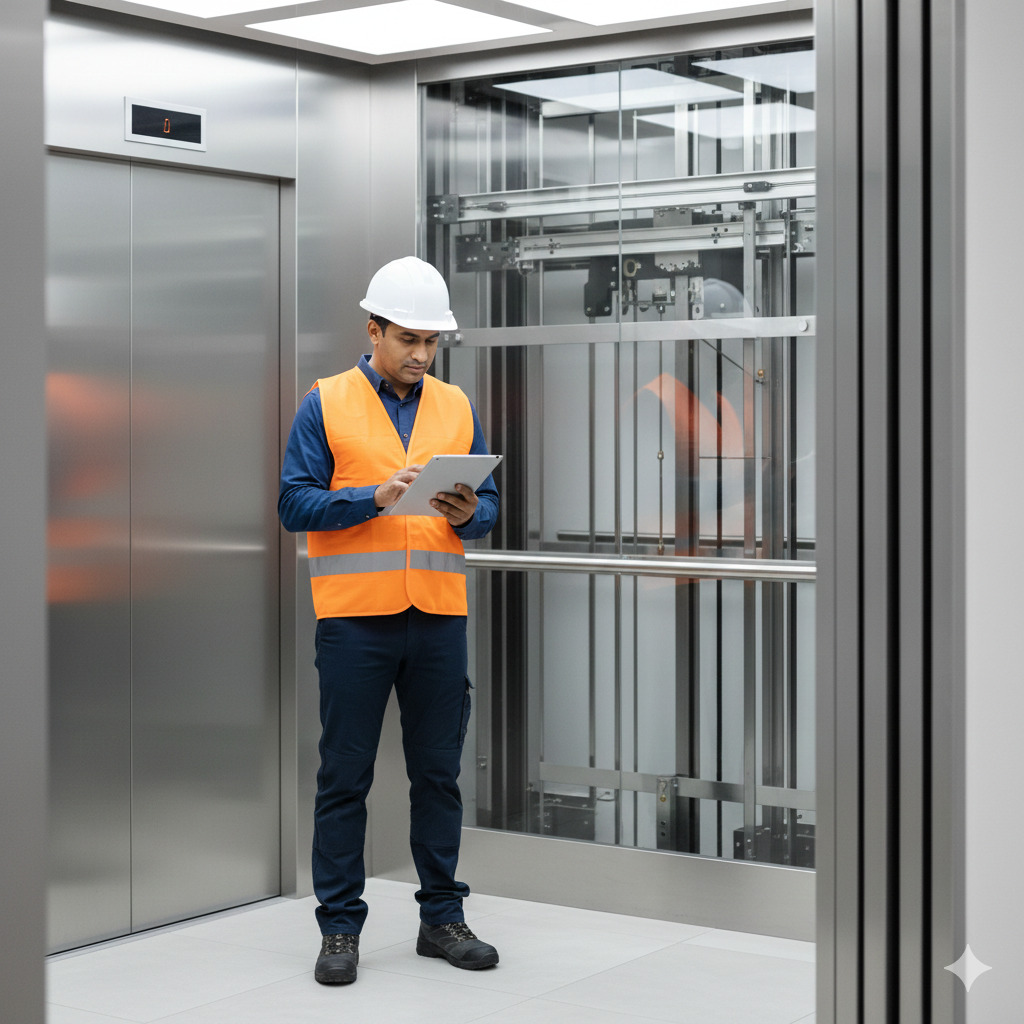
Elevator services encompass the specialized engineering lifecycle of vertical transportation systems, including precision installation, preventative maintenance, emergency repair, and full-scale modernization. These services ensure that mechanical and electronic components—such as traction machines, controllers, and safety gears—function within prescribed technical tolerances to provide safe, efficient passenger transit.
Industry Context: The Hyderabad Landscape
Urbanization and High-Rise Proliferation
Hyderabad has transitioned from a mid-rise city to a hub of “Super High-Rises.” With several residential projects now exceeding 40 and 50 floors, the technical demands on elevator systems have spiked. High-speed traction lifts with sophisticated group control systems are now the standard, moving away from simpler geared technologies.
Smart Building Integration
The “HITEC” influence has led to a surge in demand for smart elevators. These systems utilize Destination Control Systems (DCS) to group passengers by floor, reducing wait times and energy consumption. Integration with Building Management Systems (BMS) for real-time monitoring is no longer optional for Grade-A commercial spaces in Hyderabad.
Regulatory Environment
While India does not have a singular federal “Lift Act,” the Telangana Lifts Act and the National Building Code (NBC) 2016 dictate the safety standards in the region. Compliance involves rigorous initial testing and periodic inspections, all of which influence the service cost profile.
Technical Breakdown: The Engineering Perspective
To understand cost, one must understand the machine. An elevator is a complex interplay of three primary subsystems:
- The Motion Control Suite: The “brain” of the lift, including the Variable Voltage Variable Frequency (VVVF) drives that ensure smooth acceleration and leveling.
- The Hoisting Mechanism: Modern Hyderabad installations favor Permanent Magnet Synchronous Motor (PMSM) gearless machines. These are more energy-efficient and occupy less space (Machine Room-Less or MRL technology).
- The Safety String: A series of electromechanical interlocks, governors, and buffers designed to fail-safe.
Operational logic today relies on predictive algorithms. Instead of “Corrective Maintenance” (fixing what is broken), the industry is moving toward “Condition-Based Maintenance,” where sensors detect wear in the hoist ropes or door operators before a failure occurs.
Systems Comparison: Performance & Application
| System Type | Typical Application | Speed Range | Maintenance Intensity | Cost Profile |
| Hydraulic Lifts | Low-rise (2-4 floors), Private Villas | 0.3 – 0.6 m/s | Medium (Fluid checks) | Low CAPEX / Med OPEX |
| MRL Traction | Mid-rise Residential/Commercial | 1.0 – 1.75 m/s | Low to Medium | Med CAPEX / Low OPEX |
| High-Speed Traction | High-rise (20+ floors) | 2.5 – 6.0+ m/s | High (Specialized) | High CAPEX / High OPEX |
| Freight/Stretcher | Hospitals, Industrial Hubs | 0.5 – 1.5 m/s | High (Heavy wear) | Medium |
Risk & Compliance Considerations
Safety Codes
In Hyderabad, elevators must adhere to IS 14665 (Indian Standard for Electric Traction Lifts). Failure to comply doesn’t just result in legal liability; it drastically increases insurance premiums for the building owner.
Periodic Inspections
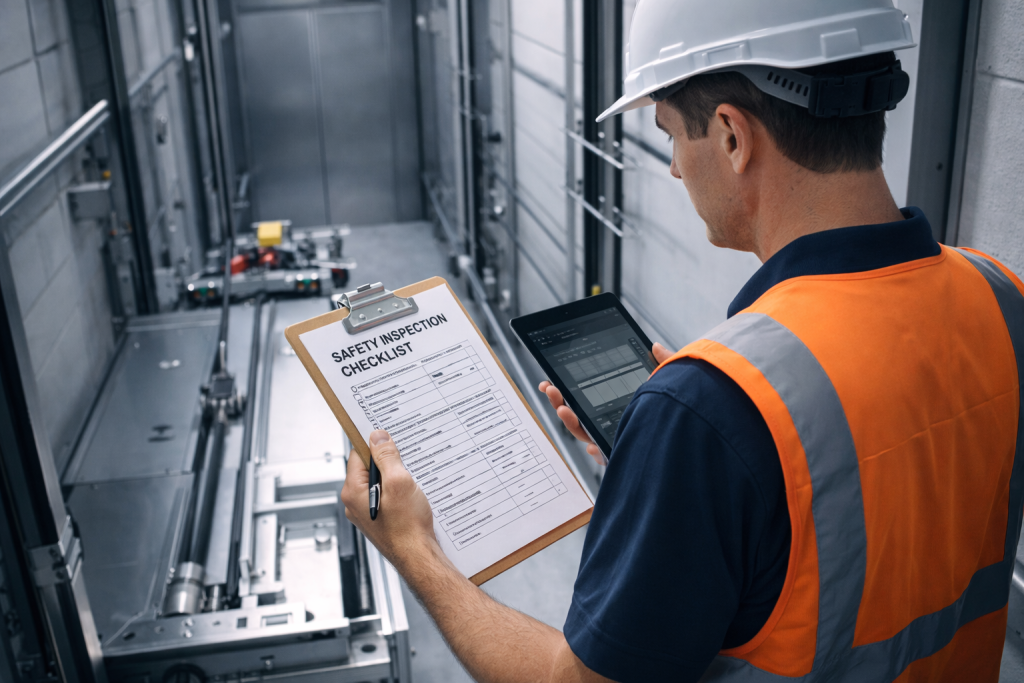
Service contracts must account for statutory inspections. A reputable service provider will facilitate the “License to Run a Lift,” ensuring that the ARD (Automatic Rescue Device) and overspeed governors are tested under load.
Long-term Operational Impact
Neglecting service to save on immediate costs leads to “Technical Obsolescence.” Once a controller’s microchips are no longer manufactured, a minor failure can force a multi-lakh modernization project years ahead of schedule.
Cost & Lifecycle Analysis
The cost of elevator services in Hyderabad is divided into three distinct phases:
1. Installation (CAPEX)
For a standard residential apartment (G+5), installation costs can range significantly based on capacity (6-passenger vs 13-passenger) and finish. High-speed systems for skyscrapers involve premium logistical costs due to the precision required in guide rail alignment.
2. Maintenance Contracts (OPEX)
- Annual Maintenance Contract (AMC): Covers basic labor and lubrication.
- Comprehensive Maintenance Contract (CMC): Includes the cost of major spare parts (e.g., ropes, pulleys, electronics). For commercial entities in Gachibowli, CMCs are preferred for budget predictability.
3. Modernization
After 15–20 years, systems require modernization. Partial modernization (replacing the controller and wiring) can extend life by 10 years, whereas full modernization involves replacing the machine itself.
Common Industry Mistakes
- Undersizing the Buffer: Builders often install fewer lifts than the “Population Analysis” suggests, leading to excessive wait times and premature mechanical wear.
- Ignoring the Shaft Environment: Hyderabad’s heat and dust can wreak havoc on sensitive electronics. Failing to provide adequate ventilation in the machine room or shaft top is a common cause of frequent VFD failures.
- Price-Only Selection: Choosing a service provider based solely on the lowest AMC quote often results in “ghost servicing,” where technicians sign off on logs without performing critical tension checks or safety tests.
Future Trends
- IoT and Predictive Maintenance: Real-time data transmission to a central hub allows for “Pre-determined service,” reducing downtime by up to 40%.
- Energy Recuperation: Modern drives can feed energy generated during braking back into the building’s power grid.
- Touchless Interfaces: Post-pandemic, Hyderabad has seen a rise in gesture-based and mobile-app-controlled elevators in corporate parks.
Conclusion
For the stakeholders shaping Hyderabad’s urban future, elevator services represent a long-term commitment to safety and building performance. Success lies in shifting the perspective from “cost center” to “value driver.” Precise engineering, rigorous compliance with the Telangana Lifts Act, and a forward-looking maintenance strategy are the hallmarks of a well-managed property. In the vertical city, the quality of your lift service is, quite literally, the lifeline of your infrastructure.


Leave a Comment