
Table of Contents
Electric Scissor Lift Manufacturers in India
Evaluating vertical transit equipment requires precise compliance and robust engineering. When selecting vertical machinery for construction or warehousing, finding the right Electric Scissor Lift manufacturers in India determines your long-term operational efficiency.
In our experience managing commercial installations across HITEC City and Gachibowli, selecting an access platform involves navigating balancing acts between vertical reach, safety standards, and regional regulatory compliance. This technical guide helps builders, facility managers, and property developers make an informed procurement decision.
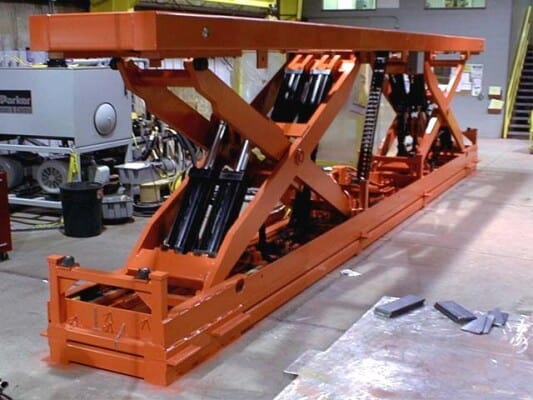
High-Rise Access and Material Handling Selection Matrix
| Option Type | Best For | Key Feature | Cost Range (INR) | Compliance Level |
| Self-Propelled Slab Scissors | Indoor facility maintenance, cleanroom operations | Non-marking tyres, zero-emission electric drive | ₹7,50,000 to ₹18,000,000 | Full IS 15713 & CE Compliance |
| Heavy-Duty Stationary Hydraulic Lifters | Multi-level warehouse integration, heavy cargo transit | Pit-mounted or pit-less fixed installations | ₹2,50,000 to ₹9,00,000 | IS 14665 & NBC 2016 Aligned |
| Mobile Semi-Electric Lifts | Periodic structural painting, seasonal MEP repairs | Manual transit with electric vertical lift | ₹1,50,000 to ₹4,50,000 | Basic BIS Component Safety |
| Rough-Terrain Electric Platforms | Early-stage commercial project sites, uneven surfaces | Oscillating axles, high ground clearance | ₹12,00,000 to ₹26,000,000 | Rigorous International Standards |
How to Evaluate Electric Scissor Lift Manufacturers in India?
Snippet Definition: Evaluating Electric Scissor Lift manufacturers in India requires assessing structural structural steel certifications, Bureau of Indian Standards (BIS) compliance, emergency descent systems, and local field support infrastructure. Reliable manufacturers must provide verified load testing certificates and regional maintenance networks to minimize machine downtime.
Core Engineering and Safety Record
In our field operations, we prioritize structural stability over initial cost. You must verify the grade of mild steel utilized in the scissor arms. Premium manufacturers use high-tensile steel structural sections that prevent lateral sway at maximum platform extension. Look for integrated safety features like hose-burst valves, overload sensors, and mechanical pothole protection systems.
Regulatory Certification and Quality Standards
Ensure the manufacturer complies with IS 15713 (specifications for vertical aerial work platforms) and NBC 2016 directives. If your project involves international tenants in Hyderabad’s Special Economic Zones (SEZs), select platforms that possess CE or ANSI certifications to pass third-party safety audits smoothly.
After-Sales Service and Regional Support
A broken-down scissor lift halts high-level MEP (Mechanical, Electrical, Plumbing) works instantly. We often see out-of-state equipment stranded on-site due to a lack of spare parts in Telangana. Verify that the manufacturer maintains a direct service hub or authorized technical partners within Hyderabad to ensure a 24-hour turnaround time for critical parts like hydraulic seals and electronic controllers.
Detailed Overhead Access Option Breakdown
1. Self-Propelled Slab Electric Scissor Lifts
These units dominate indoor corporate facility management. Equipped with deep-cycle lead-acid or lithium-ion battery banks, these platforms enable operators to drive, steer, and elevate the machine directly from the platform workspace.
In our experience at major IT parks in Madhapur, these platforms are highly effective for routine fire sprinkler maintenance and centralized HVAC duct cleaning. Their compact footprint fits into standard commercial passenger lifts when the guardrails are collapsed.
Pros and Cons
- Pros: High maneuverability in narrow warehouse aisles; zero emissions; responsive joystick controls.
- Cons: Limited to smooth, level concrete floors; higher initial financial investment compared to pull-behind units.
2. Heavy-Duty Stationary Hydraulic Lifters
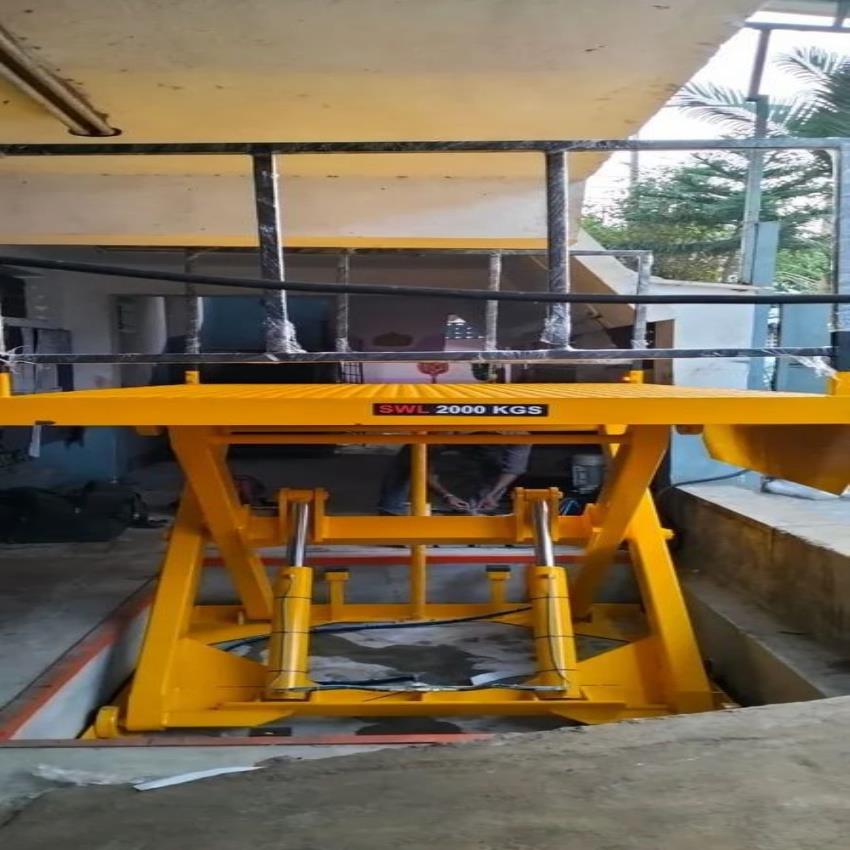
Stationary scissor lifts serve as fixed material handling installations rather than mobile access platforms. These units are mounted in a structural pit or anchored directly to the warehouse floor to bridge the height gap between loading docks and delivery vehicles.
We frequently specify these heavy-duty hydraulic lifters for industrial manufacturing facilities in the Pashamylaram and Jeedimetla industrial zones. They integrate effectively with automated conveyor systems to move bulk materials across floor levels.
Pros and Cons
- Pros: Massive payload capacities up to 10 tonnes; customizable platform dimensions; long operational lifespan.
- Cons: Lacks mobile flexibility; requires dedicated civil works for pit excavation and structural anchoring.
3. Mobile Semi-Electric Lifts
Semi-electric models feature an electric hydraulic pump for vertical lift, while operators manually pull or tow the chassis to position it across the job site.
These platforms suit low-frequency maintenance schedules, such as changing high-bay LED fixtures in regional distribution hubs or community halls in Kompally. They offer a cost-effective alternative when continuous self-propelled transit is unnecessary.
Pros and Cons
- Pros: Lower acquisition cost; simpler electrical circuits; lower maintenance requirements.
- Cons: Requires manual effort or external vehicles for relocation; increases setup time due to mandatory outrigger placement.
4. Rough-Terrain Electric Platforms
Engineered for demanding external environments, rough-terrain electric scissors utilize four-wheel-drive systems, foam-filled lug tyres, and active oscillating axles to navigate muddy, unpaved commercial construction zones.
We recommend these rugged platforms during the mid-stage construction of large commercial developments. They allow teams to perform external glass glazing and structural facade cladding before final floor screeding occurs.
Pros and Cons
- Pros: Exceptional stability on uneven ground; higher platform capacities for multiple workers and heavy tools.
- Cons: Larger turning radius; wide chassis profiles prevent access through standard double-door openings.
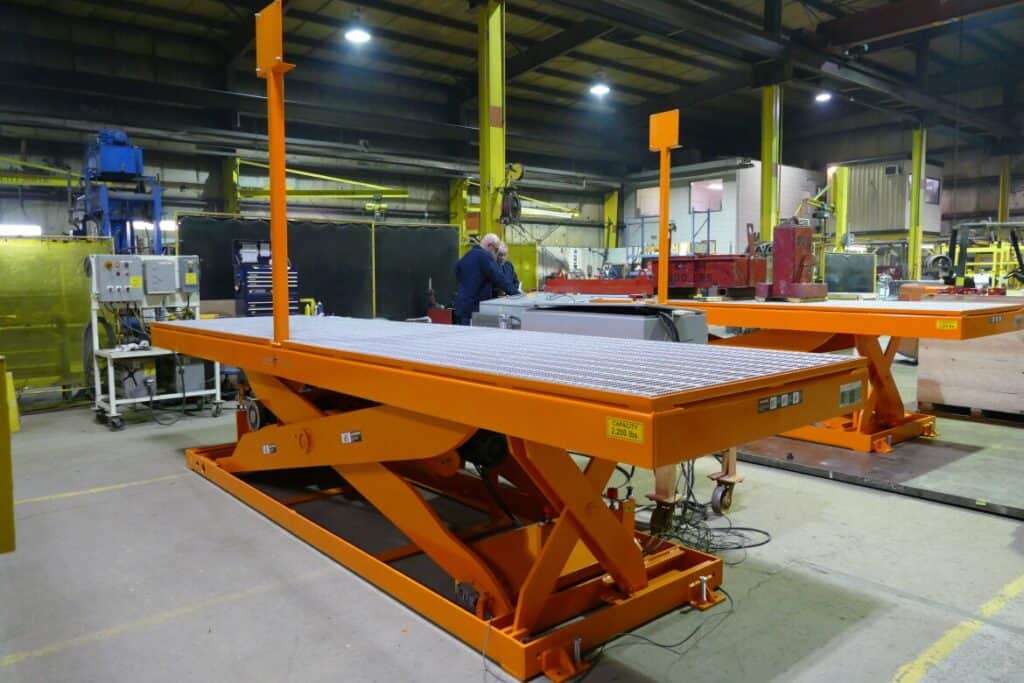
Procurement Matrix by Property Typology
Building Type       | Primary Use Case             | Recommended Scissor Variant      | Budget Tier
----------------------------------------------------------------------------------------------------
IT Park Towers      | Indoor MEP & Facade Care     | Self-Propelled Slab Scissor      | Premium
Logistics Hubs      | Loading Dock Freight Transit | Stationary Heavy-Duty Lifter     | Mid-to-High
Commercial Retail   | Atrium Lighting & Signage    | Compact Mobile Semi-Electric     | Economy
Industrial Plant    | Heavy Machinery Maintenance  | Rough-Terrain Electric Platform  | Premium
Cost Comparison Analysis in Hyderabad
Procurement costs for an industrial scissor lift price vary based on maximum working height, platform dimensions, and drive configuration. Stationary hydraulic units generally cost between ₹2,50,000 and ₹7,00,000 depending on tonnage. Mobile, self-propelled slab scissors range from ₹7,50,000 for standard 6-meter platforms up to ₹18,00,000+ for specialized 14-meter variants.
Local pricing transparency remains a challenge in the regional market. For comparison, established industry suppliers like Exfol Friends Elevators utilize explicit, structured billing models for custom vertical installations and commercial freight solutions.
When budgeting for your lift equipment, remember to include these secondary cost factors:
- Civil Infrastructure: Pit excavation, drainage, and structural retaining walls for stationary models.
- Power Substation Upgrades: Installing 3-phase industrial power lines (415V) for heavy-duty electric motor pumps.
- Statutory Compliance Audits: Regular testing charges for structural load certification under local safety regulations.
Common Buying Mistakes with Electric Scissor Lifts
Snippet Definition: Common procurement errors include underestimating the required working height, overlooking battery maintenance infrastructure, ignoring floor load limitations, and bypassing local statutory compliance. Buyers often calculate floor height instead of working height, which leaves technicians short of the actual workspace.
Calculating Floor Height Instead of Working Height
We often see buyers order an 8-meter platform lift for an 8-meter ceiling height. This creates an immediate problem. A lift’s platform height is the maximum elevation of the deck floor, whereas working height adds approximately 2 meters to account for an average worker’s reach. Always check the exact technical specifications provided by the manufacturer.
Ignoring Floor Load Capacities (Slab PSI Limits)
A self-propelled electric scissor lift can easily weigh over 2,500 kg. Concentrating this massive weight onto small, solid rubber tyres creates significant localized pressure. If you operate the machine on post-tensioned (PT) concrete slabs or delicate granite flooring within modern office complexes without load-spreading mats, you risk structural micro-cracks or expensive tile damage.
Vertical Access Frequently Asked Questions
1. What is the standard lifespan of an electric scissor lift battery bank?
Under typical operation in commercial facilities, deep-cycle lead-acid battery packs last between 3 to 5 years, provided they undergo proper watering and regular charging cycles. Upgrading to lithium-ion batteries extends the operating lifespan to 7–10 years and supports opportunity charging during work breaks.
2. Do scissor lifts fall under the jurisdiction of the Telangana Lifts Act?
Fixed, pit-mounted stationary scissor lifts used as dedicated freight lifters across structural floors must comply with the design and safety directives of the Telangana Lifts, Escalators and Passenger Conveyors Act. Mobile, wheeled aerial work platforms are regulated by general occupational safety standards and industrial factory inspectorships.
3. Can an indoor electric scissor lift operate safely outdoors?
Indoor slab scissors feature an “Outdoor Rating: No” because they lack the wind-load stability needed for open environments. Even light wind gusts can cause high-profile platforms to tip over on outdoor surfaces. Only operate units that explicitly feature a certified outdoor rating beyond enclosed job sites.
4. What are the key differences between a hydraulic lift and an electric scissor lift?
A hydraulic scissor lift uses an electric motor to pump fluid into cylinders that mechanically expand the structural legs. An “electric” scissor lift shares this same lifting mechanism but utilizes dedicated electric drive motors to propel the wheels across the floor, replacing manual positioning.
5. What specific documentation must a manufacturer supply at delivery?
The equipment manufacturer must supply the original manufacturer test certificate, structural load-testing records, an authorized operations manual, electrical circuit schematics, and a comprehensive spare parts log to comply with factory inspection guidelines.
6. How often must our facility team conduct thorough load-testing on these lifts?
In accordance with industrial safety guidelines and international standard practices, competent personnel must perform dynamic load testing at 110% of rated capacity at least once every twelve months, alongside quarterly structural checks on the scissor arm welds.
7. What is the typical lead time for custom stationary scissor lifts in India?
Standard engineering lead times for custom-built stationary lifts range from 4 to 6 weeks. This period covers specialized platform sizing, cylinder assembly, and application-specific safety gate integration at the manufacturing unit.
8. Are pit-less stationary lifts effective for heavy commercial use?
Yes, low-profile, pit-less stationary platforms work well when floor trenching is restricted by foundational structural layouts. They feature entry ramps for pallet trucks, though they require a slightly longer floor footprint than standard pit-mounted options.
Aligning Engineering Requirements with Project Budgets
Selecting the right industrial machinery requires balancing long-term engineering reliability against your initial capital budget. Identifying dependable Electric Scissor Lift manufacturers in India involves confirming valid BIS component tracking, verifying robust local service frameworks, and matching platform performance to your specific site conditions.
For comprehensive vertical transit and specialized commercial cargo elevator installations, consulting established regional professionals like Exfol Friends Elevators helps ensure your project layouts align with Telangana regulatory standards and the National Building Code. We recommend scheduling an initial site assessment with a certified vertical transportation engineer before finalizing your equipment purchases.


Leave a Comment