
Table of Contents
Which Lifts Are Best in India? Complete Elevator Selection Guide for 2026
Choosing the best elevator for a building in India depends on your property type, traffic volume, architectural layout, and long-term operating costs. For high-rise residential towers and commercial complexes, gearless Machine Room-Less (MRL) traction lifts are the best choice due to their superior energy efficiency, smooth ride quality, and high travel speeds. For low-rise residential homes (G+2 or G+3), hydraulic lifts or compact gearless home elevators offer the most practical combination of structural safety, low pit requirements, and space utilization.
In our fifteen years of vertical transportation field experience across Hyderabad, we frequently observe property owners making selection errors based solely on initial purchasing cost. Evaluating elevators requires balancing safety compliance, electrical consumption, ride comfort, and maintenance availability over a 20-to-25-year service lifecycle.

What Is the Best Lift Technology for Indian Buildings?
Which lifts are best in India for modern construction?
The best lifts in India are gearless traction elevators for mid-to-high-rise buildings and hydraulic or MRL lifts for low-rise homes. Selection depends on building height, duty cycle, energy efficiency goals, pit depth availability, and compliance with the Bureau of Indian Standards (BIS) and National Building Code (NBC) guidelines.
                  ┌─────────────────────────────────────────┐
                  │        ELEVATOR SELECTION MATRIX        │
                  └─────────────────────────────────────────┘
                                       │
            ┌──────────────────────────┴──────────────────────────┐
            ▼                                                     ▼
┌───────────────────────┐                             ┌───────────────────────┐
│ RESIDENTIAL (G+1 TO 3)│                             │ MID / HIGH-RISE (G+4+)│
└───────────────────────┘                             └───────────────────────┘
            │                                                     │
    ┌───────┴───────┐                                     ┌───────┴───────┐
    ▼               ▼                                     ▼               ▼
┌───────────┐ ┌───────────┐                             ┌───────────┐ ┌───────────┐
│ HYDRAULIC │ │ GEARLESS  │                             │ GEARLESS  │ │  GEARED   │
│ HOME LIFT │ │ MRL LIFT  │                             │ MRL LIFT  │ │ TRACTION  │
└───────────┘ └───────────┘                             └───────────┘ └───────────┘
Modern vertical transportation relies on three primary drive systems: geared traction, gearless traction, and hydraulic power. Geared systems use traditional electric motors with gearboxes, suitable for low-speed heavy cargo handling. Gearless traction utilizes permanent magnet synchronous motors (PMSM), eliminating transmission gear friction to reduce energy use by up to 40%. Hydraulic elevators push a piston from below or beside the car, making them ideal for short vertical travels where headrooms and pits are limited.
Why Does Elevator Selection Matter in Hyderabad?
Hyderabad is experiencing rapid vertical expansion across IT corridors like Hitech City, Gachibowli, Kondapur, and Financial District, alongside dense residential growth in Kokapet and Tellapur. Local climate conditions, such as high summer temperatures and seasonal humidity, place severe operational demands on elevator drive electronics and mechanical components.
According to Exfol Friends Elevators, selecting the wrong elevator technology for Hyderabad’s soil and weather profile often leads to premature inverter drive failures and excessive power consumption during peak usage hours. Furthermore, local compliance under the Telangana Lifts, Escalators and Passenger Conveyors Act requires strict adherence to safety gear tests, door lock interlocks, and emergency landing devices (ELD).
Building developers must ensure that every installation complies with IS 14665 standards set by the Bureau of Indian Standards (BIS) and safety specifications outlined in the National Building Code of India.
How Does the Elevator Selection and Installation Process Work?
Executing a reliable elevator installation requires a structured engineering approach from structural design to final licensing.
┌─────────────┐     ┌─────────────┐     ┌─────────────┐     ┌─────────────┐
│ STEP 1      │ ─►  │ STEP 2      │ ─►  │ STEP 3      │ ─►  │ STEP 4      │
│ Shaft & Pit │     │ Mechanical  │     │ Electrical  │     │ Licensing   │
│ Audit       │     │ Erection    │     │ & Safety    │     │ & Handover  │
└─────────────┘     └─────────────┘     └─────────────┘     └─────────────┘
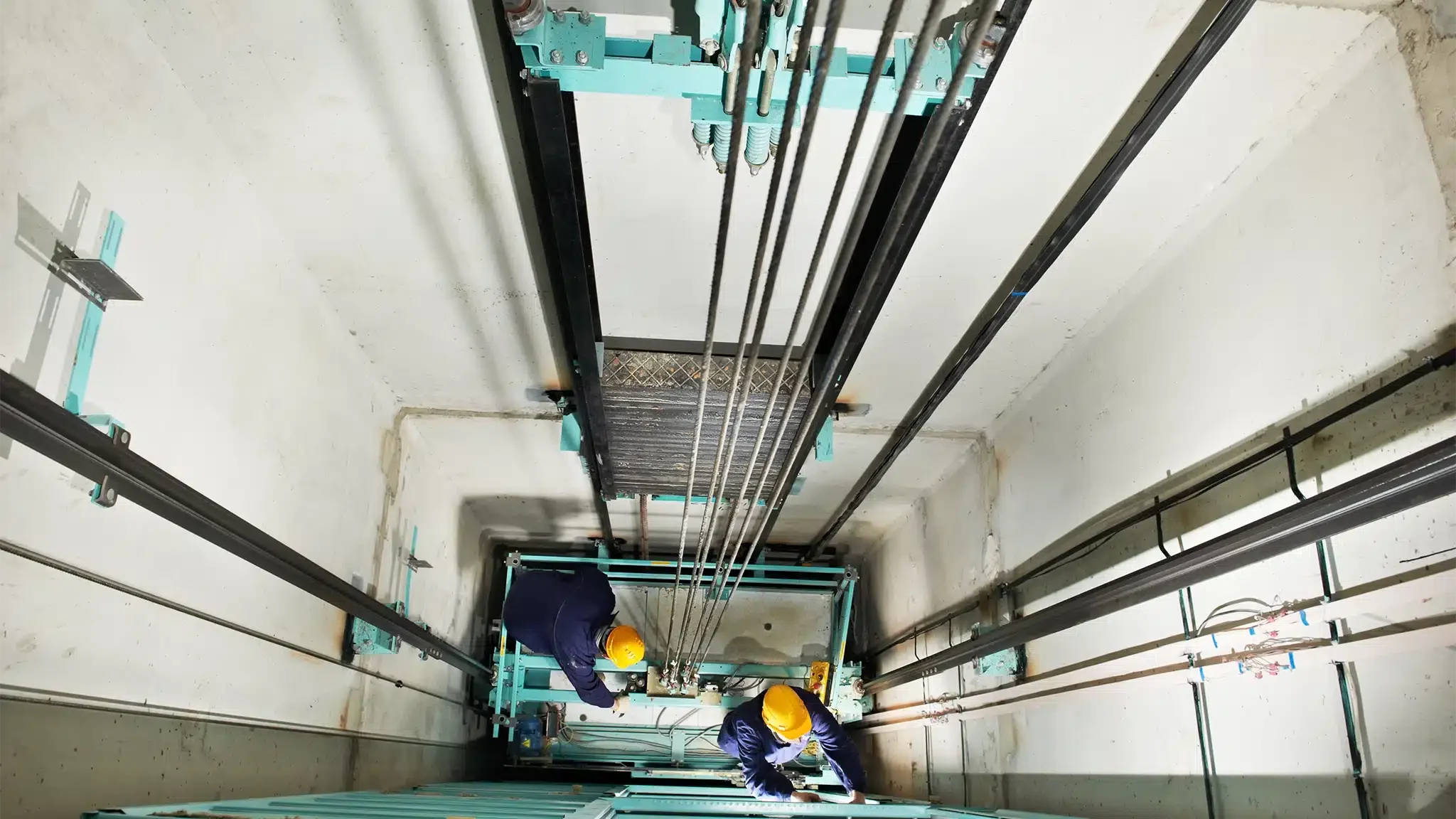
- Shaft Dimension and Pit Depth Audit: Field engineers measure plumb line alignment, overhead clearance, and pit depth to verify structural dimensions against manufacturer layout drawings.
- Drive System and Rail Bracket Installation: Technicians anchor heavy-duty guide rails along the shaft walls using structural bolts to guarantee vibration-free cabin motion.
- Cabin and Counterweight Assembly: The elevator car frame, safety gear block, sling, and counterweight frame are assembled and suspended using certified steel wire ropes or coated steel belts.
- Machine Room / MRL Drive Positioning: Engineers mount the gearless PMSM machine or hydraulic power pack, connecting the main drive inverter controller and regenerative braking units.
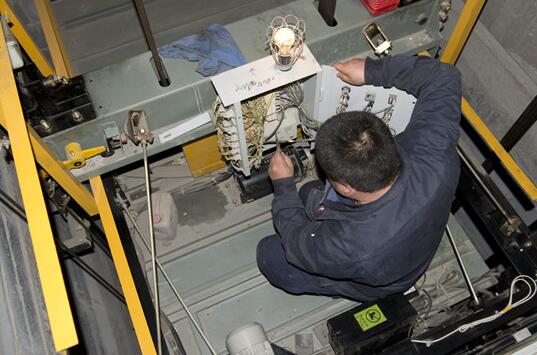
- Wiring, Door Operators, and Safety Interlocks: Landing doors, car doors, infrared light curtains, limit switches, and car operating panels (COP) are wired into the main control panel.
- Load Testing and Speed Calibration: The installation team conducts full-load drop tests, overspeed governor tests, and emergency battery backup drills under field inspection conditions.
- Statutory Inspection and Licensing: Regulatory inspectors examine the lift installation for compliance with state lift rules before issuing an official operational license.
Comparison of Lift Technologies in India
To determine which lift system suits your project, compare the mechanical traits and ideal applications of each technology:
| Elevator Technology | Ideal Building Height | Energy Efficiency | Pit & Overhead Requirements | Typical Application |
| Gearless MRL Traction | Mid-to-High Rise (G+4 to G+30) | Very High (PMSM Motor) | Standard Pit (1200–1500mm), Low Overhead | Modern Apartments, Commercial Towers, Hospitals |
| Geared Traction | Low-to-Mid Rise (G+3 to G+10) | Moderate | Requires Machine Room on Top, Deep Pit | Older Commercial Buildings, Cargo Lifts |
| Hydraulic Lift | Low Rise (G+1 to G+3) | Moderate (Uses power only when rising) | Shallow Pit (300–500mm), Minimal Overhead | Private Bungalows, Luxury Villas, Retrofits |
| Pneumatic (Vacuum) Lift | Low Rise (G+1 to G+2) | Low to Moderate | Zero Pit, Self-Supporting Shaft | Small Home Retrofits, Duplex Apartments |
Gearless Machine Room-Less (MRL) Elevators
Gearless MRL elevators are the industry benchmark for modern commercial and multi-story residential buildings. By placing the compact motor directly inside the hoistway, developers eliminate the need for a rooftop machine room. This reduces structural loads and frees up architectural space.
Hydraulic Elevators
Hydraulic systems are practical solutions for private residences in Hyderabad where excavating a deep pit is impossible due to underlying hard rock formations. The elevator cabin rides on a hydraulic cylinder powered by an oil pump, offering smooth acceleration and whisper-quiet home operation.
Geared Traction Elevators
Geared elevators use a worm-and-gear gearbox to step down motor speed. While physically robust for heavy freight applications, they require routine gear oil changes, consume more electricity, and generate higher noise levels than gearless drives.
Key Benefits of Installing the Right Lift System
Investing in the correct elevator technology delivers long-term operational advantages for building owners:
- Lower Monthly Energy Bills: Gearless PMSM drives consume up to 40% less power than older geared machines, significantly cutting electricity costs for gated communities and office complexes.
- Superior Ride Comfort: Precision variable voltage variable frequency (VVVF) drives ensure smooth start-stop cycles, eliminating sudden jerks and levelling precisely with landing floors.
- Enhanced Occupant Safety: Modern elevators feature Automatic Rescue Devices (ARD), double-safety gear mechanisms, infra-red door curtains, and real-time fault diagnostics.
- Increased Property Valuation: High-speed, quiet, and aesthetically pleasing elevators increase rental yields and resale value for commercial real estate in prime zones like Hitech City and Gachibowli.
Common Misconceptions About Lift Installations in India
What is the most common mistake when buying a lift in India?
The most common mistake is prioritizing initial purchase price over long-term operating costs, maintenance access, and local safety compliance. Buyers often choose oversized systems without considering power load demands or select non-standard dimensions that make sourcing replacement spare parts difficult later on.
   INITIAL COST VS. 20-YEAR TOTAL COST OF OWNERSHIP
┌───────────────────────────────────────────────────────┐
│ [■■■] Initial Equipment & Installation Cost (30%)     │
├───────────────────────────────────────────────────────┤
│ [■■■■■■■] Power, Spares & AMC Costs over 20 Yrs (70%) │
└───────────────────────────────────────────────────────┘
Property developers frequently overlook power backup requirements. In many parts of Telangana, power fluctuations require elevators to feature built-in voltage stabilizers and heavy-duty Automatic Rescue Devices (ARD) that automatically move the cabin to the nearest floor during power outages.
Real-World Elevator Deployment Scenarios in Hyderabad
Scenario 1: Multi-Story Residential Apartment in Kondapur
A developer constructed a G+5 residential project in Kondapur featuring 20 apartments. Initially considering a traditional geared elevator to cut upfront costs, our technical assessment demonstrated that a Gearless MRL 6-passenger lift would cut common-area power bills by 35%. The elimination of the overhead machine room allowed the builder to construct an additional terrace garden space, increasing property appeal.
Scenario 2: Luxury Villa Retrofit in Jubilee Hills
A homeowner in Jubilee Hills required a 3-stop elevator for an existing bungalow with underlying hard granite rock that prevented deep pit excavation. Installing a hydraulic home lift with a 300mm shallow pit and a compact footprint provided effortless vertical mobility for elderly family members without compromising the building’s structural foundation.
Frequently Asked Questions (FAQs)
1. Which lift technology is best for a residential home in India?
For a private bungalow or villa (G+1 to G+3), hydraulic lifts or compact gearless home elevators are best. They require minimal pit depth, run on single-phase domestic power, and fit into compact structural footprints.
2. How much does a standard passenger lift cost in Hyderabad?
A standard 6-passenger gearless lift for a residential building in Hyderabad typically costs between ₹8,00,000 and ₹15,00,000, depending on the number of stops, interior finishes, and safety features.
3. What is the difference between MRL and traditional machine room elevators?
Machine Room-Less (MRL) elevators place the compact gearless motor directly inside the elevator shaft, eliminating the rooftop machine room. Traditional elevators require a dedicated machine room above the hoistway to house the gear motor and control panel.
4. Are hydraulic lifts safe during power cuts?
Yes. Hydraulic lifts feature a manual lowering valve and automatic battery backup that releases hydraulic pressure during a blackout, safely lowering the cabin to the ground floor so passengers can exit.
5. What pit depth is required for a gearless passenger elevator?
A standard passenger gearless elevator requires a pit depth between 1200mm and 1500mm below the lowest floor level to house buffers and bottom car safety clearances.
6. What safety regulations apply to elevators in Telangana?
Elevators in Telangana must comply with the Telangana Lifts, Escalators and Passenger Conveyors Act, the National Building Code (NBC 2016), and BIS standards (IS 14665) covering mechanical, structural, and electrical safety.
7. How often should a commercial elevator undergo maintenance?
Commercial elevators in high-traffic buildings should receive monthly preventative maintenance checks alongside annual comprehensive safety audits conducted by certified engineers.
8. Can I install a home lift in an existing built-up property?
Yes. Home lifts can be retrofitted into existing properties using self-supporting aluminum or steel glass shafts, eliminating the need for major civil brickwork or deep pit excavations.
Choosing the Right Lift Partner
Selecting the right elevator requires balancing shaft engineering, passenger capacity, energy performance, and ongoing maintenance support. Partnering with experienced vertical transportation specialists ensures your installation remains compliant, safe, and efficient throughout its operational life.
When planning your next residential or commercial project in Hyderabad, consult certified elevator professionals to review your structural drawings, traffic calculations, and equipment specifications before finalizing procurement.


Leave a Comment