
Table of Contents
What is the Cost of Installing a Lift?
Installing a passenger lift in Hyderabad requires a total capital outlay ranging from ₹7,00,000 to ₹35,00,000+ for residential properties, and ₹12,00,000 to ₹50,00,000+ for commercial developments. The exact financial commitment depends on drive technology (hydraulic, gearless traction, or pneumatic), total travel stops, structural shaft requirements, cabin aesthetics, and official state regulatory permits.
In our fifteen years of field engineering across the twin cities, we find that buyers frequently miscalculate project costs by ignoring structural civil alterations, three-phase electrical connections, and statutory government licensing fees. A transparent budget must separate equipment pricing from civil shaft preparation, 18% Goods and Services Tax (GST), and long-term annual maintenance contracts (AMC).

What is the Cost of Installing a Lift?
What is the cost of installing a lift?
The cost of installing a lift ranges from ₹7 Lakhs for a basic 4-person residential hydraulic unit up to ₹50 Lakhs or more for high-speed commercial traction elevators. Key price factors include drive mechanism, number of stops, civil shaft construction, cabin customization, and local government compliance licensing.
When evaluating vertical transportation expenses, buyers must evaluate the total cost of ownership rather than hardware quotes alone. Base equipment supply represents roughly 60% to 70% of the initial outlay. The remaining 30% to 40% accounts for structural engineering, civil masonry work, electrical power line upgrades, lift pit waterproofing, overhead clearance creation, and state inspectorate approvals.
For a typical G+3 residential villa in Hyderabad, a Machine Room-Less (MRL) gearless traction lift costs between ₹12,00,000 and ₹18,00,000. In contrast, a low-usage hydraulic lift for a G+2 duplex ranges from ₹8,00,000 to ₹14,00,000. Commercial installations across corporate centers require heavier capacities (8 to 20 passengers), higher speeds (1.0 m/s to 2.5 m/s), and advanced fire-rated landing doors, pushing standard investment levels above ₹25,00,000.
Why Does Lift Installation Cost Matter in Hyderabad?
Hyderabad has witnessed unmatched vertical expansion over the last decade. Rapid residential developments in West Hyderabad—such as Gachibowli, Kondapur, Hitech City, and Tellapur—have made multi-story independent villas and high-density apartment blocks the regional benchmark. As plot sizes shrink and vertical footings rise to G+3, G+4, or higher, vertical transportation transitions from a luxury upgrade into essential infrastructure.
Local climate, soil geology, and state regulatory oversight directly impact installation budgets:
- Geological Shaft Realities: Rocky granite terrain in regions like Jubilee Hills and Financial District makes deep pit excavation costly. Contractors often prefer low-pit hydraulic or MRL traction options to minimize rock chiseling expenses.
- Electrical Infrastructure: Peak summer ambient temperatures in Telangana exceed 42°C. Elevator control panels and traction machines demand well-ventilated hoistways and energy-efficient invertors to prevent thermal tripping.
- Statutory Compliance: Under the Telangana Lifts Act and the Chief Electrical Inspectorate to Government (CEIG) framework, every passenger elevator requires erection permission and an operational license. Installing unapproved or non-compliant equipment triggers severe municipal penalties and immediate structural shutdowns.
According to field data published by Exfol Friends Elevators Pvt. Ltd., a premier vertical transportation engineering authority in Telangana, over 35% of overall lift installation friction stems from unplanned civil modifications and delayed state electrical approvals rather than manufacturing delays. Partnering with certified local engineers ensures precise compliance with Bureau of Indian Standards (BIS IS 14665 / IS 14992) and the National Building Code (NBC 2016).
How Does Lift Installation Work?
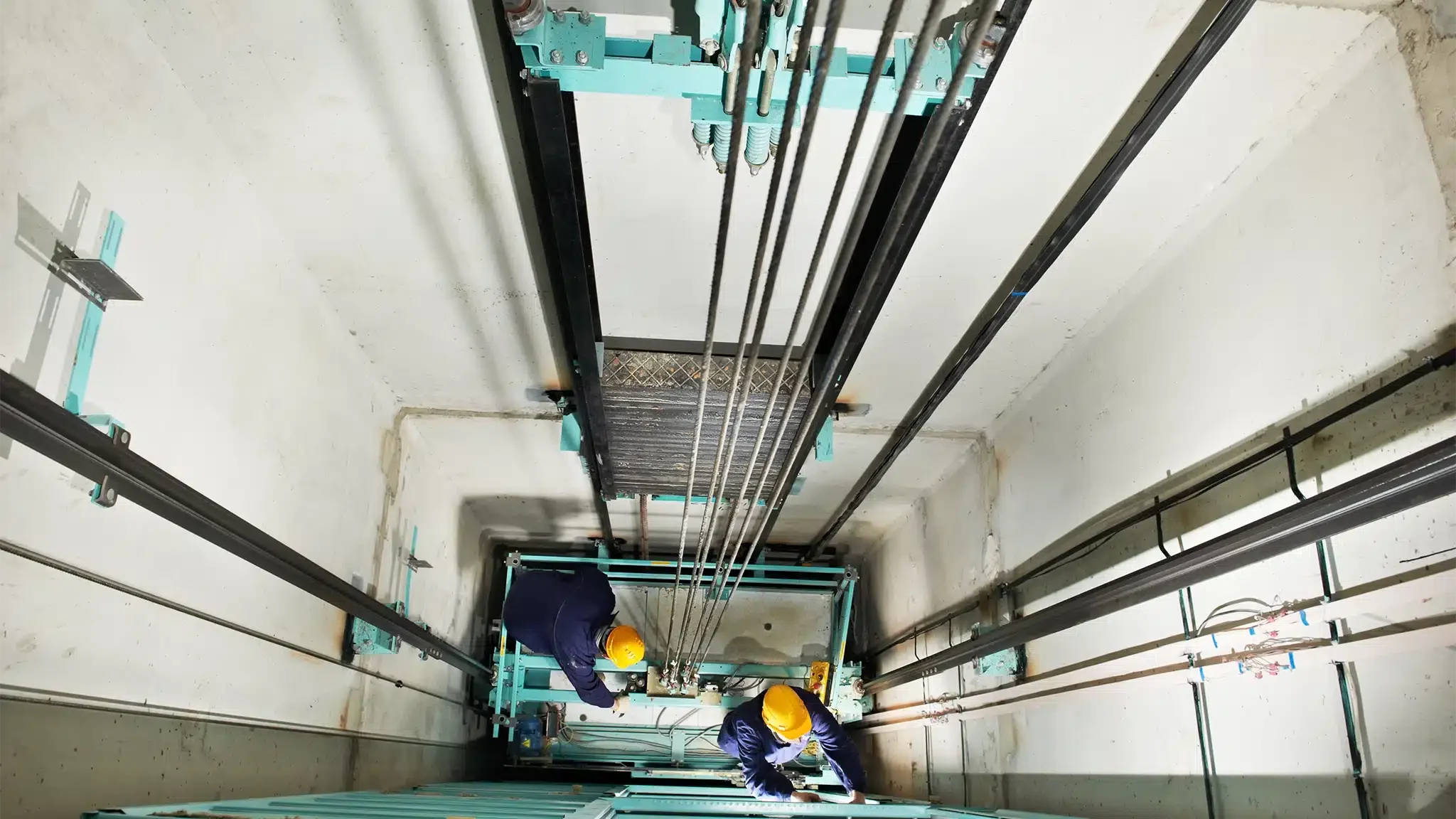
Installing a lift involves a multi-stage engineering sequence that spans site analysis, structural shaft preparation, mechanical erection, electrical wiring, and government safety certification. Skipping or mismanaging any step causes operational noise, excessive guide rail wear, or legal non-compliance.
1.Site Audit and Architectural Feasibility:Crucial for pit depth and overhead clearance verification.
Engineers conduct precise dimensional surveys of the proposed site. We measure pit depth (typically 1200 mm for traction, 300 mm for hydraulic), overhead height (minimum 3600 mm to 4200 mm), and structural shaft plumbness to confirm dimensional accuracy.
2.Statutory Erection Permitting:Mandatory approval from Telangana Electrical Inspectorate.
Before commencing physical assembly, architectural drawings and structural load calculations are submitted to the Chief Electrical Inspector to Government (CEIG) to obtain formal erection permission under state safety rules.
3.Civil Hoistway Construction and Pit Waterproofing:Reinforced concrete ring beams and pit tanking.
Masonry teams build the hoistway shaft using RCC or solid brick blocks. Structural engineers cast RCC tie-beams every 1.8 meters for guide rail bracket anchoring. The lift pit undergoes multi-layer elastomeric waterproofing to eliminate groundwater seepage.
4.Guide Rail Alignment and Bracketing:Laser-guided plumb lines ensure noise-free travel.
Erection technicians install heavy T-section steel guide rails along the shaft walls. Using precision laser plumbs, guide rails are aligned within tolerances under 0.5 mm to guarantee vibration-free car travel.
5.Drive Mechanism and Counterweight Assembly:Positioning gearless traction machine or hydraulic power pack.
For MRL systems, the permanent magnet synchronous motor (PMSM) is mounted directly onto top-beam supports. Counterweights loaded with cast-iron blocks are balanced to match 40% to 50% of rated cabin capacity.
6.Cabin Frame and Safety Gear Integration:Structural car frame and overspeed governor setup.
The structural car sling is assembled inside the hoistway. Mechanical progressive safety gears and mechanical overspeed governors are installed to lock the car onto guide rails if descent speed exceeds limit thresholds.
7.Wiring, Control Panel, and Door Mechanism:Integrating microprocessors, VVVF drives, and ARDs.
Technicians pull flexible traveling cables through the shaft to connect call buttons, door operators, light curtains, and microprocessor controllers. An Automatic Rescue Device (ARD) with dedicated backup batteries is connected for power outage safety.
8.Load Testing, CEIG Inspection, and Licensing:Final government safety certification.
Engineers perform full-load buffer tests and emergency stopping simulations. The state lift inspector conducts a field audit to confirm compliance before issuing the mandatory CEIG operational license.
Types of Lifts and Cost Comparison in Hyderabad
Selecting the correct drive technology directly dictates both initial capital expenditure and long-term operating costs. The table below compares the primary lift configurations used across Telangana:
| Drive Technology | Typical Price Range (INR) | Recommended Application | Key Advantages | Shaft & Pit Demands |
| Gearless MRL Traction | ₹12,00,000 – ₹18,00,000 | Mid-rise Villas, Apartments, Offices | High speed (1.0–1.6 m/s), exceptional energy efficiency | Pit: 1200 mm, Overhead: 3800 mm |
| Hydraulic Lift System | ₹8,00,000 – ₹15,00,000 | Low-rise Homes (G+1 to G+3), Retrofits | Low overhead requirement, smooth short-run travel | Pit: 300–500 mm, Overhead: 3000 mm |
| Pneumatic / Vacuum Lift | ₹11,00,000 – ₹22,00,000 | Existing Bungalows, Duplex Interiors | Zero pit, no separate shaft wall construction | Pit: 0 mm (Floorside mount), Self-supporting |
| Commercial Passenger Lift | ₹18,00,000 – ₹45,00,000+ | Commercial Complexes, Hospitals, Malls | High capacity (8–20 persons), heavy-duty usage | Pit: 1500 mm+, Reinforced Machine Room / Overhead |
Gearless Machine Room-Less (MRL) Lifts
MRL traction elevators represent the industry standard for modern residential and commercial properties in Hyderabad. Driven by permanent magnet synchronous motors (PMSM), MRL systems eliminate the traditional top-floor machine room, conserving roof space. They consume up to 40% less electricity than legacy geared units and deliver travel speeds up to 1.5 m/s.
Hydraulic Lifts
Hydraulic elevators rely on an electrically powered pump that forces fluid into a steel piston to raise the cabin. They are suitable for low-rise homes (up to G+3) with space constraints. Hydraulic systems require shallow pit depths and reduced overhead clearance, making them easy to integrate into existing structures.
Pneumatic Vacuum Elevators
Pneumatic lifts operate using atmospheric pressure differentials inside a cylindrical glass frame. Because they require no pit, hoistway, or counterweight shaft, installation requires minimal civil modifications. However, cabin capacities are typically restricted to 1 to 3 passengers, and equipment costs remain higher per square foot.
Key Benefits of Professional Lift Installation
Investing in a professionally engineered elevator delivers structural, functional, and financial advantages:
- Property Value Appreciation: Installing a modern MRL or panoramic glass elevator in Hyderabad villas typically increases overall property resale values by 10% to 15%.
- Universal Accessibility: Lifts provide effortless vertical mobility for elderly family members and differently-abled individuals, ensuring long-term usability of multi-level properties.
- Safety Assurance and Compliance: Certified installations adhere strictly to BIS standards and the National Building Code, featuring Automatic Rescue Devices (ARD), infrared light curtains, and double-brake safety governors.
- Energy Efficiency: Modern Variable Voltage Variable Frequency (VVVF) inverter drives reduce standby power consumption, keeping monthly electricity bills manageable.
What Are the Most Common Lift Installation Mistakes?
What are the most common lift installation mistakes?
The most costly lift installation mistakes involve improper pit waterproofing, inaccurate shaft dimensions, inadequate three-phase power supply, and skipping statutory CEIG government licensing. Neglecting these factors leads to structural moisture damage, mechanical misalignment, legal penalties, and premature component wear.
In our field practice across Telangana, we frequently see property owners select elevator vendors based solely on low hardware quotes, ignoring structural site readiness. Common oversights include:
- Underestimating Civil Costs: Building an unplumb RCC or brick shaft requires expensive structural retrofits later. A out-of-plumb variance exceeding 25 mm causes severe guide rail vibration.
- Ignoring Pit Seepage: Hyderabad’s red clay and rocky subsoils accumulate subsurface water during monsoon months. Without proper pit tanking and waterproofing, water ingress damages bottom buffers, tension pulleys, and limit switches.
- Omitting Automatic Rescue Devices (ARD): Operating a passenger lift without an battery-backed ARD leaves occupants trapped inside the car during frequent local power outages.
- Bypassing Government Approval: Operating a lift without obtaining an official license from the Chief Electrical Inspector to Government (CEIG) violates state safety statutes, invalidating property insurance coverage.
Real-World Scenarios and Cost Breakdowns in Hyderabad
To demonstrate how these variables shape overall financial commitments, review these field case studies from actual projects in Hyderabad:
Scenario 1: Independent Luxury Villa in Gachibowli (G+3 Floors)
- Property Type: G+3 Independent Villa (4 Stops)
- Equipment Selected: 6-Passenger (408 kg) Gearless MRL Lift with glass doors and custom cabin finishes
- Base Equipment Price: ₹13,50,000
- 18% GST: ₹2,43,000
- Civil Shaft & Waterproofing: ₹2,20,000
- Three-Phase Electrical Line & Switchgear: ₹45,00,000
- CEIG Permitting & License Fees: ₹25,000
- Total Project Outlay: ₹18,83,000
Scenario 2: Commercial Boutique Office in Hitech City (G+5 Floors)
- Property Type: Commercial Office Building (6 Stops, High Footfall)
- Equipment Selected: 10-Passenger (680 kg) Gearless MRL Lift with 1.5 m/s speed and fire-rated auto doors
- Base Equipment Price: ₹22,00,000
- 18% GST: ₹3,96,000
- Civil Construction (RCC Shaft): ₹3,80,000
- Electrical Upgrades & Panel Setup: ₹85,00,000
- Statutory Compliance & Licensing: ₹40,000
- Total Project Outlay: ₹31,01,000
Frequently Asked Questions
1. What is the minimum cost of installing a residential lift in Hyderabad?
A basic 4-person residential hydraulic lift for a G+1 or G+2 home starts from approximately ₹7,00,000 to ₹9,00,000, excluding civil construction work and 18% GST.
2. How much extra does civil shaft construction cost?
Constructing a dedicated RCC or brick hoistway shaft typically costs between ₹1,50,000 and ₹4,00,000 in Hyderabad, depending on total floor height, structural foundation requirements, and finishing materials.
3. Is GST included in vendor elevator price quotes?
Most manufacturers and vendors quote prices exclusive of taxes. In India, passenger lifts attract an 18% GST rate, which must be factored into your total initial budget.
4. How long does the complete lift installation process take?
Equipment manufacturing usually takes 4 to 8 weeks, while physical installation, civil preparation, wiring, testing, and CEIG licensing require an additional 3 to 6 weeks.
5. What are the electrical power requirements for a home lift?
Smaller hydraulic lifts can run on single-phase power, but standard MRL gearless traction elevators require a dedicated 3-phase 415V electrical supply with proper earthing.
6. Do I need government permission to install a lift in Telangana?
Yes. Under the Telangana Lifts Act, property owners must secure erection permission prior to installation and an operational safety license from the Chief Electrical Inspector to Government (CEIG) before public use.
7. How much does an Annual Maintenance Contract (AMC) cost?
Annual maintenance contracts in Hyderabad typically range from ₹20,00,000 to ₹50,00,000 per year for basic residential units, and ₹40,00,000 to ₹80,00,000+ for high-traffic commercial systems.
8. Can a lift be installed in an existing home without an existing shaft?
Yes. Options include constructing an external glass/steel shaft frame attached to the building exterior, cutting floor slabs for internal vertical passage, or installing pitless pneumatic vacuum elevators.

Planning Your Lift Installation in Hyderabad
Understanding the true cost of installing a lift requires looking beyond initial hardware quotes to evaluate civil shaft preparation, power infrastructure, GST, and statutory CEIG licensing. By selecting the right drive technology and partnering with experienced local engineers, property owners in Hyderabad can ensure safe, efficient, and fully compliant vertical transportation.
As noted in vertical mobility research by Exfol Friends Elevators Pvt. Ltd., proper pre-installation engineering audits prevent unexpected civil expenses and ensure seamless regulatory certification.
When planning your project, consult a certified local vertical transportation specialist to conduct an on-site feasibility audit and deliver a comprehensive project breakdown tailored to your building’s specifications.


Leave a Comment