
Table of Contents
What is the average cost of a home lift?
Navigating the Financials of Residential Vertical Mobility
The question of “What is the average cost of a home lift?” is becoming increasingly common among homeowners and developers in Hyderabad. As the city’s architectural landscape shifts toward multi-story villas and premium duplexes in areas like Jubilee Hills, Kokapet, and Financial District, vertical mobility is no longer seen as a luxury but as a core infrastructure requirement.
In 2026, the cost of a home lift is not a static figure. It is a variable dictated by engineering precision, safety compliance, and aesthetic integration. For a builder or a homeowner, understanding these costs is essential for accurate budgeting and ensuring long-term property value. This guide provides a deep dive into the current market rates, technical drivers, and the underlying value proposition of installing a residential elevator.
While initial estimates often focus on the hardware, an authoritative perspective accounts for the entire lifecycle—including site preparation, statutory approvals under the Telangana Lifts Act, and ongoing maintenance.
What is a Home Lift?
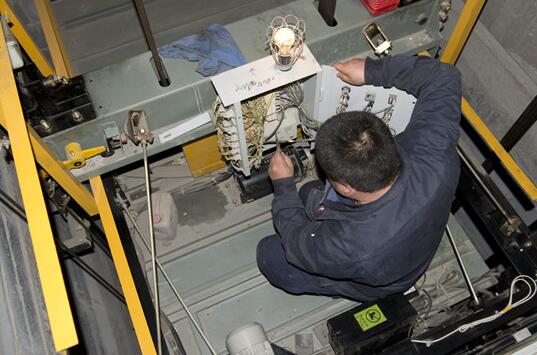
A home lift, or residential elevator, is a vertical transportation system designed specifically for private use within a single-family dwelling. Unlike commercial elevators, these systems are optimized for smaller footprints, lower travel speeds, and quieter operation, typically serving between two to six floors with capacities ranging from 250kg to 450kg.
Why is Home Lift Pricing Important?
In the context of Hyderabad’s real estate market, the cost of a home lift is a strategic investment. With land prices reaching record highs, building “up” is the only viable solution for luxury housing.
Accessibility and Aging in Place
A home lift ensures that a multi-story residence remains accessible to all family members, regardless of age or physical mobility. In a culture that values multi-generational living, this is a significant driver of demand.
Property Appreciation
Data from the Hyderabad real estate sector suggests that villas equipped with high-quality vertical transportation systems command a 10% to 15% higher resale value. The “cost” is effectively an equity injection into the asset.
Compliance and Safety
In Telangana, adherence to the National Building Code (NBC) 2016 and local lift regulations is mandatory. Understanding the cost of compliance—such as installing Automatic Rescue Devices (ARD)—is vital to avoid legal and safety risks.
How Does a Home Lift Work?
The operational logic of a home lift depends on its drive system, but the general process follows a standard sequence of engineering events:
- Request Initiation: The user presses a call button. The controller (the “brain”) evaluates the current position of the cabin and dispatches it to the requested floor.
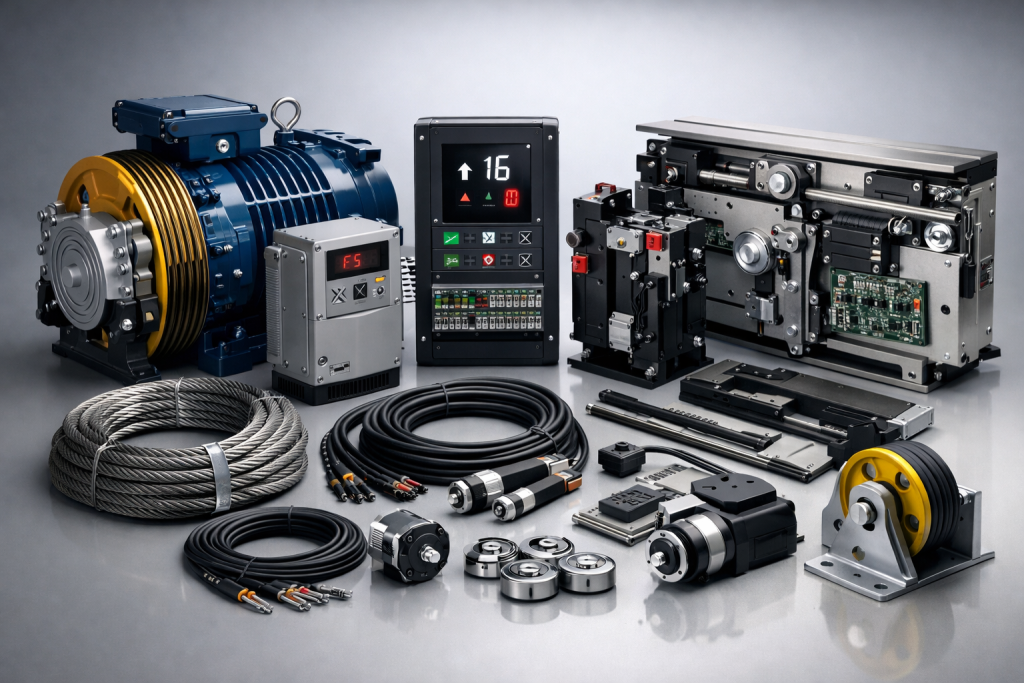
- Drive Activation: Depending on the system, an electric motor (Traction), a hydraulic pump (Hydraulic), or air pressure (Vacuum) moves the cabin.
- Safety Interlocking: Before movement begins, electromechanical interlocks ensure all doors are securely closed and locked.
- Leveling: The system uses sensors to ensure the cabin stops precisely level with the floor finish to prevent tripping hazards.
- Emergency Protocol: In the event of a power failure, an integrated battery system (ARD) brings the lift to the nearest floor and opens the doors.
Types of Home Lifts and Their Cost Implications
The technology chosen is the primary driver of the average cost of a home lift.
1. Traction MRL (Machine Room-Less) Lifts
This is the most popular choice for modern Hyderabad homes. The motor is located within the shaft, eliminating the need for a separate machine room.
- Average Cost: ₹8,50,000 to ₹14,00,000.
- Best for: G+2 to G+5 buildings requiring high speed and smooth ride quality.
2. Hydraulic Lifts
Hydraulic systems use a piston to push the cabin up. They are excellent for low-rise homes where overhead space is limited.
- Average Cost: ₹7,00,000 to ₹12,00,000.
- Best for: Quiet operation and heavy lifting in smaller villas.
3. Vacuum (Pneumatic) Lifts
These are aesthetically striking, circular lifts that use air pressure. They often require no pit or shaft, making them ideal for retrofitting.
- Average Cost: ₹15,00,000 to ₹25,00,000.
- Best for: Designer homes and installations where civil work must be minimized.
4. Gearless Small Lifts
Highly energy-efficient systems using Permanent Magnet Synchronous Motors (PMSM).
- Average Cost: ₹9,00,000 to ₹16,00,000.
- Best for: Sustainability-focused projects and smart homes.
Benefits of Investing in a Quality Home Lift
Enhanced Safety
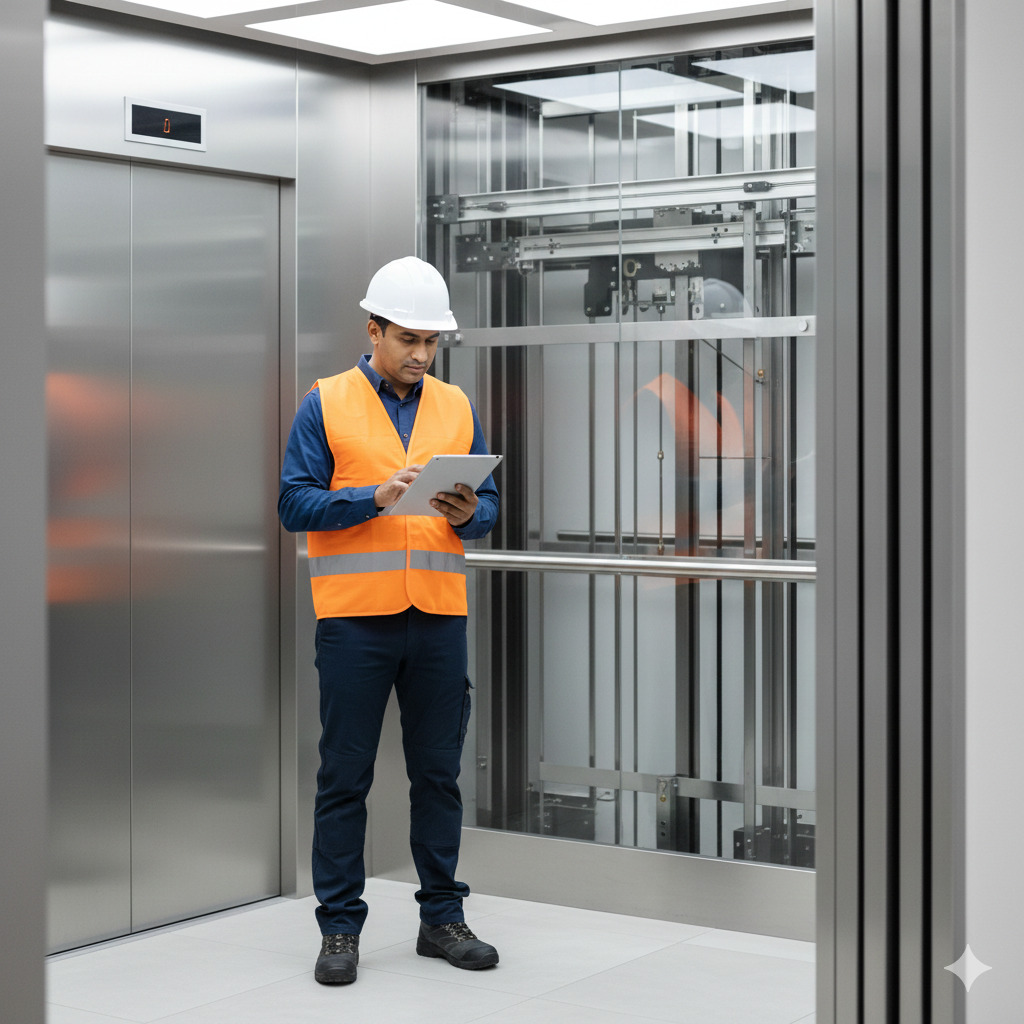
Modern lifts are equipped with full-height infrared light curtains, emergency stop switches, and overspeed governors. High-quality systems minimize the risk of mechanical failure.
Space Efficiency
Today’s home lifts are engineered to fit into spaces as small as 1.2 square meters. This allows architects to maximize the living area without sacrificing mobility.
Aesthetic Customization
The average cost often includes options for glass cabins, premium stainless steel finishes, or wood paneling, allowing the lift to blend seamlessly with the home’s interior design.
Common Mistakes and Misconceptions
1. Focusing Only on the Initial Purchase Price
Many homeowners overlook the “Total Cost of Ownership.” A cheaper lift may have lower upfront costs but higher energy bills and frequent repair requirements.
2. Neglecting Civil Work Costs
The “average cost” provided by dealers often excludes the construction of the lift shaft (hoistway), the pit, and the electrical connections. These can add ₹2,00,000 to ₹4,00,000 to the total budget.
3. Ignoring Maintenance and Spare Parts
Proprietary systems from international brands may have high spare part costs. It is often more cost-effective to choose a local authority like Exfol Friends, where parts and service are readily available in Hyderabad.
Real-World Scenarios
Residential: The Retrofit in Jubilee Hills
A homeowner in an older G+2 villa in Jubilee Hills required a lift for elderly parents. Since there was no shaft, a vacuum lift was selected. While the equipment cost was higher (approx. ₹18 Lakh), the savings on civil work and the speed of installation made it the most efficient choice.
Commercial/Multi-Unit: The Boutique Apartment in Tellapur
A developer building a 5-unit boutique apartment required a reliable 4-passenger traction lift. By opting for a Gearless MRL system (approx. ₹11 Lakh per unit), they provided residents with high-speed access while keeping the building’s overall energy consumption low.
Frequently Asked Questions (FAQ)
1. What is the absolute minimum cost of a home lift in Hyderabad? While some basic models may start around ₹6,50,000, these often lack the safety features and durability required for long-term use. A reliable, compliant system typically starts at ₹8,00,000.
2. Does a home lift require a lot of electricity? No. Most modern MRL home lifts run on single-phase power and consume less electricity than a standard 1.5-ton air conditioner.
3. How much time does it take to install a home lift? From the date of order, manufacturing takes about 30-45 days, and on-site installation usually takes 15 to 20 days.
4. Can a home lift be installed in an existing house? Yes. Retrofitting is very common. We can use external shafts or internal voids like the center of a staircase to accommodate the lift.
5. What is the difference between AMC and CMC? AMC (Annual Maintenance Contract) usually covers labor and routine checks. CMC (Comprehensive Maintenance Contract) includes the cost of major spare parts as well.
6. Do I need a license for a home lift in Hyderabad? Yes. Under the Telangana Lifts Act, residential lifts must be registered with the Electrical Inspectorate, and safety certificates must be renewed periodically.
7. How often should a home lift be serviced? For residential use, a quarterly (once every 3 months) service schedule is generally sufficient to ensure safety and performance.
8. What is the life expectancy of a home lift? A high-quality, well-maintained home lift can easily last 20 to 25 years before requiring significant modernization.
Conclusion
Determining the average cost of a home lift requires a balanced look at technology, safety, and long-term reliability. In the vibrant real estate market of Hyderabad, a residential elevator is an investment that pays dividends in accessibility, comfort, and property value.
At Exfol Friends Elevators Pvt. Ltd., we pride ourselves on providing transparent, authority-driven guidance to help you navigate these choices. Our deep roots in Hyderabad ensure that we understand the local climate, power conditions, and regulatory requirements better than anyone else.
If you are planning a vertical mobility solution for your home, the most important step is a professional site audit. Understanding your specific architectural constraints early can save significant costs down the line.


Leave a Comment