

Table of Contents
How Much Does a Residential Elevator Cost in Hyderabad?
Understanding the Investment: Residential Elevator Costs in Hyderabad
For homeowners and developers in Hyderabad, the question of vertical mobility has transitioned from a high-end luxury to a functional necessity. As the city’s residential landscape shifts toward multi-story villas in Gachibowli and premium independent floors in Jubilee Hills, the integration of a home lift is a primary consideration. However, determining a precise figure for residential elevator costs involves navigating a complex matrix of engineering choices, safety standards, and architectural constraints.
On average, a residential elevator in Hyderabad typically ranges from ₹8,50,000 to ₹15,00,000 for a standard G+2 or G+3 installation. This price fluctuate based on the drive system—be it traction, hydraulic, or vacuum—the number of landings, and the level of aesthetic customization. Furthermore, localized factors such as Hyderabad’s specific electrical regulations and the structural requirements of the Deccan plateau’s soil (affecting pit construction) play a critical role in the final budgetary outcome.
At Exfol Friends Elevators Pvt. Ltd., we believe that transparency in pricing is the foundation of trust. An elevator is a twenty-year asset; therefore, the initial purchase price is only one part of the equation. Understanding the long-term value, energy efficiency, and maintenance requirements is essential for any property owner looking to enhance their home’s accessibility and market value.
What is a Residential Elevator?
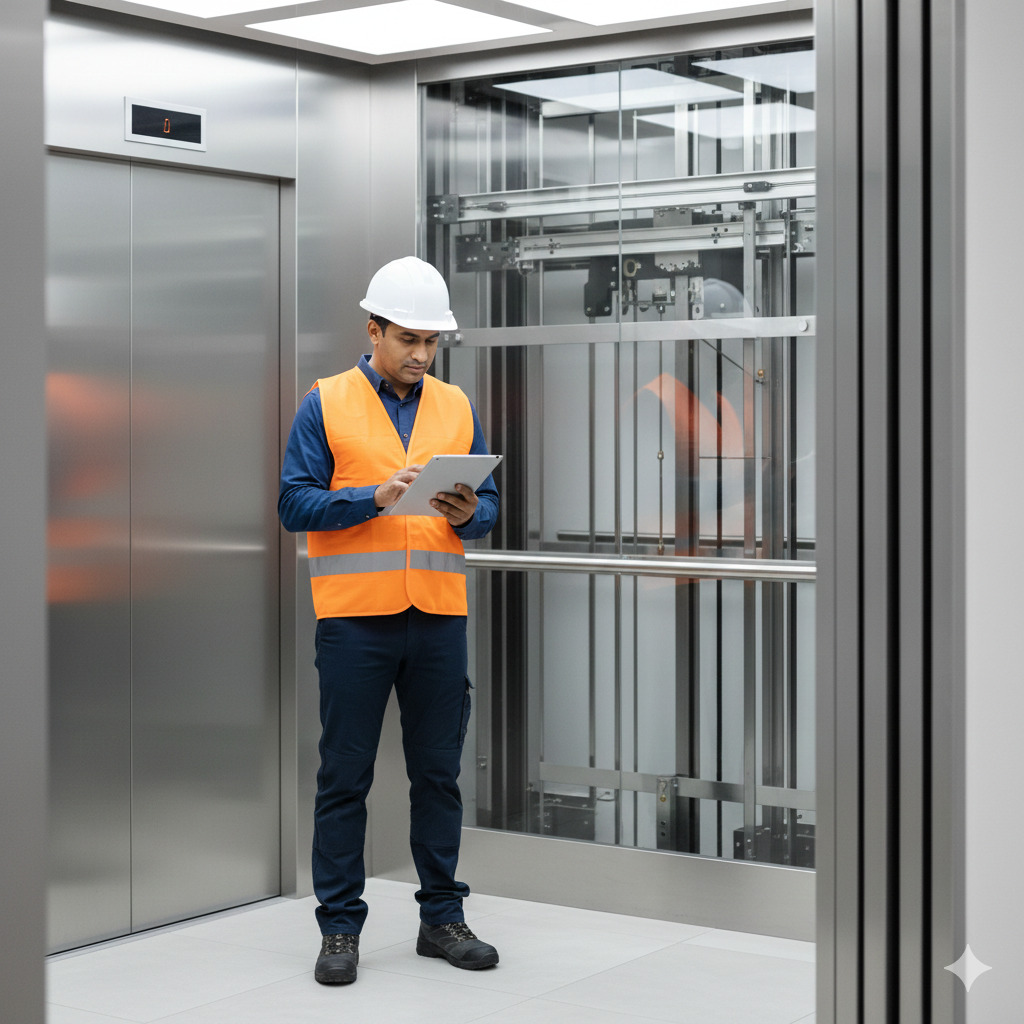
Residential Elevator: A vertical transportation system designed specifically for private dwellings. Unlike high-traffic commercial lifts, residential elevators are optimized for lower travel heights (typically up to G+4), compact footprints, and specialized safety features such as manual lowering in the event of a power failure.
Why is Residential Elevator Costing Important in Hyderabad?
In the context of Hyderabad’s unique real estate market, accurate costing is vital for both financial planning and structural integrity.
1. Architectural Integration
Hyderabad is seeing a surge in “retrofit” projects in established neighborhoods like Banjara Hills and Secunderabad. In these scenarios, the cost is heavily influenced by the ability to install a lift without a traditional deep pit or a massive machine room. Choosing the right technology can save lakhs in civil renovation costs.
2. The Aging-in-Place Trend
With an increasing number of families opting for multi-generational living, elevators are being installed to allow senior citizens to navigate their homes safely. Pricing must account for specific accessibility features, such as wider doors for wheelchair access and emergency communication systems linked to the building’s main security.
3. Climate and Infrastructure Factors
Hyderabad’s intense summer heat can impact the electronics of a home lift. Professional costing includes the price of high-grade controllers and cooling systems that ensure the lift remains operational even when ambient temperatures in the machine room or shaft rise significantly.

How Does a Residential Elevator Installation Work?
Installing a residential elevator is a phased engineering process that requires coordination between the elevator provider and the homeowner’s civil team.
Step 1: Technical Site Feasibility
Engineers conduct a site audit to determine if the building can support a concrete shaft or if a self-supporting steel structure is required. They measure the pit depth (the area below the ground floor) and the “overhead” (the space above the top floor).
Step 2: Selecting the Drive Mechanism
The homeowner chooses between Traction (using counterweights and cables) or Hydraulic (using fluid pressure). Traction systems are often preferred for their energy efficiency, while Hydraulics are chosen for their smoothness and ability to fit into restricted overhead spaces.
Step 3: Manufacturing and Customization
The lift is fabricated to the exact dimensions of the site. This stage involves choosing cabin finishes—ranging from powder-coated steel to panoramic glass—and integrated safety features like the Automatic Rescue Device (ARD).
Step 4: Mechanical Assembly and Commissioning
The guide rails are installed with laser precision, followed by the motor and cabin. Once wired, the lift undergoes a series of load tests and safety checks to ensure it complies with the Telangana Lifts Act before it is handed over to the family.
Types of Residential Elevators and Their Cost Impact
1. Traction MRL (Machine Room-Less) Elevators
These use a gearless motor placed inside the shaft.
- Cost Range: ₹9,50,000 – ₹13,00,000.
- Benefit: Best energy efficiency and silent operation. Ideal for modern Hyderabad villas.
2. Hydraulic Lifts
These move via a piston at the base or side of the car.
- Cost Range: ₹8,50,000 – ₹14,00,000.
- Benefit: Extremely smooth ride and requires very little overhead space.
3. Vacuum/Pneumatic Lifts
Air pressure changes move the car within a glass tube.
- Cost Range: ₹12,00,000 – ₹18,00,000.
- Benefit: 360-degree visibility and requires zero pit or machine room.
Benefits of Investing in a Quality Home Lift
1. Increased Property Valuation
A home with a professionally installed elevator typically sees a value appreciation that exceeds the initial cost of the lift. It makes the property “future-proof” for buyers of all ages.
2. Unmatched Safety and Convenience
Modern residential lifts come with infrared door curtains and emergency battery backups. In a city where power fluctuations can occur, having a lift that automatically returns to the nearest floor provides immense peace of mind.
3. Regulatory Compliance
By following the Telangana Lifts, Escalators, and Passenger Conveyors Act, homeowners ensure their lift is registered and safe. This prevents legal hurdles during property resale and ensures the unit meets national safety benchmarks (IS 14665).
Common Mistakes and Misconceptions
“The Cheapest Quote is Always Best”
In the elevator industry, a low price often indicates a compromise on the grade of steel in the ropes, the quality of the ARD batteries, or the sophistication of the controller. These “budget” lifts frequently lead to higher maintenance costs within 24 months.
Ignoring the “Civil” Component
Homeowners often forget that the elevator quote usually does not include the construction of the shaft or the power supply to the machine room. Always ask for a “civil requirement” sheet before finalizing your budget.
Miscalculating Space Requirements
Choosing a lift that is too small for a wheelchair might save money today but will render the lift useless if a family member’s mobility needs change in the future.
Real-World Scenarios in Hyderabad
Scenario A: The New Build in Tellapur
A builder is constructing a G+3 luxury villa.
- Recommendation: A Traction MRL lift.
- Estimated Cost: ₹10,50,000.
- Outcome: High energy efficiency and a silent ride that matches the premium nature of the project.
Scenario B: The Retrofit in Banjara Hills
A family wants to add a lift to their existing 20-year-old home.
- Recommendation: An external glass-shaft hydraulic lift.
- Estimated Cost: ₹14,00,000 (including steel structure).
- Outcome: Provides accessibility without damaging the existing foundation of the home.
Frequently Asked Questions
1. What is the average residential elevator cost in Hyderabad for a G+2 home?
A standard gearless traction lift for a G+2 villa usually costs between ₹8.5 Lakh and ₹10.5 Lakh, inclusive of GST and basic installation.
2. Does the price include the shaft construction?
Generally, no. Elevator companies provide the technical drawings, but the physical construction of the concrete shaft or pit is managed by the building’s civil contractor.
3. Why are home lifts more expensive per floor than apartment lifts?
Home lifts often require more customization, “pitless” engineering, and high-end aesthetic finishes, which increases the manufacturing complexity compared to standard apartment units.
4. How long does the installation take?
In Hyderabad, the manufacturing process takes 4-6 weeks, and the on-site installation usually requires 3-4 weeks.
5. What are the yearly maintenance costs?
An Annual Maintenance Contract (AMC) for a residential lift in Hyderabad typically costs between ₹25,000 and ₹40,000, depending on the scope of the contract.
6. Can I install a lift that runs on single-phase power?
Yes, many modern residential elevators are designed to run on a standard domestic 230V single-phase power supply, making them ideal for existing homes.
7. Does the government inspect home lifts in Hyderabad?
Yes. Under the Telangana Lifts Act, all lifts, including those in private residences, must be inspected and licensed by the Electrical Inspectorate.
8. What happens during a power cut?
Every lift installed by Exfol Friends Elevators includes an Automatic Rescue Device (ARD) which brings the car to the nearest floor and opens the doors automatically.
Conclusion: Elevating Your Quality of Life
Deciding on a residential elevator is an investment in your home’s future and your family’s comfort. While the initial residential elevator cost in Hyderabad is a primary factor, the emphasis should always be on engineering reliability, safety compliance, and the reputation of the service provider. A well-chosen lift provides a seamless, safe, and silent transition between floors, adding a layer of sophistication and utility to your residence.
At Exfol Friends Elevators Pvt. Ltd., we combine technical mastery with a deep understanding of the Hyderabad market. We provide transparent, detailed costing to ensure you make an informed decision for your property.
Are you ready to enhance the accessibility of your home? Contact Exfol Friends Elevators today for a comprehensive site audit and a customized quote that meets your architectural and budgetary needs.


Leave a Comment