

Table of Contents
How often should an elevator be serviced?
Determining the appropriate frequency for elevator maintenance is a primary responsibility for any property owner, facility manager, or builder. In a rapidly verticalizing city like Hyderabad, where high-rise IT parks in Gachibowli and luxury villas in Jubilee Hills rely heavily on seamless mobility, the question of “how often” becomes a matter of both operational efficiency and human safety. While modern elevators are marvels of engineering, they remain complex mechanical systems that operate under constant stress, friction, and electrical load.
The short answer is that an elevator should undergo a professional preventive maintenance check at least once every month. However, this frequency is not an arbitrary suggestion; it is a standard established to catch minor component wear before it leads to a catastrophic system failure or passenger entrapment. In the Deccan climate, characterized by high dust levels and significant seasonal temperature shifts, a monthly cadence is essential to protect sensitive electronic controllers and ensure the mechanical longevity of the drive system. At Exfol Friends Elevators Pvt. Ltd., we view maintenance not as a recurring expense, but as a strategic protocol to preserve the building’s most expensive moving asset.
What is Elevator Servicing?
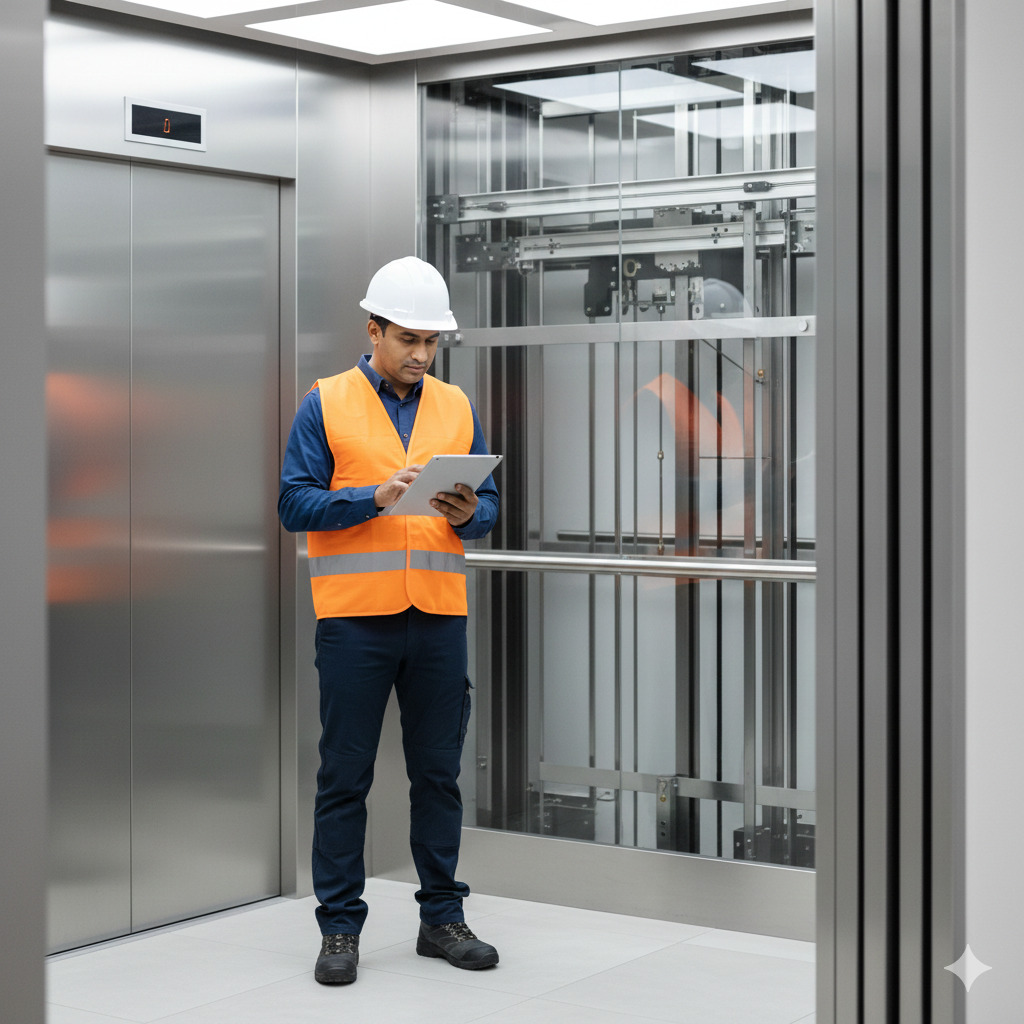
Elevator Servicing Elevator servicing is a systematic process of preventive maintenance that includes the inspection, lubrication, and adjustment of mechanical and electrical components. It ensures that the system complies with Bureau of Indian Standards (BIS) and the Telangana Lift Act, focusing on the fail-safe operation of safety gears, door interlocks, and emergency rescue systems.
Why Regular Maintenance Frequency is Essential
In the context of Hyderabad’s urban infrastructure, the frequency of servicing directly correlates to several high-priority factors.
Compliance with the Telangana Lift Act
The Telangana government mandates strict adherence to safety norms for vertical transportation. Regular servicing ensures that your equipment remains eligible for its annual fitness certificate from the Electrical Inspectorate. Without documented monthly service logs, property owners face legal liabilities and the potential sealing of the lift by municipal authorities.
Managing Environmental Stressors
Hyderabad’s environment presents specific challenges such as fine dust from construction and power grid fluctuations. Dust accumulation in door tracks is the leading cause of “call-backs” in the city. Monthly servicing ensures that these tracks are cleaned and that the Variable Voltage Variable Frequency (VVVF) drives are checked for thermal stress, preventing premature PCB failure.
Protection of Property Value
An elevator is a significant capital investment. For developers in areas like Tellapur or Nanakramguda, a well-maintained elevator system significantly enhances the resale and rental value of a property. Frequent servicing prevents the “aging” of the ride quality, ensuring the lift remains as silent and smooth as the day it was installed.
How Does a Service Visit Work?
A professional service visit follows a disciplined, step-by-step engineering protocol that goes far beyond simple oiling.
- Site Safety and Lockout: The technician places the elevator on “Inspection Mode” and positions safety barriers at landing doors to ensure no passengers can attempt to use the lift during the procedure.
- Machine Room and Controller Audit: The “brain” of the lift is inspected. The technician checks for loose electrical connections, monitors the health of the backup batteries (for the ARD), and cleans the cooling fans of the inverter.
- Shaft and Hoisting Inspection: The technician travels on top of the car to inspect the hoisting ropes for fraying, lubricates the guide rails, and checks the tension of the door operating cables.
- Pit and Safety Gear Testing: The “Pit” is checked for water seepage or debris. Crucially, the mechanical safety gears (the governor system) are verified to ensure they will grip the rails in an overspeed event.
- Leveling and Door Calibration: The technician verifies that the car stops perfectly flush with each floor. Door sensors (light curtains) are tested to ensure they detect obstructions instantly.
- Logbook Documentation: A detailed report is generated, noting the work completed and highlighting any parts that may require replacement in the next quarter.

Variations in Service Frequency Requirements
While the baseline is monthly, certain factors may necessitate a more rigorous schedule.
High-Traffic Commercial Buildings
IT parks and hospitals in the Financial District, where elevators operate 24/7, may require bi-weekly inspections for high-wear components like door rollers and brake pads.
Residential Home Lifts
Private villa elevators with low usage (fewer than 10 trips a day) must still adhere to a monthly schedule. This is because “idle” time can lead to battery discharge in the Automatic Rescue Device (ARD) and the drying out of essential lubricants.
Industrial Freight Elevators
Lifts in the pharmaceutical hubs of Jeedimetla or Pashamylaram, which carry heavy loads, require specialized quarterly weight-load testing in addition to monthly routine checks to ensure structural integrity.
Benefits of Consistent Servicing
1. Uncompromising Passenger Safety
The primary benefit is the prevention of accidents. Regular checks on the “Safety Circuit”—a series of electrical switches that must all be closed for the lift to move—ensures that the lift never operates with an open door or a faulty brake.
2. Operational Cost Savings
Preventive maintenance is significantly cheaper than reactive repair. Replacing a worn-out carbon brush during a routine visit costs a fraction of the price of replacing a burnt-out motor caused by that same brush failing during peak hours.
3. Extended Equipment Lifecycle
A well-serviced elevator can last 20 to 25 years. Without regular care, the same equipment may require a full modernization or replacement within 10 to 12 years due to mechanical fatigue and cumulative electrical damage.
Common Mistakes and Misconceptions
“The Lift is Working Fine, So No Service is Needed”
This is the most dangerous misconception in the industry. Many elevator failures occur in “safety-critical” components that do not affect daily operation until the moment they are needed—such as the overspeed governor or the emergency light battery.
Choosing “Breakdown-Only” Services
Some facility managers opt for “on-call” repair rather than an Annual Maintenance Contract (AMC). This approach leads to longer downtimes, as parts are not pre-ordered, and the lack of preventive lubrication causes irreversible wear on the guide rails and ropes.
Neglecting the ARD (Automatic Rescue Device)
In Hyderabad, power cuts are a reality. Many owners forget that the ARD relies on lead-acid batteries that have a finite lifespan. Monthly testing is the only way to ensure you won’t be trapped during the next power outage.
Real-World Scenarios
Residential: The G+4 Apartment in Kukatpally
An apartment association skipped three months of service to “save costs.” Dust built up in the ground-floor door track, causing the door to remain partially open. The safety circuit correctly prevented the lift from moving, but the resulting “entrapment” of the system during morning office hours caused significant chaos and required an emergency call-out fee that exceeded the cost of the skipped maintenance.
Commercial: The Office Tower in Madhapur
A proactive facility manager maintained a strict monthly CAMC (Comprehensive AMC). During a routine check, the technician noticed a slight discoloration in the main drive’s traveling cable. It was replaced overnight during low-traffic hours, preventing a mid-day failure that would have stranded hundreds of employees.
Frequently Asked Questions
1. Is monthly service a legal requirement in Telangana?
Yes. The Telangana Lift Act and subsequent municipal norms require regular maintenance and an annual safety inspection to maintain a valid operating license.
2. Can we skip service if the building is unoccupied?
Even in unoccupied buildings, the lift should be serviced. Components like ARD batteries and electronic capacitors can fail if left unpowered and unchecked for long periods.
3. How long does a typical service visit take?
A standard preventive maintenance visit for a single lift usually takes between 60 to 90 minutes, depending on the number of floors.
4. What is the difference between a Comprehensive and Non-Comprehensive AMC?
A Comprehensive AMC includes the cost of most spare parts and labor, while a Non-Comprehensive AMC covers only labor and routine check-ups; parts are billed separately.
5. Why does my elevator jerk even after being serviced?
A “jerk” usually indicates an issue with the VVVF drive settings or a need for rail lubrication. If it persists after service, the drive parameters may need recalibration by a senior engineer.
6. What happens if I lose my maintenance logbook?
The logbook is a critical legal document. If lost, you should immediately request your service provider for a digital duplicate of your service history to remain compliant with government inspections.
7. Does the AMC cover the cost of the annual government inspection?
Usually, the AMC covers the technician’s presence during the inspection, but the government fee for the license renewal is paid directly by the building owner.
8. How often should the hoisting ropes be replaced?
There is no fixed time, but they are typically replaced every 7 to 10 years based on the “wire break” count detected during monthly inspections.
Conclusion: Consistency is the Key to Reliability
The question of how often an elevator should be serviced has a clear answer: consistency is more important than intensity. A monthly preventive maintenance schedule is the industry standard for a reason—it balances the mechanical needs of the system with the safety requirements of the passengers. For property owners in Hyderabad, partnering with a technically proficient firm like Exfol Friends Elevators Pvt. Ltd. ensures that these schedules are met with precision and transparency.
By treating elevator maintenance as a non-negotiable aspect of building management, you protect your investment, ensure legal compliance, and, most importantly, provide peace of mind to everyone who steps into the cabin.


Leave a Comment