

Table of Contents
How much will it cost to install a lift?
Determining exactly how much it will cost to install a lift requires a nuanced understanding of engineering specifications, architectural requirements, and safety compliance. In the current Indian market, particularly in rapidly developing hubs like Hyderabad, the price of a lift is not a fixed commodity but a variable investment influenced by technology, number of floors, and interior customization.
For a standard residential villa (G+2 or G+3), installation costs typically range from ₹5,00,000 to ₹12,00,000. However, for commercial complexes or high-rise apartments in areas like Hitech City or Gachibowli, the complexity of high-speed traction systems can push these figures between ₹15,00,000 and ₹45,00,000+. These estimates generally include the equipment, installation, and initial licensing assistance, though civil work often remains a separate budgetary line item.
What is Lift Installation Cost?
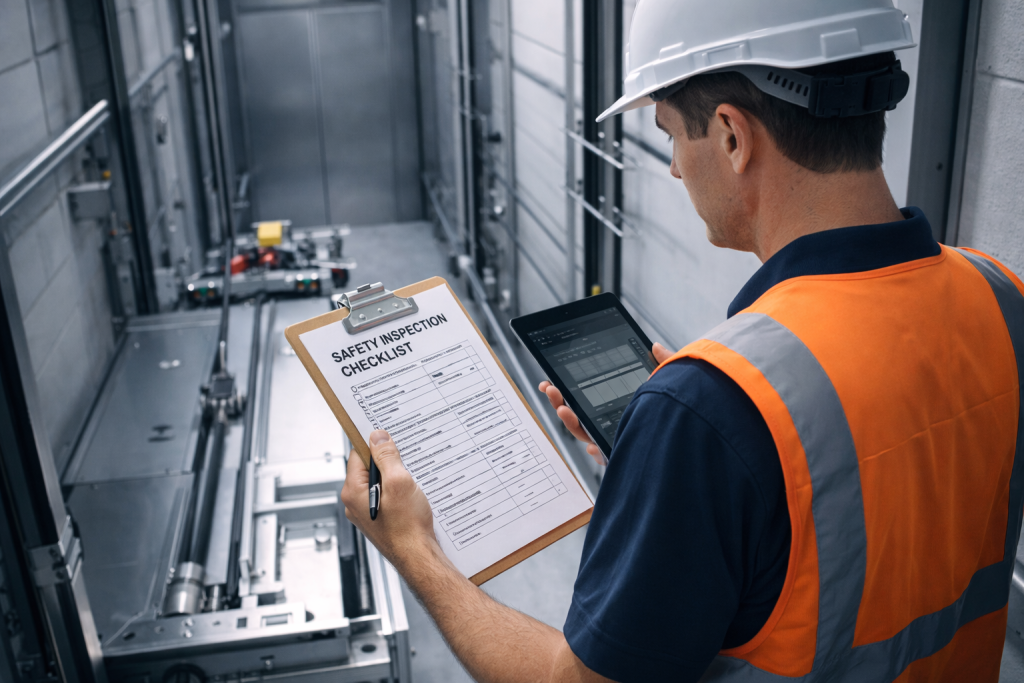
Lift Installation Cost Lift installation cost refers to the comprehensive financial outlay required to procure, assemble, and commission an elevator system. This includes the price of mechanical components, electrical controllers, safety gear, labor for onsite assembly, and the technical certification required to meet local regulatory safety standards.
Why is Accurate Budgeting for Lift Installation Important?
In the context of Hyderabad’s real estate boom, accurate budgeting for an elevator is vital for both financial planning and structural integrity. An underfunded lift project often leads to the selection of inferior components, which significantly increases the risk of frequent breakdowns and safety hazards.
Impact on Property Valuation
In premium residential zones like Jubilee Hills or Banjara Hills, an elevator is no longer a luxury—it is a mandatory amenity. A high-quality installation increases a property’s market value far beyond the initial cost of the lift, making it a sound capital investment for homeowners and developers alike.
Long-term Operational Efficiency
Budgeting for energy-efficient technology, such as Gearless Permanent Magnet Synchronous Motors (PMSM), may involve a higher upfront cost but results in substantial savings on monthly electricity bills. In a city where commercial power tariffs are significant, this “green” investment pays for itself over a few years.
Compliance with the Telangana Lift Act
Budgeting must also account for the legalities of the Telangana Lift Act. This ensures all safety features, such as Automatic Rescue Devices (ARD) and infrared door curtains, are included from day one, avoiding expensive retrofitting or legal penalties during government inspections.
How Does the Costing Process Work?
The final quote for a lift installation is derived through a systematic evaluation of five key phases:
- Site Feasibility and Audit: Engineers assess the hoistway dimensions, pit depth, and overhead clearance. Any deviation from standard dimensions can increase the cost due to customized engineering.
- Technology Selection: Choosing between Traction (MRL), Hydraulic, or Pneumatic drives determines the base price. Traction is generally more expensive upfront but more efficient for higher travel.
- Specification Mapping: The number of stops (landings), weight capacity (number of passengers), and rated speed are calculated. Each additional floor typically adds ₹50,000 to ₹1,00,000 to the cost.
- Aesthetic Customization: The choice of cabin interiors—ranging from basic powder-coated steel to premium mirror-finish stainless steel or panoramic glass—can sway the budget by 15–30%.
- Logistics and Assembly: This includes the safe transport of heavy machinery and the labor cost for certified technicians to assemble the guide rails, car, and electrical controller on-site.
Variations and Types: A Pricing Overview
1. Traction MRL (Machine Room-Less) Elevators
The gold standard for modern apartments. By eliminating the rooftop machine room, they save construction costs while providing high speeds.
- Average Cost: ₹8,00,000 – ₹18,00,000 (Residential/Mid-rise).
2. Hydraulic Home Lifts
Ideal for luxury villas with 2–4 floors. They offer an exceptionally smooth ride and require minimal overhead space.
- Average Cost: ₹6,00,000 – ₹14,00,000.
3. Pneumatic (Vacuum) Lifts
A popular choice for retrofitting into existing homes where digging a pit is impossible.
- Average Cost: ₹10,00,000 – ₹20,00,000.
Benefits of Investing in a Quality Installation
Safety and Occupant Confidence
A certified installation from a reputable company like Exfol Friends ensures the presence of high-grade safety gears. This builds trust among residents and tenants, knowing the system is engineered to prevent free-fall and entrapment.
Compliance and Insurance
Lifts that meet BIS (Bureau of Indian Standards) codes are easier to insure and license. This regulatory alignment is essential for commercial buildings to obtain fire safety clearances and occupancy certificates.
Minimal Maintenance Expenditure
While “budget” lifts save money initially, they often utilize non-standard parts. A quality installation uses standardized, high-performance components that reduce the frequency of emergency repairs and the cost of Annual Maintenance Contracts (AMC).
Common Mistakes and Misconceptions
Ignoring Civil Work Costs
Many property owners overlook the cost of building the lift shaft, the pit, and the machine room (if applicable). These civil costs can add ₹2,00,000 to ₹5,00,000 to the total project budget and should be planned alongside the lift purchase.
Prioritizing Price Over Drive Technology
Choosing a geared traction motor over a gearless one to save money is a common mistake. Geared motors are noisier, require more oil changes, and consume significantly more power, leading to higher long-term costs.
Skipping the Automatic Rescue Device (ARD)
To lower a quote, some vendors offer ARD as an “optional” add-on. In a city like Hyderabad, where power fluctuations occur, an ARD is a non-negotiable safety feature that prevents passengers from being stuck between floors during a power cut.
Real-World Scenarios
Residential: The Independent Villa in Jubilee Hills
A homeowner installing a 4-passenger glass lift for a G+2 villa. The focus is on aesthetics and silence. The budget includes a premium hydraulic drive and a glass cabin.
- Estimated Investment: ₹11,50,000.
Commercial: The Office Complex in Madhapur
A developer building a 6-floor office space needs two high-speed MRL elevators to handle employee traffic. The focus is on duty cycle and speed.
- Estimated Investment: ₹28,00,000 (for both units).
Frequently Asked Questions
1. What is the cheapest type of lift to install?
Basic hydraulic or geared traction lifts are generally the most affordable, starting around ₹5,00,000. However, they are only suitable for low-rise buildings with low traffic.
2. Does the number of floors affect the price significantly?
Yes. Every additional floor requires more guide rails, wiring, landing doors, and sensors. On average, each floor adds about ₹75,000 to the base price.
3. Are there hidden costs in lift installation?
The most common “hidden” costs are civil work (shaft construction), electrical wiring to the machine room, and the government licensing fees for the lift inspectorate.
4. How much does a glass (panoramic) lift cost?
Adding glass panels to a cabin and shaft typically increases the cost by ₹2,00,000 to ₹5,00,000 compared to a standard stainless steel lift.
5. Is a home lift more expensive than a commercial one?
Usually, no. Commercial lifts require higher weight capacities, higher speeds, and more robust safety features for public use, making them significantly more expensive than residential models.
6. Can I install a lift in an old building?
Yes, this is called retrofitting. It may involve higher civil costs to create a shaft, but modern pneumatic or small-pit hydraulic lifts are designed specifically for this purpose.
7. How long does the installation take?
Once the site is ready, the physical installation takes 15–30 days. However, manufacturing the lift to your specific dimensions usually takes 45–60 days.
8. What is the annual maintenance cost (AMC)?
After the initial warranty period, a residential AMC typically costs between ₹20,000 and ₹45,000 per year, depending on the type of lift and the scope of the contract.
Conclusion: Balancing Cost and Quality
Understanding how much it will cost to install a lift requires looking beyond the initial quotation. A lift is a complex integration of safety, technology, and architectural harmony. While budget is always a factor, the priority must remain on selecting a system that ensures the safety of its passengers and the longevity of the building’s infrastructure.
Exfol Friends Elevators Pvt. Ltd. is committed to providing transparent, engineering-led solutions for Hyderabad’s residents and businesses. By focusing on high-quality components and localized service, we ensure that your investment in vertical mobility provides value for decades to come.
If you are currently planning a project and require a detailed, site-specific cost analysis, a professional consultation is the most effective next step toward a safe and efficient installation.


Leave a Comment