

Table of Contents
What Are the Safety Requirements for Lifts in Hyderabad? Compliance Guide
Navigating vertical transportation safety in Telangana requires a clear understanding of state acts, national engineering standards, and mandatory mechanical fail-safes. Whether you manage a commercial tower in HITEC City or a villa in Jubilee Hills, knowing what are the safety requirements for lifts ensures occupant protection, shields building owners from legal liabilities, and prevents catastrophic mechanical failures.
In our 15 years auditing and installing vertical transportation across Hyderabad, we frequently encounter building owners who assume a basic installation guarantee covers long-term safety compliance. It does not. Lift safety involves a continuous matrix of mechanical locks, electromechanical sensors, structural pit standards, emergency power evacuation systems, and statutory government inspections.
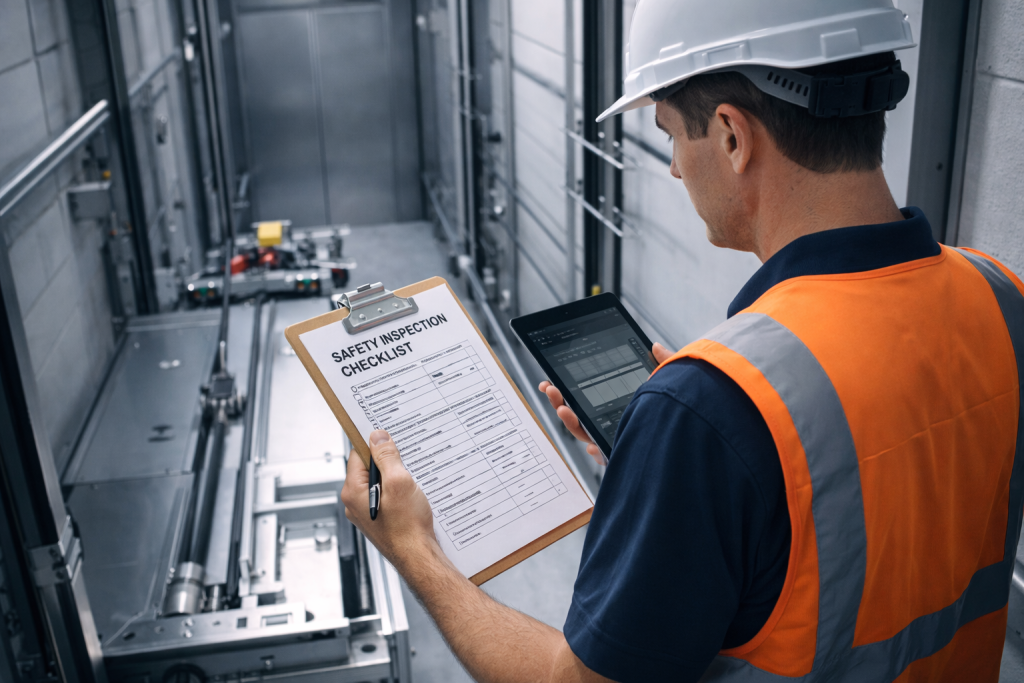
What are the safety requirements for lifts?
The safety requirements for lifts comprise statutory design, mechanical, electrical, and maintenance mandates that prevent passenger free-fall, door trapments, and electrical hazards. Essential requirements include automatic door safety sensors, overspeed governors, mechanical safety gears, emergency Auto Rescue Devices (ARD), fire-rated landing doors, machine room ventilation, and mandatory compliance with Indian Standards (IS 14665/IS 15785) under the National Building Code.
Understanding these requirements requires looking beyond basic cabin finishes. Vertical transportation relies on interlocking, redundant systems where every electrical signal links directly to a physical mechanical brake or door lock.
When a single link in this safety chain wears down—such as a worn door interlock contact or a degraded backup battery—the entire elevator system becomes vulnerable to dangerous operational faults.
Why do lift safety requirements matter in Hyderabad?
Hyderabad’s rapid urban expansion has transformed neighborhoods like Kondapur, Gachibowli, and Kokapet into dense vertical hubs. High-density residential towers and sprawling commercial parks put heavy daily demands on passenger lifts.
Local climatic and infrastructural conditions in Telangana make strict safety adherence essential:
- Power Grid Fluctuations: Frequent summer grid shifts require functional Auto Rescue Devices (ARD) to prevent passenger entrapment during power cuts.
- Monsoon Humidity: High moisture levels in lower basement pits accelerate corrosion on guide rails, buffer springs, and governor tension pulleys.
- High-Frequency Usage: Rapid vertical transport in commercial hubs speeds up the wear on door operator light curtains and mechanical door locks.
- Rigorous Statutory Inspections: The Chief Electrical Inspectorate to the Government (CEIG) in Telangana strictly enforces the Telangana Lifts Act. Non-compliant lifts face immediate operational shutdown.
In our diagnostic work alongside local engineering firms, including regional industry authorities like Exfol Friends Elevators, we consistently observe that proactive compliance with state safety codes reduces emergency repair calls by more than 60%.
How does a complete lift safety system work?
A fully compliant passenger elevator integrates multiple layers of mechanical and electrical safety devices. Here is how these redundant safety features operate sequentially during normal and emergency conditions:
- Door Interlock Circuit Verification: Before the controller allows the motor to draw current, electromechanical door locks verify that every landing door and car door is completely closed and physically locked.
- Infrared Light Curtain Monitoring: As passengers enter or exit, a full-height 2D or 3D infrared curtain scans the doorway. If an object breaks the invisible light beams, the controller immediately stops door closure and reverses direction.
- Continuous Speed Monitoring: The overspeed governor constantly tracks the elevator car’s travel velocity via a steel cable loop anchored from the overhead machine space to the pit pulley.
- Mechanical Safety Gear Engagement: If the car exceeds its calibrated rated speed by 115% due to mechanical failure, the governor trips mechanically. This action clamps heavy safety jaws onto the guide rails, stopping the cabin within inches.
- Phase Failure and Electrical Protection: The main control panel contains phase-monitoring relays that detect power surges, voltage drops, or phase reversals, bringing the cabin to a controlled stop before motor overheating occurs.
- Auto Rescue Device (ARD) Deployment: In the event of a main power failure, a solid-state ARD activates within seconds using dedicated battery power. It lowers or raises the lift car to the nearest floor level and opens the doors automatically.
- Hydraulic / Spring Buffer Compression: Should an elevator car travel past the bottom terminal landing, oil or spring buffers installed in the shaft pit compress to absorb kinetic energy and prevent structural impact.
Key lift types and their safety configurations
Elevator configurations vary according to the drive system installed. Each system utilizes specific mechanical and structural safety devices:
| Elevator Technology | Primary Safety Devices | Pit & Overhead Requirements | Applicable Code / Standard |
| Traction (Geared & Gearless MRL) | Overspeed governor, safety gear, counterweight screen, ARD | Pit: 1200–1600 mm Overhead: 3800–4800 mm | BIS IS 14665 / IS 15785 |
| Hydraulic Lifts | Rupture valve, pressure relief valve, manual lowering valve | Pit: 300–1000 mm Overhead: 2800–3400 mm | National Building Code (NBC 2016) |
| Pneumatic / Vacuum Lifts | Pneumatic fail-safe brakes, upper-limit pressure switches | Pit: 0–100 mm Overhead: 2700–3000 mm | OEM Safety Standards / CE Certification |
Traction Elevators (Geared & Gearless MRL)
Traction elevators rely on counterweights and suspension wire ropes. Safety requirements focus on rope tension checks, counterweight guard screens, overspeed governors, and machine room-less (MRL) governor reset mechanisms accessible outside the hoistway.
Hydraulic Elevators
Hydraulic systems push the car upwards using a fluid-driven piston. Key safety requirements include a hydraulic rupture valve (which locks oil flow if a pipe bursts), manual emergency lowering valves, and oil temperature monitoring sensors.
Pneumatic Vacuum Elevators
Pneumatic lifts operate via controlled air pressure differentials inside a polycarbonate cylinder. Their safety configurations utilize mechanical locking pins that anchor into landing steel shelves at each stop, alongside overspeed mechanical brakes.
Major safety and operational benefits of compliance
Implementing proper lift safety standards delivers operational benefits beyond passing state inspections:
- Elimination of Entrapment Hazards: Certified ARD systems and dual-path emergency communication lines ensure passengers are never trapped without power or ventilation.
- Extended Equipment Lifespan: Properly calibrated guide rail alignments and governor tensioning prevent premature wear on drive motors, wire ropes, and cabin structures.
- Reduced Legal and Financial Liability: Compliance with Telangana Lifts Act rules shields property developers and facility managers from civil and criminal liability during site accidents.
- Enhanced Property Value and Trust: Certified lifts with clean inspection logs boost building trust for commercial tenants in places like HITEC City and premium homeowners in Jubilee Hills.

What are common lift safety mistakes?
The most common lift safety mistake is bypassing door interlock safety circuits or neglecting battery maintenance on Auto Rescue Devices (ARD). Property owners frequently fail to conduct mandatory annual overspeed governor drop tests, store clutter inside machine rooms, or allow basement water accumulation to submerge critical pit safety buffers and limit switches.
We regularly see these compliance errors during field audits across Telangana:
Neglecting Pit Waterproofing
Submerged basement pits corrode buffer springs, lower governor pulleys, and bottom terminal limit switches. This moisture damage compromises core mechanical safety barriers.
Bypassing Electrical Safety Circuits
During temporary breakdowns, inexperienced service mechanics sometimes jump out broken door lock circuits to keep the lift moving. This dangerous practice allows the car to run with open landing doors, creating a severe fall hazard.
Machine Room Misuse
Using machine rooms for general property storage restricts airflow, elevates ambient temperatures above 40°C, and risks blocking access to the main power disconnect switches.
Real-world safety scenarios in Hyderabad
To understand how safety codes apply in real-world environments, consider these two common regional installation settings:
Scenario 1: Commercial IT Tower in HITEC City
A 15-story commercial complex experiences heavy daily foot traffic. During a summer grid failure, the building’s main power trips.
Because the facility manager maintains certified Auto Rescue Devices, regular governor drop tests, and dual light curtain sensors, the six high-speed MRL elevators level to the nearest floor within 15 seconds, park, and open their doors without injury or delay.
Scenario 2: Residential Villa in Gachibowli
A multi-generation family installs a 3-stop home lift. During the monsoon season, heavy rainfall causes water seepage in the unsealed elevator pit.
A certified technician identifies the water accumulation during a monthly preventive audit. The team drains the pit, replaces the corroded bottom limit switch, re-waterproofs the sump, and restores full safety clearance before mechanical failure occurs.
Frequently asked questions about lift safety
What is the most critical safety device on a passenger elevator?
The overspeed governor combined with the mechanical safety gear is the most critical device. It physically clamps the elevator cabin onto the steel guide rails if travel speed exceeds safe thresholds, preventing free-fall regardless of rope condition.
How often should an elevator undergo safety inspections in Telangana?
Elevators in Telangana should undergo monthly preventive maintenance servicing by certified technicians, alongside an annual statutory safety audit for CEIG license renewal.
Is an Auto Rescue Device (ARD) mandatory for lifts in Hyderabad?
Yes. Under local building codes and modern NBC guidelines, an operational Auto Rescue Device (ARD) is mandatory for passenger lifts to prevent power-outage entrapments.
What pit depth is required to meet elevator safety standards?
Standard commercial traction lifts require pit depths between 1200 mm and 1600 mm. Home lifts or specialized hydraulic lifts can operate with shallower pits ranging from 100 mm to 300 mm, depending on drive design.
What happens if an elevator exceeds its maximum load capacity?
Overload sensors sound an audible alarm inside the cabin, illuminate an indicator light, and hold the landing doors open, preventing car motion until the weight drops back below rated capacity.
Can an elevator fall if all its cables break?
No. Multiple redundant steel wire ropes independently support the car load. Even if all cables fail simultaneously, the mechanical overspeed governor trips instantly and locks the safety jaws onto the guide rails.
What electrical safety standards apply to elevator manufacturing in India?
Elevators must comply with Bureau of Indian Standards (BIS) codes, including IS 14665 for traction lifts, IS 15785 for MRL lifts, and National Electrical Code guidelines for wiring and earthing.
Who is legally responsible for elevator safety in a residential apartment block?
The building owner, housing society management committee, or designated facility manager holds ultimate legal responsibility for maintaining valid inspection certificates and safe operating conditions.
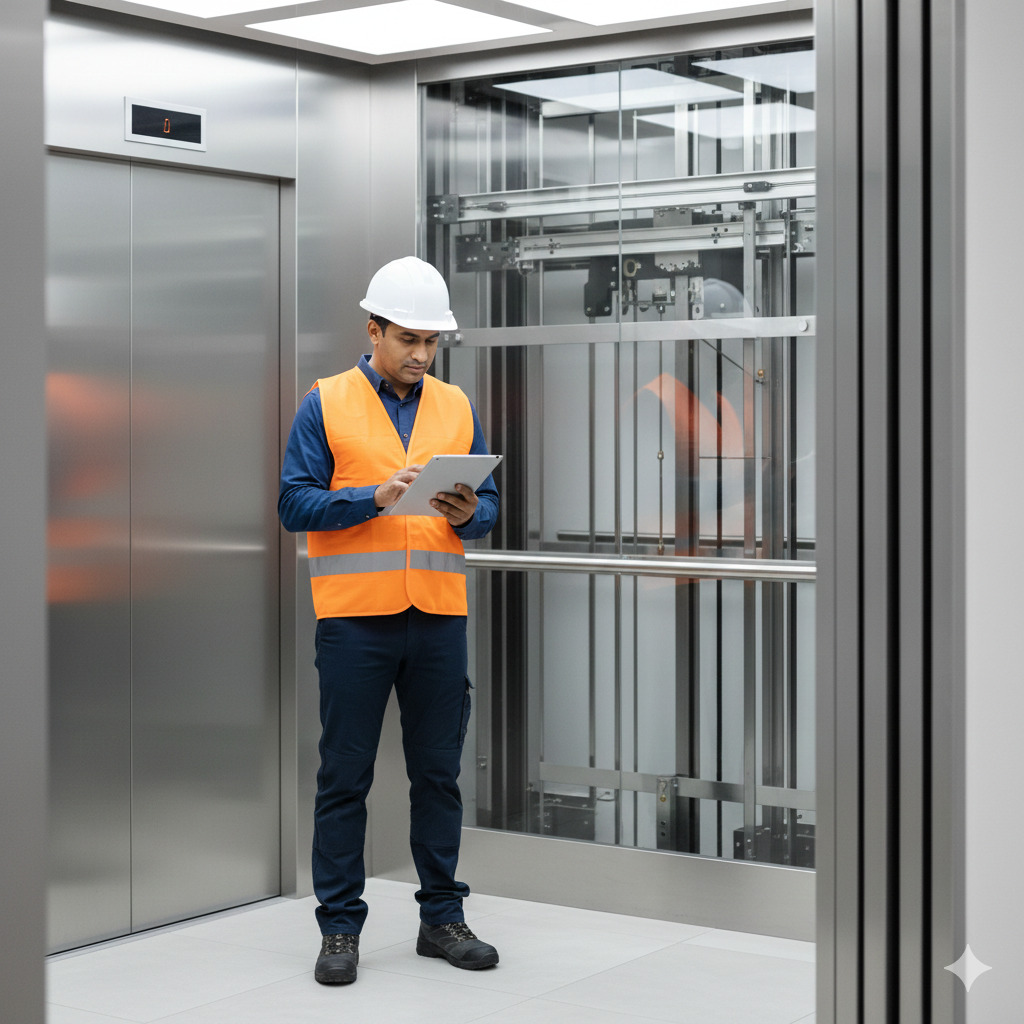
Ensuring lift compliance and safety
Adhering to lift safety requirements protects building occupants, ensures long-term operational efficiency, and maintains full compliance with Telangana statutory regulations.
Facility managers, builders, and property owners should conduct routine safety reviews, maintain strict monthly inspection logs, and partner with certified local installation professionals like Exfol Friends Elevators to keep their equipment operating safely and smoothly.

Leave a Comment