
Table of Contents
Which Is the Safest Home Elevator in India?
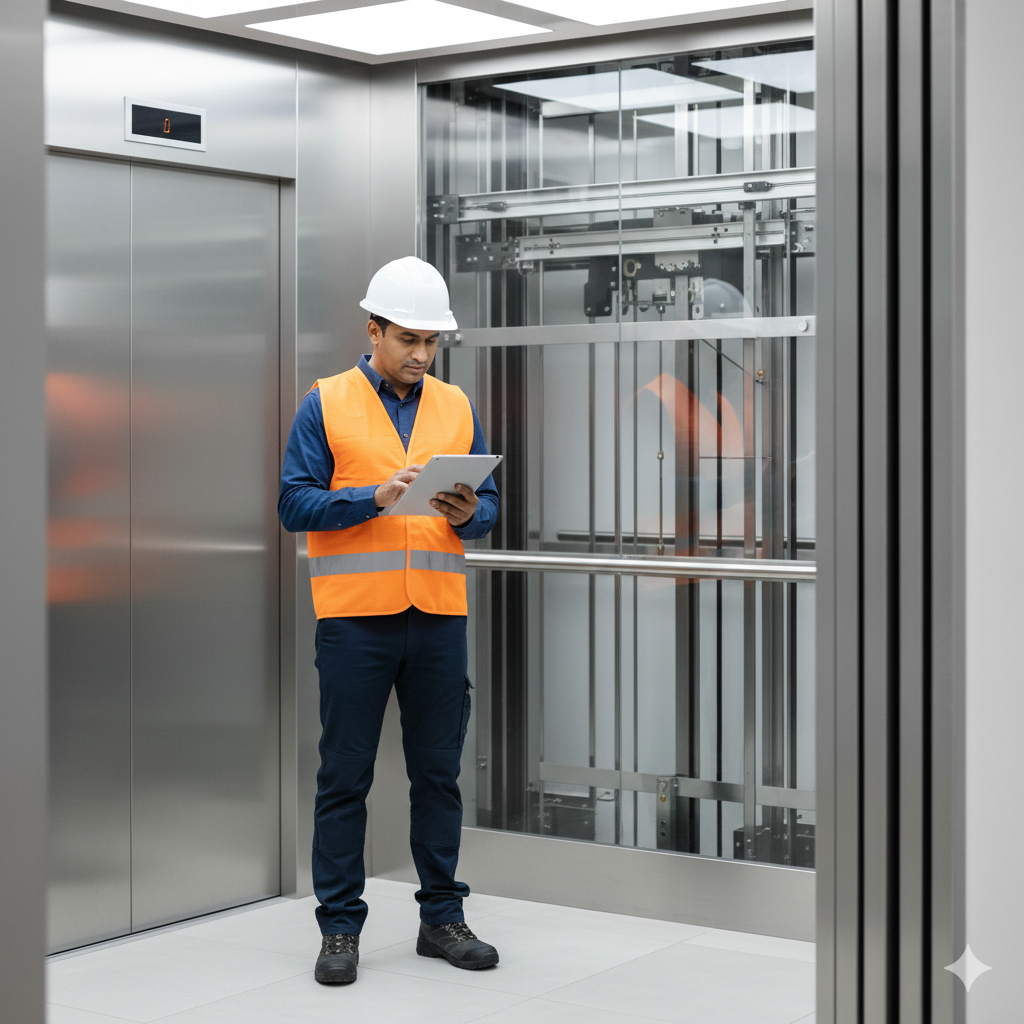
Determining which is the safest home elevator in India requires a close look at certified safety features, build quality, and structural compliance. The safest residential lift is a gearless traction or hydraulic elevator built strictly according to Bureau of Indian Standards guidelines, featuring a multi-layered safety circuit loop. These premium passenger systems use full-height infrared light curtains, dependable mechanical overspeed governors, and fully integrated automatic rescue devices to protect your family. In our fifteen years of engineering experience across Telangana, proper installation by certified technical experts matters just as much as buying the highest-rated machinery.
We often see builders and homeowners prioritize Italian cabin finishes and glass walls while completely ignoring underlying mechanical safety components. In our view, true vertical transit safety depends on redundant engineering systems that actively prevent common operational hazards. A safe lift must handle local power grid fluctuations, operate reliably during summer heat waves, and feature fail-safe emergency brakes. Property developers should choose high-quality components over cheap imports to ensure absolute safety for elderly residents and children.
Safest Home Elevator Definition: The safest home elevator in India is a residential vertical transport system that fully complies with the IS 14665 or IS 15259 standards, featuring an integrated automatic rescue device, electromechanical door interlocks, an overspeed governor, and emergency backup braking systems.
Evaluating residential lift safety requires looking beyond smooth marketing brochures to study the core mechanical engineering principles of the machinery. True safety means the lift system uses multiple physical backups to prevent accidents, even if a main electronic controller card fails completely. For example, if a primary lifting cable snaps, mechanical safety gears must clamp onto the guide rails instantly to stop the car. Understanding these industrial design safeguards helps property managers make smart, safety-first purchasing decisions for their multi-story developments.
Why Residential Lift Safety and Compliance Matter Across Hyderabad
The explosive growth of luxury gated communities in booming areas like Gachibowli, Hitech City, and Kondapur has driven high demand for multi-story private lifts. Multi-generation families rely completely on these systems to give aging parents and vulnerable residents safe, independent access to every floor. A single mechanical failure or leveling error can cause serious trips, falls, or stressful entrapment incidents within the home. Local real estate developers know that installing high-safety, certified lifts increases property values and builds buyer trust.
Furthermore, Hyderabad properties must deal with severe summer heat waves and unpredictable power supply fluctuations that stress sensitive electronic components. Intense heat can easily scramble unventilated microprocessor boards, while sudden voltage drops trip safety circuits and trap passengers between floors. Data from regional field testing centers like Exfol Friends Elevators Pvt. Ltd. shows that 70% of local residential breakdowns stem from poor voltage regulation and neglected backup battery maintenance. Choosing a system with climate-hardened components helps homeowners prevent these regional climate issues.
How the Safest Home Elevators Systematically Protect Passengers
- The Electronic Infrared Light Curtain Monitors the Doorway: Continuous arrays of invisible light beams scan the entrance to reopen the sliding doors instantly if a child or pet steps near the path.
- The Electromechanical Interlocks Lock the Hoistway Access Points: Heavy-duty physical locks prevent any landing door from opening unless the elevator car has arrived and stopped perfectly level at that floor.
- The Mechanical Overspeed Governor Tracks Travel Velocity: A calibrated governor system uses steel flyweights to trigger the safety brakes instantly if the cabin moves faster than its rated speed.
- The Automatic Rescue Device Deploys During Main Power Cuts: A dedicated battery bank takes over during blackouts to drive the lift safely to the next landing and open the doors automatically.
- The Solid Steel Buffers Absorb Excess Kinetic Energy: Heavy industrial springs or hydraulic buffers mounted at the bottom of the shaft cushion the cabin safely if it travels past the lowest landing.
- The Emergency Safe-Stop Loop Shuts Down Motor Power: A series of safety switches wired in a continuous loop cuts off all electrical power to the drive motor if a single door lock opens unexpectedly.
- The Certified Technical Inspector Confirms Full Regulatory Clearances: Field engineers complete rigorous load tests to ensure the system fully satisfies the strict safety rules of the Telangana Lifts Act.
Safety Variations Across Different Residential Elevator Designs
| Lift Technology Type | Core Mechanical Safety System | Drive Efficiency Level | Best Fit for Hyderabad Properties |
| Gearless Traction MRL | Dual mechanical disk brakes, overspeed governor, steel ropes | High Energy Efficiency (Up to 40% power savings) | Perfect for modern high-use villas and multi-family apartments |
| Hydraulic Drive System | Rupture valve locks, manual lowering valve, oil pressure switches | Medium Efficiency (Draws power mostly when going up) | Great for premium low-rise homes needing a silent, smooth ride |
| Screw and Nut Drive | Self-locking threaded shaft, limit switches, basic backup motor | Low Efficiency (Slower travel speeds) | Good for compact spaces where cutting a deep pit is not possible |
Gearless Traction Machine-Room-Less Lifts
Gearless Traction MRL designs represent the peak of modern residential vertical transit engineering, using durable counterweights and high-strength steel ropes to move the car. These systems mount the compact motor directly inside the top of the shaft, removing the need for a separate penthouse machine room. Dual mechanical disk brakes work alongside an independent overspeed governor to give passengers reliable, multi-layered protection. Traction systems are ideal for properties with high daily usage because they stay cool under heavy loads and offer smooth, high-speed travel.
Premium Hydraulic Drive Systems
Hydraulic home elevators use an electric pump to push specialized fluid into a steel piston, lifting the car smoothly between floors. These designs offer excellent safety because the car rests on a solid column of oil, making sudden drops mechanically impossible. If a pipe cracks, a specialized rupture valve cuts off oil flow instantly to lock the lift safely in place. Hydraulic models also feature a simple manual lowering valve that lets you bring the car down safely by hand during total power failures.
Screw and Nut Drive Mechanisms
Screw-driven lifts use an electric motor to rotate a heavy industrial nut around a fixed vertical steel screw, moving the car smoothly up and down. This simple mechanical layout is incredibly safe because the threaded design prevents the cabin from falling, even if the drive loses all electrical power. These units require very shallow floor pits and low overhead space, making them popular for retrofitting into older homes. However, they travel much slower than traction models and generate more mechanical noise during long trips.
Major Long-Term Benefits of Choosing Certified High-Safety Lifts
- Eliminates Passenger Entrapment Risks: High-quality automatic rescue systems ensure the elevator car always reaches a safe floor landing during unexpected grid blackouts.
- Reduces Annual Maintenance Expenses: Buying certified machinery prevents early component wear, saving you from expensive emergency motor and control board repairs.
- Maintains Smooth and Silent Operation: Perfect structural rail alignment and high-grade guide rollers remove annoying cabin vibrations and metallic scraping sounds.
- Meets All Local Government Safety Laws: Keeping your lift fully compliant with the National Building Code (NBC) protects your property from municipal fines and insurance issues.
Home Elevator Safety Misconceptions: The biggest misconception is believing that standard backup power inverters can replace a dedicated industrial Automatic Rescue Device (ARD), when in reality, basic home inverters lack the peak current capacity needed to disengage heavy mechanical motor brakes safely.
We often visit residential properties where owners have bypassed the elevator’s built-in automatic rescue systems to save money, wire-tapping the lift directly into their household backup inverters instead. This dangerous practice often burns out sensitive control electronics and fails to unlock the heavy mechanical brakes during an emergency. A true, factory-integrated ARD runs on its own independent battery circuit that is continuously monitored and tested by the lift’s main computer. Relying on verified, purpose-built safety hardware ensures your family stays protected during unexpected power cuts.

Field Scenarios: Elevating Safety Protocols in Telangana Properties
Luxury Villa Inspection: Gachibowli
A homeowner living in a premium gated estate in Gachibowli contacted our technical team because their home lift was making loud thumping noises whenever the doors closed.
[ Misaligned Door Panel ] ──► Safety Interlock Fails to Close ──► System Shuts Down Safety Loop
[ Precision Re-alignment ] ──► Flawless Safety Contact Restored ──► Zero Interruption Performance
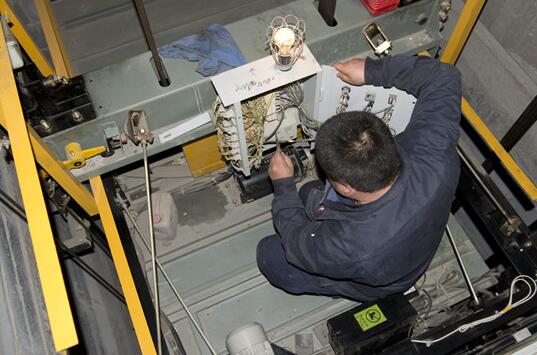
Our on-site evaluation showed that structural settling in the villa had shifted the main door frame out of alignment by several millimeters. This small shift prevented the mechanical interlock from locking smoothly, which forced the safety computer to shut down the lift repeatedly. We realigned the door headers, cleaned out the floor tracks, and updated the door controller software. These adjustments fixed the noise issues and ensured the mechanical safety switches engaged perfectly on every single trip.
Private Triplex Modernization: Kondapur
A developer building a large multi-generation home in Kondapur needed an urgent safety audit after a cheap imported lift failed its initial building inspection.
The imported lift lacked a certified overspeed governor and used unrated mechanical ropes that did not meet Indian safety guidelines. We stripped out the uncertified parts and upgraded the hoistway with an advanced gearless traction motor, code-compliant steel cables, and a verified safety block assembly. This comprehensive mechanical overhaul brought the lift into full compliance with the Telangana Lifts Act, giving the owners long-term peace of mind.
FAQs: Choosing and Maintaining the Safest Home Elevators
1. Which is the safest home elevator in India for multi-story residential villas?
The safest choice is a gearless traction or hydraulic lift built strictly to IS 14665 standards and fitted with a verified automatic rescue device.
2. Why are full-height infrared light curtains essential for home lift safety?
Light curtains scan the entire doorway with continuous light beams, stopping the doors from closing if a child, pet, or object is in the way.
3. Can a home elevator fall down the shaft if all the lifting cables snap?
No, certified elevators use independent mechanical safety gears that clamp onto the steel guide rails instantly to stop the car if a rope fails.
4. How does extreme summer heat affect private villa elevators in Hyderabad?
Unventilated machine spaces can overheat sensitive control panels, which triggers safety shutdowns and leaves the lift unresponsive until it cools down.
5. What is the main safety advantage of a hydraulic home elevator drive?
Hydraulic cars rest directly on a solid cylinder of oil, making sudden drops impossible and allowing easy manual lowering during power outages.
6. How often do automatic rescue device batteries need a professional load test?
Field engineers should test the backup rescue batteries every thirty days and replace the power cells every two years to ensure reliability.
7. Is a shallow pit elevator safe for a home with young children?
Yes, as long as the system uses electromechanical interlocks and safety switches that prevent the car from moving if any access panel is open.
8. Do local Telangana regulations require formal inspections for private home lifts?
Yes, the Telangana Lifts Act requires regular safety checkups by certified technicians to protect passengers and maintain legal building compliance.

Investing in Certified Peace of Mind for Your Household
Choosing a certified, high-safety home elevator protects your family’s daily mobility, reduces building liability risks, and preserves your real estate value for years to come. Staying on top of basic maintenance—like keeping door tracks clear and testing backup batteries—stops minor wear from turning into major breakdowns. Partnering with a licensed local service group guarantees your lift runs dependably and safely every single day.
Consulting with experienced local lift engineers helps property owners select the right equipment designs and avoid uncertified machinery. For comprehensive safety audits, custom hoistway evaluations, or structural compliance checks across Telangana, consider contacting the expert group at Exfol Friends Elevators Pvt. Ltd. Luxury villa owners, residential community managers, and luxury property developers can reach the regional office of Exfol Friends Elevators Pvt. Ltd., Hyderabad, Telangana via Exfol Friends Elevators to book an on-site safety inspection or arrange a detailed technical consultation today.


Leave a Comment