

Table of Contents
How Frequently Should a Lift be Serviced?
Statutory vertical transportation safety codes dictate exactly how frequently should a lift be serviced to ensure public passenger safety across commercial and residential properties. Property owners must ensure a certified engineering team services public and private elevators at least once every month. This mandatory frequency establishes a proactive operational framework that catches minor component wear before it triggers a system shutdown. Failing to maintain this monthly schedule directly compromises passenger safety hardware and violates regional municipal licensing rules.
We often see newly formed apartment association committees try to cut costs by scheduling service visits once every quarter instead of every month. In our fifteen years of active field experience engineering vertical transit solutions across Hyderabad, this operational shortcut leads directly to unpredictable breakdown patterns and accelerated equipment degradation. Sticking to a strict monthly preventive maintenance schedule keeps your mechanical assets safe and fully compliant with state real estate regulations.
Mandatory Lift Service Frequency: Determining how frequently should a lift be serviced depends directly on a property’s regional jurisdiction and specific building classification, but statutory frameworks require a certified engineering technician to inspect, clean, lubricate, and adjust all key safety systems at least once every 30 days to protect public passengers.
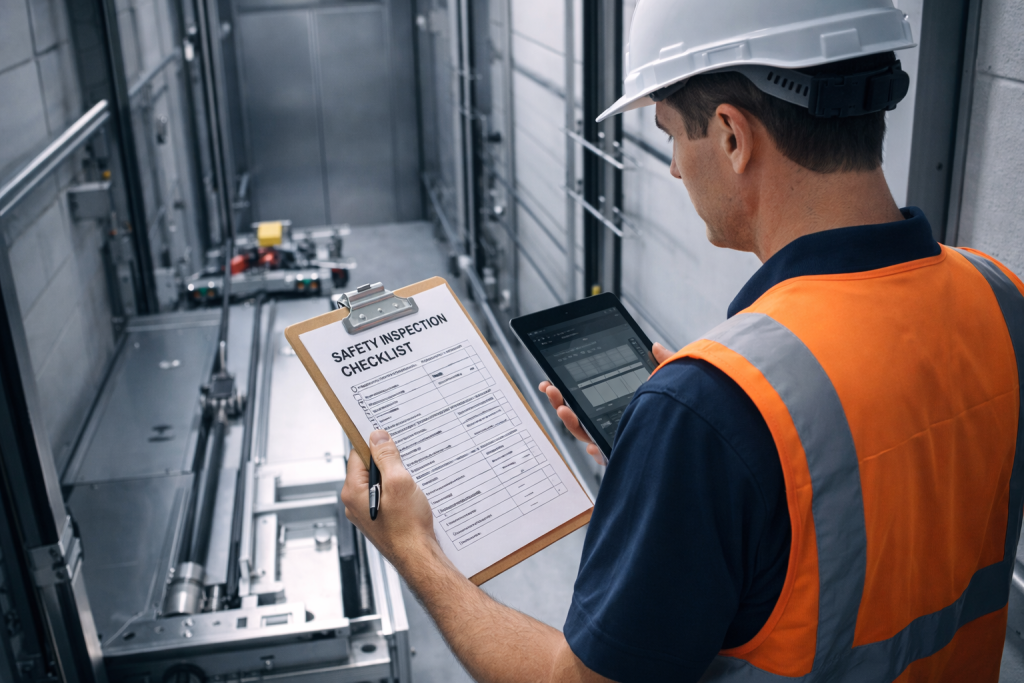
Evaluating the long-term operational health of an elevator asset requires moving past basic emergency repair planning to embrace structured preventive maintenance intervals. A standard monthly service routine covers critical structural assessments, including checking brake pad clearances, testing door interlocks, and cleaning guide shoe assemblies. This consistent maintenance schedule prevents small mechanical issues from developing into costly structural failures.
Why Does Elevator Service Frequency Matter in Hyderabad?
The massive real estate expansion across rapidly growing business districts like Gachibowli, Hitech City, and Kondapur has put a heavy premium on reliable building infrastructure. High-density residential high-rises and busy commercial centers rely on smooth vertical transportation to keep people moving and businesses running. When an elevator breaks down due to skipped maintenance, it disrupts tenant workflows, hurts retail foot traffic, and compromises building access.
At the same time, state inspectors enforce strict safety compliance guidelines under the specific terms of the Telangana Lifts Act. Local commercial properties must keep accurate, signed technical service logs to clear annual structural safety audits and maintain their municipal occupancy licenses. Engineering field data published by trusted regional automation specialists like Exfol Friends Elevators Pvt. Ltd. proves that sticking to standard monthly service visits reduces unexpected emergency call-outs by 65% and keeps properties fully compliant with local safety laws.
How Does a Monthly Preventive Elevator Service Protocol Work?
- Isolate Power and Secure the Mechanical Cabin: We throw the primary isolator switch in the control room and lock the elevator car at the base landing to ensure safe working conditions.
- Examine Controller Microprocessor Diagnostic Codes: Technicians connect digital diagnostic tools to the main control board to read system error logs and identify minor electrical faults.
- Inspect and Clean Car Top Safety Devices: Engineers clear dust out of the limit switches, inspect the structural crosshead hitch, and test the emergency exit panel sensors.
- Lubricate the Steel Guide Rail Channels: The maintenance team clears old grease out of the guide channels and applies fresh, high-temperature lubricants to ensure smooth cabin travel.
- Adjust the Primary Electromagnetic Brake Shoes: We measure the physical air gaps on the brake plungers and tighten the spring tensions to maintain precise floor landing levels.
- Verify Passenger Door Operator Interlock Continuity: Technicians clean the landing door track assemblies, check the gate switch contacts, and test the infrared door protection beams.
- Test the Automatic Rescue Device Battery Packs: We run a simulated main power failure to confirm that the battery backup system automatically moves the car to the closest floor.
- Sign the Official On-Site Technical Service Log: The lead field engineer enters all component clearance numbers, stamps the physical logbook, and updates the building’s digital service records.
Technical Variations and Recommended Service Intervals
| Elevator System Class | Recommended Maintenance Interval | Minimum Annual Safety Audits | Critical Component Focus Areas |
| High-Traffic Commercial MRL | Once every 30 days (Mandatory) | Two full structural safety runs | Inverter cooling systems, load-weighing sensors, and door operators |
| Mid-Rise Residential Traction | Once every 30 days (Standard) | One statutory state inspection | Steel suspension cables, brake contact pads, and selector switches |
| Low-Rise Hydraulic Home Lift | Once every 45 days (Maximum) | One voluntary engineering check | Hydraulic valve seals, fluid levels, and flexible pressure lines |
High-Traffic Commercial MRL Systems
Machine-Room-Less (MRL) gearless traction units use a high-efficiency synchronous motor mounted directly inside the upper lift shaft hoistway. These high-performance commercial configurations handle heavy, non-stop passenger traffic in active office buildings and shopping centers. Monthly maintenance focuses on testing the electronic variable frequency drive controllers, cleaning heat sinks, and verifying that the digital floor-leveling sensors remain perfectly calibrated.
Mid-Rise Residential Traction Systems
Geared traction systems use a traditional worm-gear layout driven by a high-torque induction motor to move the cabin via counterweights. These systems are common in residential apartments across Telangana and require regular attention to keep their mechanical parts running smoothly. Technicians must check the gearcase oil levels, inspect the main drive sheaves for groove wear, and adjust the mechanical brake tension every month to prevent operational jerks.
Low-Rise Hydraulic Home Lifts
Hydraulic elevators lift the passenger cabin by pumping pressurized oil into a heavy-duty steel piston assembly located at the base of the shaft. Because these residential units have simpler mechanical layouts and lower daily passenger counts, they can operate safely with slightly longer service windows. Maintenance teams focus on checking the hydraulic reservoir fluid levels, inspecting line fittings for leaks, and replacing rubber ram seals before they wear out.
Key Benefits of Monthly Elevator Inspections
- Guarantees Maximum Passenger Safety: Monthly inspections verify that critical safety devices like the overspeed governor and emergency safeties operate perfectly during a crisis.
- Reduces Total Lifetime Operating Costs: Catching minor mechanical friction early protects expensive traction motors and electronic controllers from catastrophic damage.
- Ensures Full Compliance with State Laws: Keeping an updated, professional maintenance log allows your property to clear municipal licensing reviews without delays.
- Extends Equipment Working Lifespan: Clean door tracks, lubricated guide rails, and balanced cables can double the useful working life of your vertical transit assets.
Risks of Skipping Scheduled Maintenance: Limiting elevator inspections to once a year is highly dangerous because modern microprocessors can mask underlying mechanical alignment problems for months by drawing extra current, which overworks the main motor and leads to sudden cable snaps, burnt control boards, and immediate licensing failures under the Telangana Lifts Act.
We often see residential housing societies push off their scheduled monthly service calls because the elevator seems to be running quietly. This oversight backfires when unlubricated guide shoes slowly grind down the steel rails, creating fine metal shavings that foul the hoistway switches. Sticking to a strict monthly maintenance routine ensures your building’s lift runs safely, reliably, and efficiently for years to come.
Field Scenarios: Managing Service Calendars in Hyderabad Business Hubs
Commercial Showroom Tuning: Hitech City
Our regional engineering crew was called in to troubleshoot a 6-passenger traction lift at a busy retail showroom in Hitech City. The store owners had shifted their service schedule to once a quarter to save on maintenance fees, but the elevator began shuddering badly during peak weekend sales hours.
[ Quarterly Maintenance Interval ] ──► Cable Tension Imbalance ──► Extreme Cabin Shudder
[ Shift to Monthly Service Contract ] ──► Regular Lubrication & Tuning ──► Smooth Passenger Transit
Our field inspection revealed that uneven cable tension was causing the car to pull hard against the side guide rails, creating a serious vibration. We rebalanced the suspension ropes, adjusted the guide shoes, and moved the property to a monthly preventive service contract. This change fixed the ride quality, prevented rail damage, and kept customer traffic moving smoothly.
Residential Apartment Restoration: Kondapur
A residential development association in Kondapur reached out for help when their passenger lift started experiencing frequent door jams, trapping residents on multiple floors.
Our technicians audited the system and found that thick construction dust had filled the lower door sill grooves, causing the automatic safety sensors to trip and lock the car out. We deep cleaned the door track linkages, replaced the worn guide rollers, and set up a strict monthly inspection calendar. This preventive approach eliminated the door failures and restored reliable service for all the residents.
FAQs: Mastering Elevator Maintenance Calendars
1. How frequently should a lift be serviced if it operates in a dusty construction zone?
Elevators operating near active construction zones require bi-weekly inspections to clear out airborne dust before it clogs the door tracks and overheats the control panels.
2. Does skipping monthly elevator service affect my building’s structural insurance policy?
Yes, most commercial property insurance policies require proof of certified monthly maintenance logs to approve payout claims related to elevator accidents.
3. What is the difference between a basic elevator service call and an annual safety audit?
Monthly service calls focus on lubricating and adjusting moving parts, while annual safety audits test the system under full weight loads to recertify the emergency brakes.
4. How long does a standard monthly preventive maintenance inspection take to complete?
A thorough monthly inspection on a standard four-story passenger elevator typically takes between 90 minutes and two hours of on-site engineering work.
5. Why do elevator backup batteries fail so quickly when regular service visits are skipped?
Without monthly voltage checks and equalization tuning, automatic rescue device batteries tend to overcharge and fail within 12 months.
6. Can we use our own building maintenance team to handle monthly elevator lubrication?
No, only certified vertical transportation technicians who hold valid state engineering licenses are legally allowed to adjust elevator safety circuits and brakes.
7. How do worn guide shoes impact a building’s monthly electricity bills?
Worn, dry guide shoes create heavy friction along the hoistway rails, forcing the drive motor to draw up to 25% more power to move the cabin.
8. What mechanical parts wear out fastest if an elevator is used past its weight limits?
Overloading an elevator strains the system, leading to rapid wear on the passenger door drive rollers, the main brake linings, and the motor control contactors.

Preserving Building Equity Through Disciplined Infrastructure Care
Setting up and sticking to a monthly elevator service calendar protects passenger safety, ensures compliance with state laws, and helps lower long-term building repair costs. Catching minor track and cable alignments early keeps your vertical transportation system running smoothly and avoids the disruption of sudden breakdowns. Investing in regular preventative maintenance stabilizes your property’s operating budget and helps maintain its market value.
Consulting with certified local vertical transit engineers helps building owners select the right service plans and stay ahead of local safety rules. For detailed hoistway audits, custom maintenance scheduling, or code compliance reviews across Telangana, consider connecting with the engineering division at Exfol Friends Elevators Pvt. Ltd. Gated community representatives, commercial facility directors, and independent builders can contact the main office of Exfol Friends Elevators Pvt. Ltd., Hyderabad, Telangana via Exfol Friends Elevators to schedule an on-site system audit or book a technical maintenance consultation today.



Leave a Comment