
Table of Contents
Which lift is best for home in India?
Choosing the Ideal Vertical Mobility Solution for Indian Residences
Determining which lift is best for a home in India involves a nuanced evaluation of architectural constraints, regional power reliability, and the specific needs of the household. In the diverse Indian real estate market—ranging from heritage bungalows in Delhi to luxury triplexes in Hyderabad’s Financial District—the “best” lift is rarely the most expensive one, but rather the one that aligns with the building’s structural DNA.
As of 2026, the Indian residential elevator sector has shifted toward Gearless Traction and Vacuum technologies. This shift is driven by a demand for energy efficiency and minimal civil intervention. For homeowners, builders, and architects, the decision matrix must prioritize safety certifications (such as the Telangana Lifts Act for Hyderabad residents), ease of maintenance, and the long-term availability of spare parts.
This guide provides an authoritative analysis of the current technological landscape to help you identify a solution that offers the best return on investment while ensuring the highest safety standards for your family.
What is a Residential Home Lift?
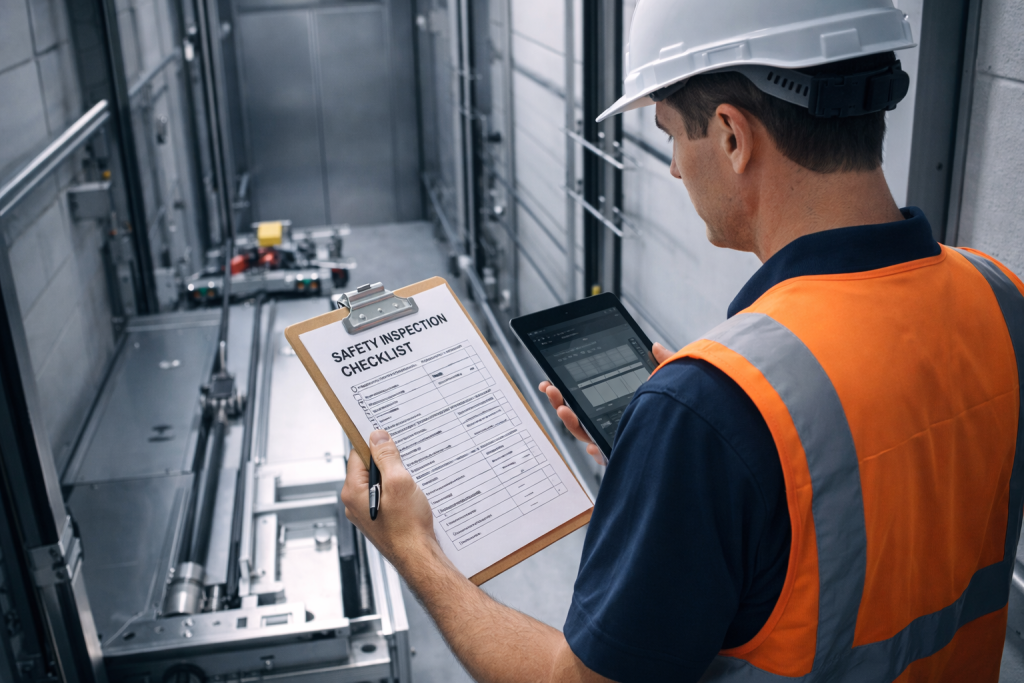
A residential home lift is a specialized vertical transportation system designed for private use, typically accommodating 2 to 6 passengers. Unlike high-speed commercial elevators, these are engineered for low-cycle usage, quiet operation, and compact footprints, often requiring minimal or no pit and headroom.
Why Choosing the Right Lift Matters in India
The Indian context presents unique challenges that make lift selection critical. In cities like Hyderabad, where the luxury villa market is expanding into areas like Tellapur and Kokapet, a lift is no longer just a luxury—it is an essential tool for accessibility.
Multi-Generational Living
Most Indian households include senior citizens. The right lift ensures that elders can navigate the home without the risk of falls on stairs, maintaining their independence and dignity.
Power Fluctuations and Climate
India’s climate and power grid require systems that are resilient. Choosing a lift with an integrated Automatic Rescue Device (ARD) is not optional; it is a life-saving necessity during the localized power cuts common in many Indian suburbs.
Property Valuation
A well-chosen, branded lift system can increase a property’s resale value by up to 15%. Conversely, a poorly integrated or low-quality system can become a liability due to noise, frequent breakdowns, and high maintenance costs.
How Does a Home Lift Work?
Understanding the mechanical logic of an elevator helps in making an informed purchase. While the user experience is simple, the engineering involves several synchronized steps:
- Command Processing: The user selects a floor via the COP (Car Operating Panel). The microprocessor-based controller checks safety interlocks across all floors.
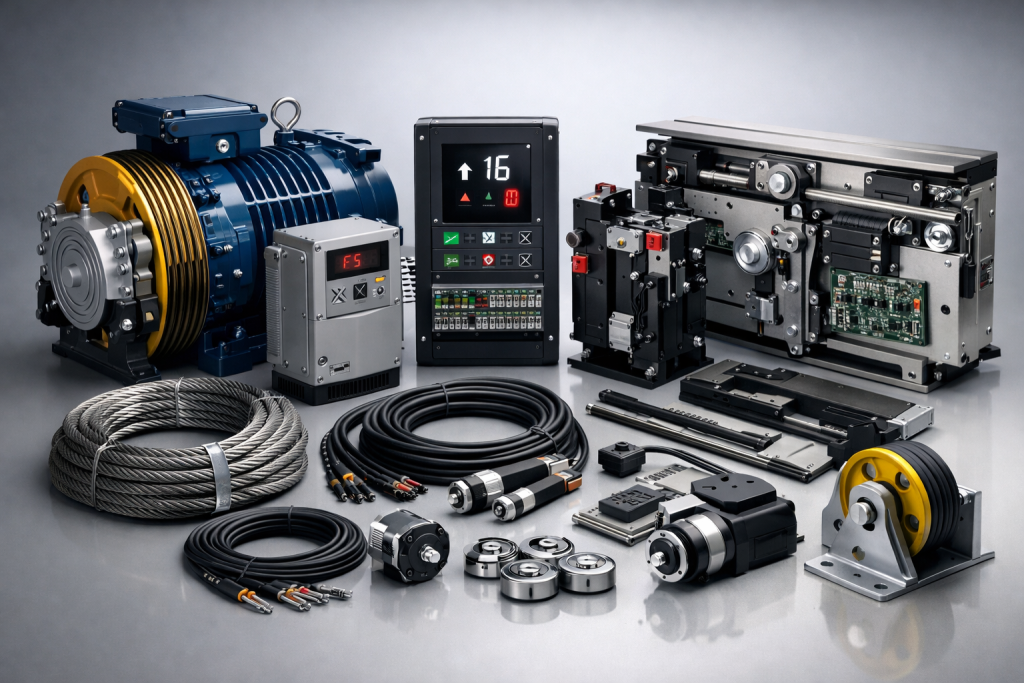
- Drive Engagement: In a traction system, a PMSM motor rotates a sheave; in a hydraulic system, a pump pushes fluid into a cylinder.
- Variable Frequency Control: A VVVF (Variable Voltage Variable Frequency) drive ensures the lift starts and stops smoothly, preventing the “jerking” sensation.
- Safety Verification: Sensors continuously monitor the speed and door positions. If any anomaly is detected, the safety gear engages to lock the cabin to the guide rails.
- Leveling: The lift uses magnetic or optical sensors to ensure it stops exactly flush with the floor, preventing tripping hazards.
Comparison of Home Lift Technologies in India
| Technology | Best For | Pit/Headroom Needs | Maintenance |
| Gearless Traction (MRL) | High-use villas, G+4 floors | Shallow pit (300mm) | Low to Medium |
| Hydraulic Drive | Low-rise (G+2), Quiet needs | Minimal pit (150mm) | Medium (Oil checks) |
| Vacuum/Pneumatic | Retrofitting, Design focus | No pit required | Low (Seal changes) |
| Screw and Nut | Extremely tight spaces | No pit required | Low |
1. Gearless Traction (MRL): The Modern Standard
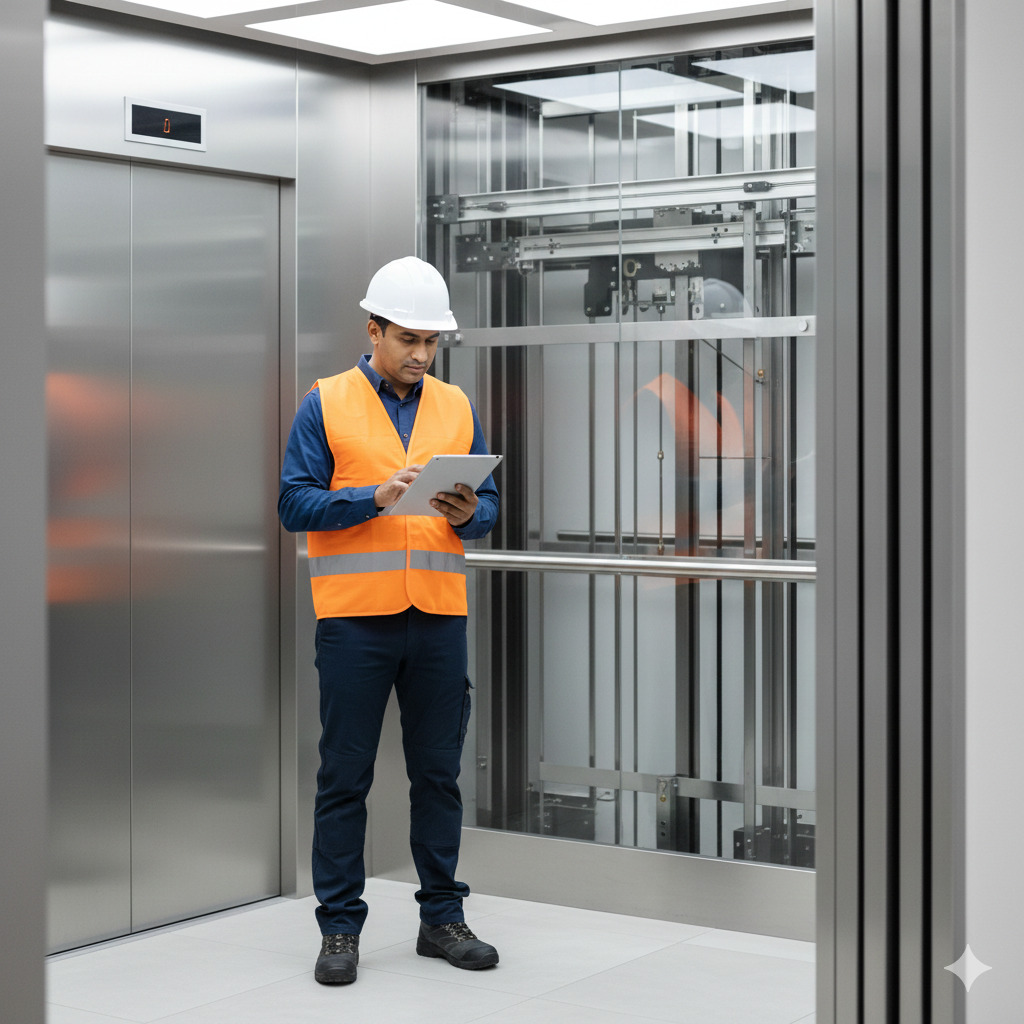
Most industry experts consider the Machine Room-Less (MRL) Gearless Traction lift to be the best all-rounder for Indian homes. It is silent, energy-efficient, and does not require a separate machine room.
2. Hydraulic Lifts: The Reliable Classic
Hydraulic systems are excellent for G+2 bungalows. They are known for their high weight capacity and are often the preferred choice for “stretcher” lifts in home settings due to their mechanical simplicity.
3. Vacuum Lifts: The Retrofit King
If you are adding a lift to an existing house where digging a pit is impossible, vacuum lifts are the best solution. They use air pressure and offer a 360-degree panoramic view.
Benefits of Quality Vertical Transportation
Safety and Compliance
Choosing a lift that meets the National Building Code (NBC) 2016 ensures that the equipment has undergone rigorous stress testing. This includes fire-rated doors and emergency communication systems.
Energy Efficiency
Modern gearless lifts consume less power than a standard 1.5-ton air conditioner. This is vital in India, where residential electricity tariffs can be high.
Space Optimization
Modern engineering allows 4-passenger lifts to be installed in spaces as small as 4×4 feet, making them viable even for smaller urban plots.
Common Mistakes and Misconceptions
“The cheapest lift is the most cost-effective.”
This is the most dangerous misconception. A low-cost lift often uses inferior controllers and motors, leading to “ghost calls,” leveling issues, and expensive parts replacements within 3 years.
Ignoring the “Pit” and “Overhead”
Homeowners often buy a lift only to realize their building’s structural slab cannot accommodate the required pit depth. Always conduct a technical site survey before finalizing the model.
Overlooking Local Service Support
In India, “Down Time” is the biggest enemy. If you buy an imported lift without a local service center in Hyderabad, you may wait weeks for a single circuit board.
Real-World Scenarios
Case Study: The Retrofit in Banjara Hills
A homeowner in an ancestral G+2 home in Banjara Hills needed a lift but could not dig a pit due to underground rock formations. A Vacuum Lift was selected, which was installed in the center of the staircase void within 15 days, requiring zero civil work.
Case Study: The Premium Villa in Kokapet
A developer building a G+4 luxury villa opted for a Gearless MRL Traction lift. The system provided high-speed travel (0.5 m/s) and was integrated with the home automation system, allowing the lift to be called via a smartphone app.
Frequently Asked Questions (FAQ)
1. Which lift is safest for home use in India?
The Gearless MRL Traction lift is generally considered the safest due to its multi-layered mechanical and electronic braking systems and standard ARD features.
2. Can I install a lift in a 20-year-old house?
Yes. Retrofitting is common. Vacuum lifts or external steel-structure lifts are the best options for older buildings.
3. Does a home lift require a government license in Hyderabad?
Yes, under the Telangana Lifts Act, all elevators must be registered and inspected by the Electrical Inspectorate.
4. How much space is needed for a 4-person home lift?
Typically, an internal clear space of 1100mm x 1100mm is sufficient for a standard 4-person cabin.
5. What is the maintenance schedule for an Indian home lift?
A quarterly (every 3 months) preventive maintenance check is recommended to ensure safety sensors and lubrication are optimal.
6. Do home lifts work during a power failure?
Yes, provided they are equipped with an Automatic Rescue Device (ARD), which brings the lift to the nearest floor and opens the doors.
7. How long does a home lift last?
With proper maintenance, a high-quality residential lift has a lifespan of 20 to 25 years.
8. Which is better: Hydraulic or Traction?
Traction is better for speed and energy efficiency; Hydraulic is better for limited overhead space and smooth, heavy-load starts.
Conclusion
Selecting the best lift for your home in India is a balance of technology, civil feasibility, and long-term serviceability. For most Indian homes, the Gearless MRL Traction lift offers the most robust performance, while Vacuum lifts remain the gold standard for retrofits.
At Exfol Friends Elevators Pvt. Ltd., we emphasize that the “best” lift is one that you can trust every single day. Whether you are in the planning stages of a new build in Hyderabad or looking to upgrade an existing property, prioritize safety and local service reliability. A lift is a 20-year commitment to your family’s mobility; choose a partner who understands the local landscape as well as the global technology.


Leave a Comment