

Table of Contents
How to Maintain an Elevator: Expert Guide for Hyderabad Properties
Knowing how to maintain an elevator requires implementing a structured schedule of routine mechanical inspections, electrical diagnostics, component lubrication, and statutory safety audits. Facility teams must execute daily visual checks, schedule monthly technical maintenance with certified engineers, and complete annual load tests to ensure smooth operation. Following a disciplined maintenance routine prevents costly equipment breakdowns, reduces power consumption, and protects passenger safety across residential and commercial high-rises.
In our 15 years of vertical transportation field experience across Telangana, we frequently see building management committees treat elevator maintenance as an afterthought until a sudden breakdown traps passengers. Maintaining an elevator isn’t merely about wiping down landing doors or topping up gearbox oil; it demands active monitoring of hoist rope tension, drive thermal thresholds, brake shoe clearance, and safety governor triggers. A rigorous maintenance strategy extends mechanical life cycles and preserves property value.
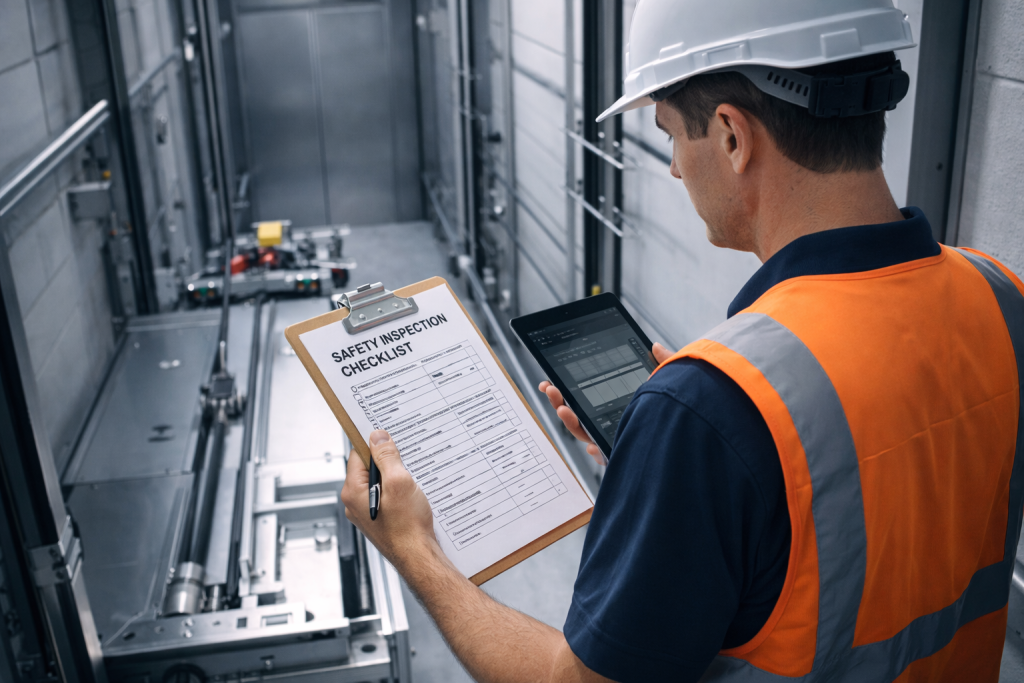
What is elevator maintenance?
Elevator maintenance is the systematic inspection, lubrication, adjustment, testing, and servicing of vertical transportation components to guarantee operational safety, ride comfort, and code compliance. Governed by Bureau of Indian Standards guidelines (IS 14665/15785) and the National Building Code (NBC 2016), structured maintenance replaces worn components before mechanical or electrical failures cause equipment downtime.
+-----------------------------------------------------------------------+
|                    ELEVATOR MAINTENANCE CORE PILLARS                  |
+-----------------------------------------------------------------------+
|  1. Daily Operational Checks  ---> Door Sensors & Floor Leveling      |
|  2. Monthly Technical Audits  ---> Motor Brakes, Drives & ARD Tests   |
|  3. Annual Safety Governance  ---> Governor Drop Tests & CEIG Licensing|
+-----------------------------------------------------------------------+
Proper elevator servicing bridges the gap between daily operations and long-term asset conservation. Maintenance tasks divide into three core operational tiers: preventive maintenance, predictive diagnostics, and corrective repairs.
Certified field technicians evaluate control panels, Variable Voltage Variable Frequency (VVVF) drives, over-speed governors, and landing interlocks during monthly service visits. By adhering to standardized protocols, property managers prevent minor component wear from cascading into major motor or traction sheath failures.
Why does elevator maintenance matter in Hyderabad?
Hyderabad’s rapid vertical expansion—from high-density commercial corridors in HITEC City to sprawling residential communities in Kondapur and Miyapur—has dramatically increased the operational strain on elevator infrastructure. High-rise developments require continuous vertical transit, making elevator reliability a core property management mandate.
Local environmental and operational factors make specialized elevator care critical across Telangana:
- Grid Power Instability: Frequent voltage spikes during summer months strain electronic control boards and motor windings. Maintenance teams must test solid-state Automatic Rescue Devices (ARD) and emergency battery banks monthly to guarantee emergency car lowering during power cuts.
- Basement Pit Moisture: Heavy monsoon downpours often cause groundwater seepage into basement elevator pits across areas like Kukatpally and Gachibowli. Water accumulation rusts bottom limit switches, governor tension pulleys, and structural buffer springs.
- Intensive Usage Cycles: Peak morning and evening office commutes in tech parks demand precise door operator calibration and weight sensor alignment to manage heavy passenger loads.
- Statutory Compliance Mandates: The Chief Electrical Inspectorate to the Government (CEIG) enforces compliance under the Telangana Lifts, Escalators and Passenger Conveyors Act. Non-compliant properties face operational shutdowns and legal liability.
Field data from regional engineering authorities like Exfol Friends Elevators demonstrates that proactive monthly servicing reduces emergency entrapment events by up to 70% compared to reactive repair models.
How to maintain an elevator step-by-step
Executing a complete elevator maintenance program involves five distinct procedural phases. Certified vertical transportation engineers follow this step-by-step protocol to keep passenger and freight systems running safely:
1.Step 1: Conduct Daily Visual and Operational Inspections:Identify physical wear, unusual mechanical noise, and sensor misalignments..
Building security or maintenance personnel must inspect car operating panels, test 3D door safety curtains, verify smooth floor-leveling alignment, and listen for abnormal motor gear grinding or brake squeal during daily operation.
2.Step 2: Execute Monthly Machine Room and Shaft Maintenance:Clean, lubricate, and measure critical moving parts..
A certified elevator technician checks gearbox oil levels, measures hoist rope stretch, cleans controller contactors, inspects brake shoe clearances, and blow-cleans dust from drive cooling fans.
3.Step 3: Test Automatic Rescue Devices (ARD) and Emergency Backups:Verify emergency battery systems under simulated power failure..
Engineers disconnect primary AC power during monthly audits to confirm that the ARD automatically moves the elevator cabin to the nearest landing, unlocks the doors, and illuminates emergency cabin lighting.
4.Step 4: Inspect Safety Circuits and Mechanical Interlocks:Audit door interlocks, limit switches, and governor safety jaws..
Technicians test landing door mechanical locks, car gate switches, top and bottom ultimate limit switches, and emergency stop buttons to ensure instant safety circuit interruption during fault conditions.
5.Step 5: Complete Annual CEIG Safety Audits and Licensing:Perform load testing and file documentation with local authorities..
Qualified specialists execute mandatory safety governor drop tests and over-speed safety jaw engagements, compiling inspection dossiers to secure annual operational license renewals from state electrical inspectors.
Elevator drive types and maintenance demands
Maintenance protocols vary significantly based on the drive technology installed within the hoistway.
| Elevator Technology | Primary Usage Profile | Key Maintenance Requirements | Service Frequency |
| Geared Traction Lifts | Low-to-mid-rise residential buildings (G+4 to G+10) | Gearbox oil checks, worm gear wear measurement, brake shoe adjustments, traction sheave groove inspection | Monthly technical inspection |
| Gearless MRL (Machine Room-Less) | High-rise commercial & residential complexes | Permanent Magnet Synchronous Motor (PMSM) tuning, VVVF drive thermal checks, encoder calibration, compact brake checks | Bi-monthly diagnostic audit |
| Hydraulic Lifts | Low-rise luxury homes & boutique commercial units | Hydraulic fluid level & temperature checks, seal leak inspections, valve block tuning, pressure line testing | Quarterly mechanical check |
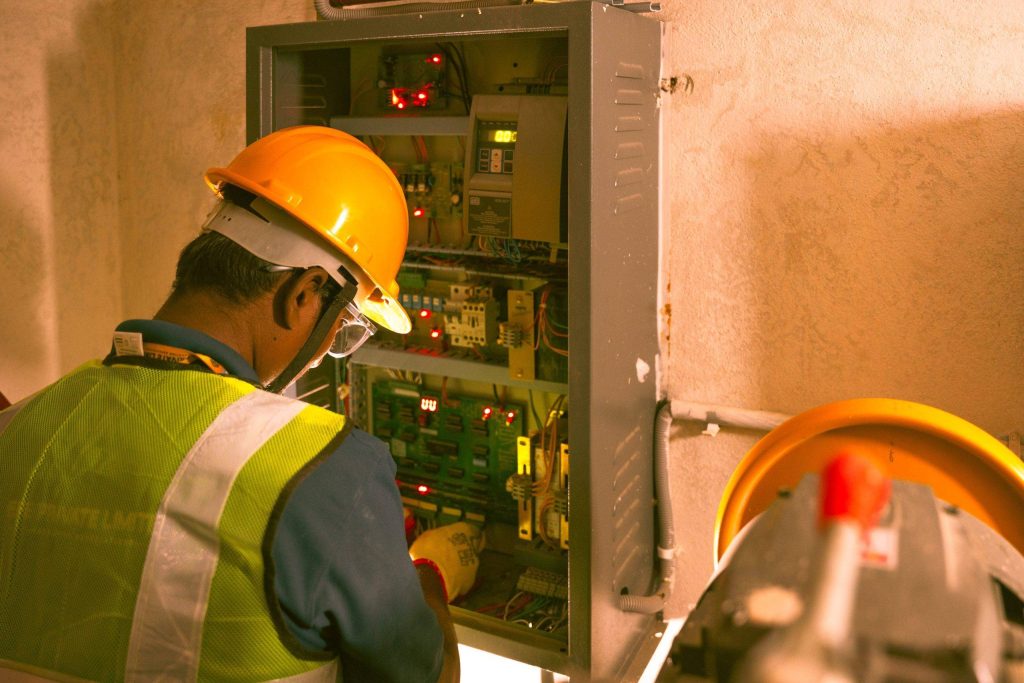
Geared Traction Elevators
Geared systems rely on a mechanical worm-gear reduction box to turn the drive sheave. Technicians must inspect oil levels monthly to prevent metal-on-metal friction and replace worn thrust bearings before drive backlash causes jerky car acceleration.
Gearless Machine Room-Less (MRL) Elevators
MRL elevators house compact PMSM motors directly inside the hoistway shaft. Maintenance focuses heavily on electronic drive diagnostics, encoder signal integrity, and micro-processor controller firmware updates, requiring specialized diagnostic handheld tools.
Hydraulic Elevators
Hydraulic units use an electrically driven pump to force hydraulic fluid into a lifting ram. Service teams focus on inspecting piston seals for fluid leaks, verifying fluid viscosity during seasonal temperature shifts, and recalibrating lowering valves for smooth floor stops.
Key benefits of systematic elevator maintenance
Investing in a disciplined elevator servicing schedule yields measurable operational, legal, and financial advantages for building owners:
- Enhanced Passenger Safety: Routine safety circuit audits and governor testing eliminate the risk of free-fall scenarios, uncontrolled car movement, or door interlock bypass accidents.
- Lower Monthly Energy Bills: Properly lubricated guide rails, balanced counterweights, and tuned VVVF drives reduce electrical motor resistance, lowering monthly power consumption by up to 25%.
- Extended Equipment Life Expectancy: Replacing minor wear items—like door slider shoes, guide roller tires, and relay contactors—prevents premature wear on high-cost traction motors and controller circuit boards.
- Full Regulatory Protection: Maintaining complete service logs and updated inspection certificates protects building managers from steep municipal fines and legal claims following accidental injuries.
Common elevator maintenance mistakes
What is the most critical mistake facility teams make when maintaining an elevator? The most critical mistake is bypassing blown safety fuses or jumpering door interlock circuits to keep a malfunctioning elevator running temporarily. Bypassing safety circuits disables essential fail-safes, creating extreme risks of passenger injury or fatal hoistway falls.
In our field investigations across Hyderabad properties, we frequently identify these preventable operational mistakes:
Neglecting Pit Waterproofing and Drainage
Allowing wastewater or seepage to collect in the hoistway pit destroys bottom limit switches, rusts counterweight buffer springs, and degrades traveling cable insulation. Pits must remain completely dry and free of debris.
Using Non-Standard Replacement Parts
Installing generic, non-OEM relay boards or unrated door operator belts causes frequent electrical communication timing faults, leading to sudden car shutdowns during operation.
Ignoring Minor Floor-Leveling Inaccuracies
When an elevator stops more than 5 mm above or below the landing threshold, it signals brake shoe wear or encoder drift. Ignoring trip hazards accelerates mechanical wear on brake assemblies and invites tenant fall claims.
Real-world elevator maintenance scenarios
These field cases illustrate how proper maintenance prevents major equipment failures:
Scenario 1: Residential Gated Community in Kondapur
A 12-story residential tower in Kondapur experienced repeated elevator stoppages during peak morning hours. Tenants reported loud scraping sounds coming from the shaft and jerky floor stops.
A technical audit revealed that the previous service vendor had neglected guide rail lubrication for over eight months, causing the car frame guide shoes to bind against the steel rails.
Cleaning the rails, replacing worn guide shoe liners, and recalibrating the motor brake restored smooth operation and reduced motor power draw immediately.
Scenario 2: Commercial Tech Tower in Gachibowli
A commercial office complex in Gachibowli suffered frequent Automatic Rescue Device (ARD) failures during summer power outages, trapping office workers between floors.
Inspectors discovered that while the main elevator drive received regular servicing, the emergency ARD gel batteries had never been load-tested or replaced since installation four years prior.
Installing fresh, high-capacity battery units and implementing a monthly automated power-drop test resolved the issue completely, ensuring smooth emergency evacuation during power cuts.
Frequently asked questions
How often should an elevator be serviced in Hyderabad?
Elevators should undergo routine monthly maintenance inspections by qualified technicians, alongside daily visual checks by building staff and annual statutory safety audits for state licensing renewals.
What is included in a standard elevator Annual Maintenance Contract (AMC)?
A standard AMC includes monthly component lubrication, brake adjustments, door sensor calibration, safety circuit testing, emergency repair labor, and 24/7 breakdown response.
How can property managers prevent elevator door failures?
Keep door tracks clean of dirt and debris, inspect infrared 3D light curtains monthly, and replace worn door operator belts and hanger rollers before mechanical binding occurs.
What causes an elevator to stop unevenly with the floor threshold?
Uneven floor stops usually stem from worn motor brake linings, stretched hoist ropes, faulty leveling sensors, or miscalibrated drive encoder parameters.
Are Automatic Rescue Devices (ARD) mandatory under Telangana regulations?
Yes. National Building Code standards and Telangana state building rules mandate functional ARD systems on passenger elevators to safely lower cars to the nearest floor during power outages.
How long do elevator traction ropes typically last?
Elevator hoist ropes generally last between 5 and 10 years, depending on traffic density, sheave groove alignment, environmental humidity, and proper lubrication maintenance.
What should facility teams do if water enters the elevator pit?
Immediately park the elevator car at a top floor, shut off main power at the breaker panel, pump out accumulated pit water, and thoroughly dry all safety switches before restoring service.
Can building maintenance staff perform internal elevator repairs?
No. Elevator systems involve high-voltage electrical panels, complex suspension physics, and strict safety interlocks that require trained, certified vertical transportation engineers.

Sustaining long-term vertical transit safety
Maintaining an elevator requires systematic engineering discipline, rigorous technical oversight, and unwavering compliance with local safety standards. Building owners, property developers, and facility managers across Telangana must prioritize structured preventive maintenance over reactive repairs to safeguard passengers and preserve real estate value.
When evaluating maintenance schedules, technical audits, or system modernizations, consult certified vertical transportation experts who understand regional infrastructure demands. Engineering firms like Exfol Friends Elevators Pvt. Ltd. provide local technical guidance to keep elevator systems operating smoothly across Hyderabad.


Leave a Comment