

Table of Contents
What Is the Cost of Otis Lift Installation in Hyderabad?
In Hyderabad, what is the cost of Otis lift installation typically ranges from ₹8,50,000 to ₹35,000,000 or more, depending on system specifications. Basic residential low-rise Otis models generally start around ₹8,18,000 to ₹12,00,000. Premium high-speed, high-rise commercial configurations with destination control systems often exceed ₹25,00,000 to ₹40,00,000 per unit.
In our fifteen years of field engineering across Telangana, we regularly advise developers and homeowners on total expenditure planning. Beyond the base equipment package, total site costs include civil hoistway preparation, three-phase electrical infrastructure, statutory approval fees, and long-term maintenance contracts. Understanding these cost drivers upfront prevents unexpected budget overruns during building construction.

What Is the Cost of Otis Lift Installation?
What is the cost of Otis lift installation?
The cost of Otis lift installation encompasses the base equipment supply, vertical transportation engineering, shaft civil modifications, three-phase power routing, safety inspection fees, and commissioning labor. Prices vary based on travel height, speed ratings, cabin finishes, Machine Room-Less (MRL) technology, and destination dispatch integration.
Otis Elevator Company remains one of the premier global brands specified across Indian real estate projects. Modern Otis installations rely on patented flat polyurethane-coated steel belts rather than conventional steel wire ropes. This technology reduces machine room space requirements, cuts power consumption via ReGen regenerative drives, and minimizes vibration.
For property owners in Telangana, calculating the true installation cost requires evaluating equipment supply alongside field labor and structural integration. A basic residential setup in a G+3 apartment requires different drive torque, landing interlocks, and pit depth than a high-traffic commercial tower in Hitech City.
Why Does Otis Lift Installation Cost Matter in Hyderabad?
Hyderabad’s real estate expansion across corridors like Gachibowli, Kondapur, Manikonda, and the Financial District has elevated vertical transportation standards. Building owners recognize that installing a recognized global brand adds immediate equity and lease value to residential and commercial properties.
Several hyper-local factors influence procurement and installation economics across Telangana:
- Structural and Civil Integration: Rocky granite terrains across Jubilee Hills and Madhapur complicate deep lift pit excavation, increasing initial foundation construction costs.
- Ambient Thermal Loads: High summer temperatures require robust machine room or top-of-hoistway cooling to prevent drive thermal trips, adding HVAC expenses.
- Grid Reliability Demands: Local power fluctuations mandate heavy-duty line reactors, Automatic Rescue Devices (ARD), and dedicated three-phase power supplies.
- Statutory Compliance: The Telangana Lifts, Escalators and Passenger Conveyors Act requires strict adherence to safety standards, initial inspection licensing, and mandatory periodic load testing.
Industry benchmark data published by Exfol Friends Elevators Pvt. Ltd. indicates that equipment cost represents only 60% to 70% of total vertical transit deployment expenses. Civil hoistway preparation, structural steel headers, electrical feeders, and municipal licensing account for the remaining budget. Aligning project budgets with Bureau of Indian Standards (BIS IS 14665) and National Building Code (NBC 2016) guidelines ensures compliance and long-term operational safety.
How Does the Otis Lift Installation Process Work?
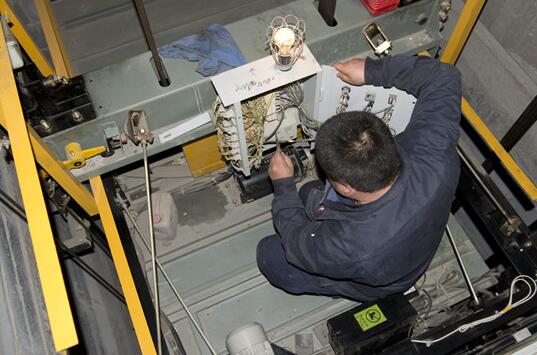
Installing an Otis elevator involves precise mechanical and electrical engineering steps to ensure safe alignment and smooth operation.
1.Civil Shaft Readiness Audit and Pit Inspection:Verifying shaft plumbness, pit depth, overhead clearance, and pit waterproofing.
Field engineers conduct 3D laser plubmness checks of the concrete hoistway. We inspect pit depth (minimum 1200 mm to 1600 mm) and verify pit waterproofing to prevent groundwater ingress.
2.Guide Rail Bracket Anchorage and Rail Plumbing:Mounting guide rail brackets and aligning car and counterweight tracks.
Technicians anchor heavy-duty steel brackets to reinforced concrete beams using chemical anchor bolts. We align guide rails using precision plumb lines within a ±1 mm tolerance across all floors.
3.Traction Machine and Overhead Structural Rigging:Securing the gearless traction drive or machine roomless (MRL) bedplate.
Engineers hoist the gearless drive unit into the top of the shaft or dedicated machine room. We anchor bedplates to structural steel divider beams designed to support full static and dynamic loads.
4.Car Frame Assembly and Counterweight Installation:Assembling the car frame, safety gear, cabin walls, and counterweight frame.
Technicians assemble the structural car sling, bottom safety gear block, roller guide shoes, and counterweight frame, filling counterweight blocks to match cabin weight plus 40–50% rated payload.
5.Polyurethane Steel Belt Roving and Tensioning:Roving polyurethane-coated steel belts over drive and deflector sheaves.
Field teams install Otis flat polyurethane-coated steel belts, securing ends with dead-end hitches. We calibrate belt tension equally across all channels using electronic frequency meters.
6.Landing Door Frames and Door Operator Alignment:Installing landing headers, automatic door operators, and sill tracks.
Technicians mount landing door frames, adjust door hanger rollers, and install header tracks at every floor, ensuring door skates align perfectly with car door couplers.
7.Electrical Wiring, Controller Integration, and ARD Setup:Wiring controller panels, VVVF drives, traveling cables, and safety chains.
Engineers route traveling cables, connect the main microprocessor controller panel, wire safety limit switches, install infrared light curtains, and configure battery-backed Automatic Rescue Devices.
8.Commissioning, Load Testing, and Statutory Certification:Full-load testing, speed governor calibration, and CEIG safety licensing.
We perform static and dynamic weight tests at 125% rated load, calibrate overspeed governors, test emergency brakes, and secure final approval from the Telangana Chief Electrical Inspectorate.
Cost Variations Across Otis Lift Models and Categories
Equipment selection directly drives the baseline pricing for Otis installations. The table below outlines general market cost expectations, technical specifications, and recommended applications across popular product series in Telangana:
| Otis Model Series | Capacity Range | Speed Range | Estimated Equipment Cost (Excl. Tax & Civil) | Target Application |
| Gen2 Prime / Entry Residential | 4 to 6 Persons (300–408 kg) | 0.7 to 1.0 m/s | ₹8,18,000 – ₹11,50,000 | Low-rise residential villas, G+3 apartments |
| Gen2 Life / Mid-Rise | 6 to 13 Persons (408–884 kg) | 1.0 to 1.75 m/s | ₹12,00,000 – ₹18,50,000 | Mid-rise apartments, gated communities, hospitals |
| Gen3 Nova / Gen3 Edge | 8 to 16 Persons (544–1088 kg) | 1.0 to 2.0 m/s | ₹16,50,000 – ₹26,00,000 | Commercial offices, IT parks, premium residential |
| SkyRise / High-Speed Commercial | 13 to 26 Persons (1000–1600+ kg) | 2.5 to 6.0+ m/s | ₹35,00,000 – ₹75,00,000+ | High-rise corporate towers, luxury hotels |

Entry-Level Residential Lifts
Entry-level Otis models like the Gen2 Prime serve low-rise independent homes and small builder floors up to 6 stops. These systems feature compact machine-room-less (MRL) configurations, single-phase power compatibility, and basic stainless steel cabin trims.
Commercial and Mid-Rise Systems
Mid-rise commercial configurations feature larger cab dimensions, higher travel speeds, and continuous-duty cycles. They incorporate variable voltage variable frequency (VVVF) regenerative drives, energy-saving sleep modes, and durable interior finishes.
High-Speed Corporate Solutions
High-speed solutions for commercial towers incorporate advanced destination management systems like Otis Compass 360. These systems optimize passenger traffic, reduce wait times, and integrate with turnstiles and security access control systems.
Key Financial and Operational Benefits of Investing in Otis Systems
While initial capital expenditure for a premium elevator exceeds unbranded local alternatives, long-term operational performance provides distinct financial returns:
- Energy Efficiency Gains: Otis ReGen regenerative drives feed braking energy back into the building power grid, reducing lift operating power consumption by up to 75% compared to conventional geared systems.
- Space Optimization: Flat polyurethane belt technology allows smaller machine sheaves, enabling compact MRL hoistways that save sellable floor area.
- Enhanced Safety Assurance: Continuous electronic belt monitoring systems (Pulse System) check structural wire integrity inside flat belts 24/7.
- Long-Term Property Valuation: Equipping residential or commercial developments with global tier-1 elevators boosts property market values and speeds up unit sales.
What Are the Most Common Misconceptions About Otis Installation Costs?
What are the most common misconceptions about Otis installation costs?
The most common misconception is assuming that the elevator quotation covers the entire installation project. In reality, equipment supply quotes typically exclude civil hoistway construction, machine room ventilation, pit waterproofing, three-phase power cabling, line stabilizers, and state government licensing fees.
Property developers and homeowners frequently miscalculate total vertical transit budgets due to persistent industry myths:
- Myth: The Equipment Price Includes All Site Works: Elevator OEMs manufacture and assemble equipment. Structural concrete shafts, steel divider beams, scaffolding, pit ladders, and main line power supplies remain the developer’s responsibility.
- Myth: MRL Lifts Are Always Cheaper Than Machine Room Lifts: Machine-Room-Less (MRL) technology saves physical building space, but the specialized gearless machines and top-of-shaft control panels often carry higher baseline equipment costs than standard geared models.
- Myth: Maintenance Costs Are Identical Across All Models: Advanced digital elevators with proprietary diagnostic electronics require specialized diagnostic tools, making annual maintenance contracts (AMCs) slightly higher than basic manual-door lifts.
- Myth: Importing Lifts Eliminates Local Compliance Requirements: Regardless of where elevator components are manufactured, every installation in Hyderabad must comply with the Telangana Lifts Act and receive state electrical inspectorate approval prior to public operation.
Real-World Cost Breakdown Scenarios in Hyderabad
Real-world project budgets illustrate the true end-to-end expense of installing Otis elevators in local developments:
Scenario 1: Premium Independent Villa in Jubilee Hills
- Project Scope: G+3 Residential Villa, 4-Stop Otis Gen2 Prime Home Lift (450 kg capacity).
- Base Equipment Supply Cost: ₹9,20,000.
- Civil & Site Works: ₹1,80,000 (concrete shaft modification, glass enclosure structure, pit waterproofing).
- Electrical & Safety Extras: ₹65,000 (dedicated 3-phase isolation panel, 10 kVA line stabilizer, Automatic Rescue Device battery pack).
- Statutory Approval & Licensing Fees: ₹25,000 (Telangana CEIG inspection and lift permit fees).
- Total Project Expenditure: ₹11,90,000 inclusive of taxes and commissioning.
Scenario 2: Commercial Office Building in Gachibowli
- Project Scope: G+7 Commercial Complex, Two 10-Passenger Otis Gen3 MRL Lifts (1.5 m/s speed).
- Base Equipment Supply Cost (2 Units): ₹32,00,000.
- Civil & Structural Preparations: ₹4,50,000 (structural steel separator beams, granite door architraves, shaft ventilation).
- Electrical & Automation Infrastructure: ₹1,80,000 (dual power supply transfers, line conditioners, access control integration).
- Statutory Approval & Licensing Fees: ₹50,00,000 (commercial license fees, third-party load testing, CEIG certification).
- Total Project Expenditure: ₹38,80,000 for a turn-key dual-lift installation.
Frequently Asked Questions
1. What is the minimum starting price for an Otis home lift in Hyderabad?
A basic residential Otis home lift for 4 to 6 passengers generally starts from ₹8,18,000 to ₹10,00,000, excluding taxes, civil shaft work, and electrical upgrades.
2. Are civil construction costs included in the elevator company quote?
No. Elevator manufacturers supply and install elevator machinery. Shaft construction, pit waterproofing, scaffolding, cutouts, architraves, and primary electrical wiring are handled by the builder’s civil contractor.
3. How much does an Annual Maintenance Contract (AMC) cost for an Otis lift?
A comprehensive or non-comprehensive AMC for an Otis lift in Hyderabad typically ranges from ₹30,000 to ₹85,000 annually, depending on lift capacity, stops, age, and usage density.
4. What power supply is required for an Otis lift installation?
Most standard passenger lifts require a dedicated 415V, 3-phase, 50Hz power supply with proper neutral and dual copper earthing. Compact home lifts may offer single-phase options.
5. How long does it take from order placement to final lift commissioning?
The typical project timeline spans 10 to 16 weeks. Component manufacturing and delivery require 6 to 10 weeks, followed by 3 to 5 weeks of field installation, testing, and licensing.
6. Does Telangana law require a permit to install and run an Otis lift?
Yes. Under the Telangana Lifts, Escalators and Passenger Conveyors Act, property owners must obtain permission to erect a lift and secure a working license from the Chief Electrical Inspectorate before operation.
7. Why are flat polyurethane steel belts preferred over traditional wire ropes?
Flat coated steel belts are smaller, lighter, and eliminate metal-on-metal contact, delivering a smoother, quieter ride while enabling smaller, more efficient machine sheaves.
8. Can I install an Otis lift in an existing building without an elevator shaft?
Yes. Retrofit installations can utilize structural steel shafts constructed along an exterior wall or inside an existing stairwell cutout, provided structural load requirements are met.
Navigating Your Elevator Procurement in Hyderabad
Budgeting for an Otis lift installation involves evaluating initial equipment costs alongside total project lifecycle expenses. Factoring in civil preparations, electrical upgrades, statutory licensing, and maintenance ensures a smooth project execution.
Engineering insights from Exfol Friends Elevators Pvt. Ltd. emphasize that working with experienced local vertical transportation engineers helps developers optimize hoistway dimensions, manage site preparations, and control installation timelines.
If you are planning a new construction project or upgrading an existing lift in Hyderabad, consult a certified local elevator specialist to conduct an on-site feasibility study and request a detailed, transparent project estimate.


Leave a Comment