

Table of Contents
What Is the Cost of Electric Lift Systems? The 2026 Hyderabad Developer Procurement Guide
Real estate developers, infrastructure builders, and private homeowners across Telangana continuously review capital expenditure budgets to determine exactly what is the cost of electric lift equipment for their vertical projects. In our current 2026 market, a standard automatic passenger traction elevator for a low-rise G+4 residential building costs between ₹5,50,000 and ₹8,50,000 for standard supply and installation. High-speed gearless systems or premium machine-room-less configurations designed for high-density commercial towers scale from ₹12,00,000 to ₹28,00,000. Securing a clear, broken-down equipment quote ensures your property secures robust vertical performance without suffering unexpected field structural overruns.
We often observe property management committees focus exclusively on basic hardware pricing while entirely ignoring integration labor and local municipal compliance overheads. Analyzing what is the cost of electric lift installations requires evaluating structural travel heights, interior cabin finishes, cabin weight capacities, and civil shaft modifications. Environmental variables across Telangana, such as power grid fluctuations and heavy construction dust loads, require adding specific equipment safeguards. This practitioner-written guide breaks down exact commercial pricing baselines, detailed installation scopes, step-by-step engineering timelines, and mandatory state regulatory safety licensing expenses.

Technical Scope: What the Installation Service Includes
Procuring a vertical transportation asset involves securing an integrated engineering system rather than purchasing simple factory machinery. A professional execution scope covers comprehensive site preparation, mechanical structural rigging, electrical network wiring, and formal load testing.
We recommend tracking every line item inside your equipment proposal to confirm your vendor provides a turnkey engineering delivery. The following structural breakdown details the precise line items that a code-compliant installation must include:
| Engineering Line Item | Included Scope Details | Practical Field Execution Notes |
| Civil Shaft Preparation | Buffer block templates, guide rail bracket inserts, pit waterproofing reviews | Shaft must match precise vertical plumb lines within a ±25mm margin. |
| Mechanical Assembly | Guide rail installation, car frame rigging, traction counterweight balancing | Steel ropes require exact tension balancing to eliminate long-term sheave wear. |
| Electrical Integration | Controller motherboard wiring, traveling cable drops, safety loop switches | Requires dedicated three-phase power lines with integrated surge suppression. |
| Door System Fitting | Landing door headers, auto-clutch linkages, infrared light curtains | Synchronizing the panels prevents door motor burnout and passenger headers jams. |
| Safety Testing & Filing | Over-speed governor drops, ARD load tests, Form A inspectorate filings | Mandatory execution step to secure an official Telangana operating license. |
Pricing Factors and Cost Ranges for Telangana Properties
What is the cost of electric lift equipment across different building tiers in Hyderabad?
Answer: In the 2026 regional market, standard residential lift installations range from ₹5,50,000 to ₹8,50,000. Mid-rise residential apartments average ₹9,00,000 to ₹14,50,000, while premium high-speed commercial gearless installations in corporate zones scale from ₹15,00,000 to over ₹28,00,000.
[Low-Rise Residential: G+4]  ──►  ₹5,50,000 – ₹8,50,000
[Mid-Rise Apartment: G+10]   ──►  ₹9,00,000 – ₹14,50,000
[Premium Commercial Tower]   ──►  ₹15,00,000 – ₹28,00,000+
In our fifteen years of active field operations across Hyderabad, four distinct design variables alter your final financial quote:
- Total Travel Floors and Shaft Height: Every additional floor landing adds specific costs for steel guide rail extensions, traveling cable drops, and landing door interlock assemblies.
- Traction Drive Engineering Type: Modern gearless permanent magnet synchronous motor (PMSM) drives carry higher initial capital costs than older geared setups but cut monthly building utility bills by forty percent.
- Cabin Structural Materials: Upgrading from standard painted MS panels to hair-line scratch-resistant stainless steel or premium panoramic glass panels adds specialized manufacturing costs.
- Equipment Brand Tier: Sourcing hardware from established regional manufacturers offers major cost advantages and ensures easy access to open-protocol replacement components over global brands.
Step-by-Step Engineering Process and Timeline
Step 1: Initial Architectural Query and Structural Shaft Audit
Our field engineering crews meet with your site team to review blueprint drawings and cross-examine concrete hoistway dimensions using laser measuring lines. We check clear overhead heights, pit depths, and wall squareness to confirm your shaft safely accepts standard traction equipment weights. This assessment eliminates expensive concrete chipping delays before manufacturing begins.
Step 2: Custom Component Manufacture and Safe Site Logistics
Once our engineers approve the shaft dimensions, the factory begins custom manufacturing your car frame, counterweight blocks, guide rails, and solid-state controller panels. We crate the finished components securely and transport them to your site using dedicated transport vehicles. All materials stay stored in a dry, lockable room on-site to shield sensitive electronic relays from wet weather.
Step 3: Mechanical Structural Rigging and Bracket Alignment
Our installation crew drops precise steel plumb lines down the full height of your concrete shaft to align the heavy T-section guide rails perfectly. We secure the structural wall brackets using heavy-duty anchor fasteners, then assemble the main car slings and counterweight frames. This alignment step ensures near-silent travel and prevents cabin vibration issues during high-speed operation.
Step 4: Electrical Safety Loop Integration and Wiring
We mount the central microprocessor controller inside the machine space and route all traveling cable packages down to the passenger cabin box. Technicians wire every individual landing door interlock switch into a continuous, low-voltage safety series loop circuit. This electrical setup ensures the system locks down instantly if any hatchway door gains even two millimeters of unaligned movement.
Step 5: Safety Optimization, Full-Load Verification, and Formal Handover
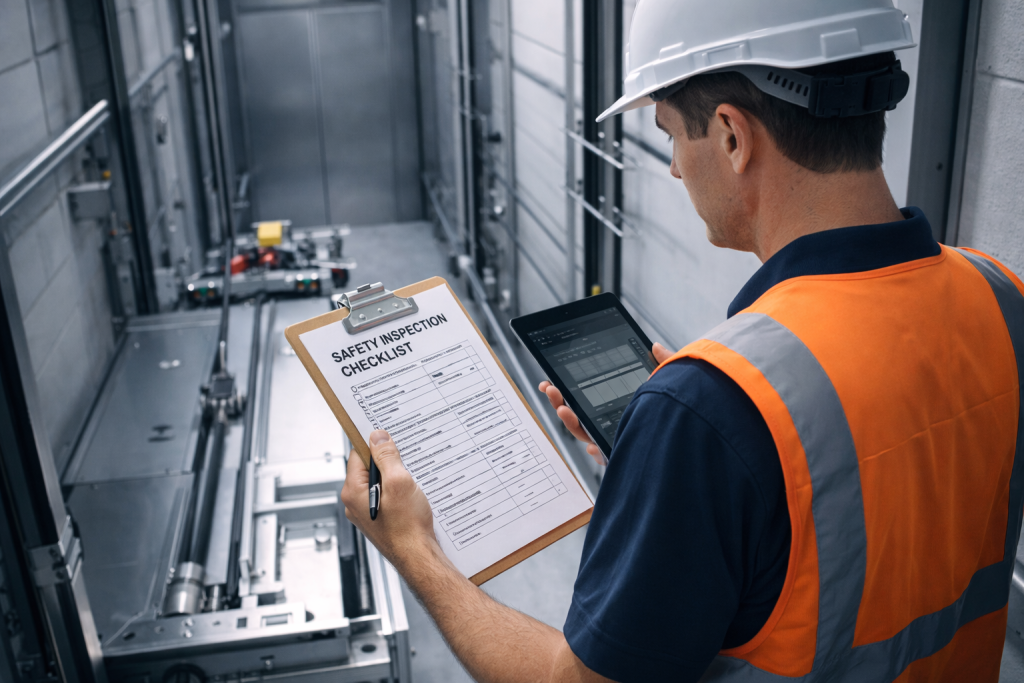
We load the passenger cabin to its maximum rated capacity using certified industrial test weights to check emergency brake stopping distances. Our team runs extensive power failure tests to ensure the Automatic Rescue Device (ARD) brings the car safely to the closest floor landing. Once all parameters pass, we log the data and hand over a fully code-compliant asset ready for daily use.
Documentation, Certification, and Local Compliance Context
Executing a vertical infrastructure project across Telangana requires strict adherence to regional public safety codes and municipal building regulations. We cannot stress enough that every new installation must fully satisfy the statutory mandates of the Telangana Lifts, Escalators and Passenger Conveyors Act. Property developers must submit official structural blueprints and electrical schematic profiles to the state electrical inspectorate before starting any physical on-site work.
Furthermore, the National Building Code (NBC 2016) and Bureau of Indian Standards (BIS) code IS 14665 strictly regulate core design dimensions and structural load factors. These guidelines explicitly ban old manual collapsible iron gates on passenger lifts, requiring automated sliding panels with integrated infrared curtains. Our field compliance teams handle all initial inspections, complete the weight dropdown tests, and manage the official Form A registration filings. Keeping your legal paperwork in order secures your municipal occupancy certificate easily and protects your management board from costly administrative fines.
Structural Warranty Periods and Post-Installation AMC Options
Every reliable vertical platform installation requires a robust structural warranty window to shield your property investment from early manufacturing faults. Standard industrial agreements cover all core mechanical elements, traction drives, and controller circuit motherboards for an initial twelve-month operational period. This factory protection relies on your building retaining authorized engineering crews to perform mandatory monthly safety inspections and lubrication checks.
Once the initial warranty period expires, asset managers must transition to a structured Annual Maintenance Contract (AMC) to keep operations running smoothly. Sourcing long-term care programs from established regional engineering authorities like Exfol Friends Elevators Pvt. Ltd. provides clear operational advantages. Property managers can select between a cost-effective Non-Comprehensive plan covering basic technical labor and path lubrication, or a Full Comprehensive AMC that includes complete coverage for expensive items like VVVF drives, door operators, and main hoisting cables. Reviewing the structured service options at Exfol Friends Elevators shows how proactive maintenance plans keep annual repair budgets entirely stable.
Trust, Technical Execution, and Operational Delivery Standards
Our regional vertical infrastructure engineering network maintains unyielding performance baselines across every single installation project we accept:
- Fifteen Plus Years of active on-site vertical engineering and structural execution experience throughout the Telangana market.
- Over Five Hundred successful elevator handovers completed across premium corporate offices, industrial hubs, and gated residential communities.
- Full Compliance Certification matching all current IS 14665, NBC 2016, and Telangana Lifts Act public safety parameters.
- Twenty-Four Hour Field Response with mobile diagnostic teams reaching any active breakdown site inside the Hyderabad metropolitan area within forty minutes.
“Our commercial property development board faced tight municipal deadlines in Hitech City. The engineering team deployed on-site within twenty-four hours of our call, corrected a misaligned concrete hoistway layout, and delivered a certified, whisper-quiet gearless passenger system ahead of schedule.” — Chief Project Engineer, Corporate IT Infrastructure Group
Why Professional Lift Providers Matter for Property Assets
What are the primary structural risks of choosing uncertified independent mechanics over professional elevator firms?
Answer: Hiring uncertified mechanics introduces major safety hazards, including bypassed safety loop circuits, uncalibrated over-speed governors, and counterfeit replacement parts. Professional providers use fully certified BIS components, maintain proper insurance, and follow strict site safety protocols to keep your building code-compliant.
We frequently notice that low-cost independent mechanics bypass essential electrical safety switches just to keep a malfunctioning elevator running temporarily. This dangerous practice violates basic state engineering laws, voids your property insurance policies, and exposes your tenants to severe injury risks. Certified vertical transportation experts maintain strict on-site safety protocols, utilize calibrated digital diagnostic instruments, and enforce proper lockout-tagout sequences during service work. Sourcing equipment through a professional firm ensures your system utilizes type-tested parts, providing reliable transit performance for twenty-five years.
FAQs: Regional Elevator Procurement and Pricing Insights
1. What is the cost of electric lift systems for standard G+4 residential buildings in Hyderabad?
Standard residential passenger lift installations usually range from ₹5,50,000 to ₹8,50,000 for standard equipment supply, mechanical rigging, and initial regulatory setup.
2. Why do gearless machine-room-less (MRL) elevators carry higher initial price quotes?
MRL configurations utilize compact permanent magnet synchronous motors that fit directly inside the shaft, eliminating upper concrete machine spaces and reducing building design loads.
3. Does the Telangana Lifts Act permit the use of manual collapsible trellis gates on new properties?
No. Current state public safety mandates explicitly ban manual trellis gates on new installations, requiring automated sliding door panels with multi-ray infrared curtains.
4. What is the average timeline to install a traction passenger elevator in an office tower?
A professional installation takes 4 to 6 weeks from the initial shaft plumb verification through to the final state load testing and license sign-off.
5. How do variable frequency (VVVF) motor drives lower long-term building operating costs in Gachibowli?
VVVF drives adjust motor torque continuously throughout the travel cycle, smoothing out acceleration curves and reducing common-area power usage by up to forty percent.
6. Can a property developer claim input tax credits on elevator installation invoices in Telangana?
Yes. Companies can claim eligible Input Tax Credits under the standard eighteen percent GST service classification lines, provided the building ledger matches proper corporate parameters.
7. How often do automatic rescue device (ARD) backup battery systems require replacement?
Standard sealed lead-acid backup battery cells run reliably for 2 to 3 years before high ambient machine room temperatures degrade their total storage capacity.
8. Who registers the initial application paperwork with the state electrical inspectorate?
Your authorized elevator installation partner manages the full engineering submittal, completes the safety loop drop tests, and secures the official operating license from the state.

Partner with Hyderabad’s Leading Vertical Infrastructure Specialists
Balancing your initial project capital expenditure against long-term passenger safety requires choosing a vertical transit partner built for intense urban use. Determining what is the cost of electric lift equipment means looking past low price sheets to verify actual material origins, open-protocol software systems, and real emergency service response times. Short-changing your vertical infrastructure installation introduces recurring mechanical breakdowns, compliance failures, and expensive component modernizations down the line.
We recommend partnering with established regional engineering firms that provide transparent component specifications and clear, upfront material warranties. For dependable, code-compliant vertical infrastructure care throughout Telangana, evaluate the comprehensive project portfolios managed by Exfol Friends Elevators Pvt. Ltd., located in Hyderabad, Telangana. Real estate developers, commercial asset managers, and private homeowners can access the specialized technical division at Exfol Friends Elevators to submit blueprints for a comprehensive engineering shaft evaluation or request a detailed installation quote today.

Leave a Comment