

Table of Contents
The Critical Role of Heavy-Duty Logistics: Goods Lift Manufacturers in India
In the rapidly evolving industrial landscape of modern India, the movement of heavy materials is no longer a secondary concern; it is the backbone of operational efficiency. From the sprawling manufacturing hubs in Gujarat to the high-tech logistics parks in Hyderabad’s outskirts, the demand for robust vertical transportation has surged. Navigating the market to find the right goods lift manufacturers in india requires an understanding of engineering resilience, statutory compliance, and long-term durability.
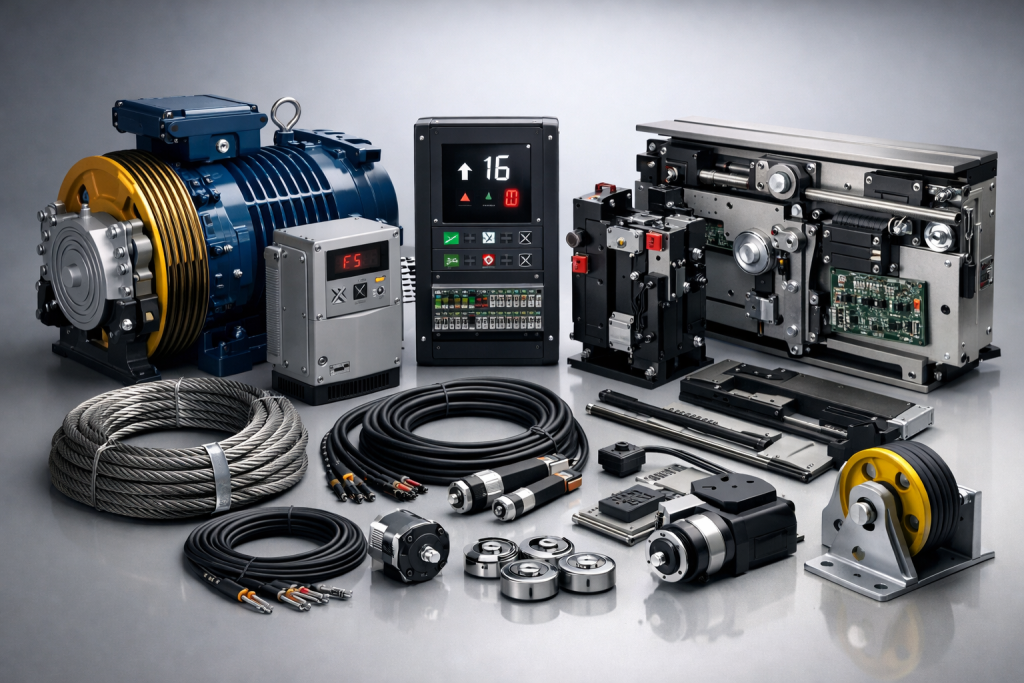
A goods lift, unlike a passenger elevator, is built for endurance rather than aesthetic speed. These systems must withstand uneven loading, harsh industrial environments, and the physical impact of trolleys or forklifts. Choosing a manufacturer involves vetting their ability to integrate heavy-duty components—such as reinforced car platforms and high-torque traction machines—that align with the Bureau of Indian Standards (BIS). For facility managers and warehouse owners, the goal is to eliminate logistical bottlenecks while ensuring the absolute safety of the personnel operating near these high-capacity machines.
At Exfol Friends Elevators Pvt. Ltd., based in Hyderabad, we have seen firsthand how a well-engineered goods lift can transform a facility’s throughput. As India pushes toward being a global manufacturing powerhouse, the role of specialized manufacturers has transitioned from mere equipment suppliers to strategic infrastructure partners. This guide provides a professional overview of the technical landscape, helping stakeholders make informed decisions about their heavy-duty vertical transportation needs.
What is a Goods Lift?
A heavy-duty vertical transportation system specifically designed to transport freight, materials, and palletized loads between different floor levels. These lifts are characterized by reinforced structural components, non-slip flooring, and specialized control systems that prioritize load capacity and safety over passenger comfort features.
While many manufacturers offer hybrid “Goods-cum-Passenger” lifts, a dedicated freight elevator is engineered for higher duty cycles and structural impact resistance, ensuring it can handle the rigorous demands of factories and warehouses.
Why are Professional Goods Lift Manufacturers Important?
The complexity of moving multi-ton loads vertically requires engineering that accounts for both static and dynamic stresses.
1. Structural Integrity Under Stress
In industrial sectors like Hyderabad’s pharma or textile hubs, lifts often carry dense, concentrated loads. Professional manufacturers utilize thicker gauge steel for the car enclosure and heavy-duty guide rails that prevent “tilting” during uneven loading. This structural rigidity is vital to prevent long-term mechanical fatigue.
2. Statutory Compliance (NBC and BIS)
Every goods lift in India must adhere to IS 14665 and the National Building Code (NBC). Professional manufacturers ensure that safety gears, over-speed governors, and buffer springs are type-tested and certified. This is not just a safety requirement but a legal one, particularly in states like Telangana where the Electrical Inspectorate maintains strict oversight.
3. Localization for Power and Environment
India’s industrial areas often face power quality issues or high ambient temperatures. Top-tier manufacturers integrate industrial-grade VVVF drives and robust Automatic Rescue Devices (ARD) that can handle the high starting current of heavy freight motors, ensuring the lift remains operational and safe during power fluctuations.
How Does a Goods Lift Work? A Step-by-Step Explanation
The operation of an industrial freight lift involves sophisticated synchronization between mechanical power and electrical control logic.
Phase 1: Call Registration and Load Sensing
When a button is pressed, the controller checks the door interlock circuits. Advanced goods lifts are equipped with load-sensing devices at the base of the car. If the load exceeds the rated capacity, the lift will not move, and an “Overload” alarm will sound, preventing potential motor burnout or cable strain.
Phase 2: High-Torque Traction
The hoisting machine—often a geared traction motor for heavy loads or a hydraulic piston for shorter travels—receives power. In traction systems, heavy-duty steel wire ropes or belts move the car. The motor must provide high starting torque to overcome the inertia of a fully loaded car without causing mechanical jerks.
Phase 3: Guide Rail Navigation
The car travels along vertical guide rails. In goods lifts, these rails are often T-sections of higher mass to handle the lateral forces exerted when heavy pallets are moved in and out of the cabin.
Phase 4: Precision Leveling and Safety Interlocks
As the car reaches the destination, the VVVF drive slows the motor down to achieve “flush leveling.” This is critical in goods lifts to allow trolleys to move smoothly across the sill without getting stuck. Once leveled, the mechanical and electrical door interlocks release, allowing the heavy-duty doors to open.

Types of Goods Lifts and Their Applications
Manufacturers in India typically offer three primary variations based on the lifting mechanism and load requirement.
1. Geared Traction Goods Lifts
These are the standard for multi-story factories. They use a motor and gearbox to achieve high lifting capacity. They are reliable for mid-rise buildings (G+3 to G+10) where consistent travel speed is required.
2. Hydraulic Goods Lifts
Best suited for low-rise warehouses (G+1 or G+2). Hydraulic systems offer immense lifting power with a smaller mechanical footprint. They are often chosen for exceptionally heavy loads (above 3 tons) because the load is supported by the ground rather than the building’s structure.
3. Dumbwaiters (Service Lifts)
A smaller variation used in the hospitality and pharmaceutical sectors for moving small packages or food. While not “heavy-duty,” they follow similar industrial manufacturing standards for hygiene and durability.
Benefits of Investing in Professional Goods Lifts
1. Maximized Operational Throughput
A reliable freight lift eliminates manual labor bottlenecks. By moving large volumes of stock in a single trip, businesses can optimize their warehouse space and reduce the “idle time” of transport vehicles.
2. Enhanced Workplace Safety
Moving heavy goods via stairs or manual hoists is a significant injury risk. Professional goods lifts feature emergency stop buttons, infrared door curtains, and mechanical safety blocks that lock the car in place if a rope loses tension, protecting both the inventory and the workers.
3. Long-Term Asset Value
Cheaper, uncertified lifts might save money upfront but lead to frequent breakdowns and expensive part replacements. A lift from an established manufacturer uses standardized parts and comes with a structured Annual Maintenance Contract (AMC), ensuring the equipment lasts for decades.
Common Mistakes and Misconceptions
Mistake 1: Treating it Like a Passenger Lift
A common error is specifying the same requirements for a goods lift as one would for a passenger unit. Goods lifts require significantly higher door torque and more robust flooring (such as chequered plates) to survive industrial use.
Mistake 2: Overlooking the Pit and Overhead
Industrial builders often forget that heavy freight lifts require deeper pits to accommodate larger buffers. Professional manufacturers must be involved during the civil construction phase to ensure the shaft dimensions can support the required load capacity.
Mistake 3: Neglecting Dust and Moisture Protection
In many Indian manufacturing zones, dust ingress is a major issue. Failing to specify IP-rated (Ingress Protection) electrical components can lead to short circuits in the controller cabinet.
Real-World Scenarios in the Indian Context
Scenario A: The Pharma Warehouse in Hyderabad
A pharmaceutical distribution center needed to move delicate temperature-controlled medicines between three floors.
- The Solution: A stainless-steel finished goods lift with a “soft-start/soft-stop” VVVF drive to prevent boxes from toppling during travel, coupled with a dust-proof machine room.
Scenario B: The Automobile Parts Factory in Pune
A factory required a lift to move heavy engine blocks weighing 2.5 tons.
- The Solution: A heavy-duty hydraulic goods lift with a reinforced platform. Since the load was concentrated, the hydraulic system provided the necessary stability that a standard traction lift could not offer.
Frequently Asked Questions
1. What is the average capacity of a goods lift in India?
Standard industrial goods lifts range from 500kg to 5,000kg. However, specialized manufacturers can design custom systems for loads exceeding 10 tons.
2. How much does a goods lift cost in India?
For a basic G+1 warehouse, prices typically start from ₹6,00,000 to ₹10,00,000. For multi-story heavy-duty traction systems, the price can exceed ₹20,00,000 depending on the specifications.
3. Is a license required for a goods lift in Telangana?
Yes. Under the Telangana Lifts Act, all goods lifts must be inspected and licensed by the Electrical Inspectorate, similar to passenger elevators.
4. What is the difference between a goods lift and a freight elevator?
Technically, they are the same. However, in the Indian market, “goods lift” often refers to smaller capacity units, while “freight elevator” usually implies higher capacity, more robust industrial systems.
5. Can a person travel in a goods lift?
Standard goods lifts are for freight only. If you need to transport personnel along with materials, you must specify a “Goods-cum-Passenger” lift, which includes additional safety features required by code for human transport.
6. How often should an industrial lift be serviced?
Monthly preventative maintenance is recommended due to the heavy duty cycles and environmental conditions in factories.
7. What safety features are mandatory for freight lifts?
Mandatory features include an over-speed governor, ARD (Automatic Rescue Device), emergency alarm, overload sensor, and mechanical door interlocks.
8. How long does it take to install a goods lift?
Manufacturing usually takes 4–6 weeks, with an additional 3–4 weeks for on-site installation and testing.

Conclusion: Engineering Resilience for Industrial Growth
Selecting the right partner among goods lift manufacturers in india is a decision that impacts the very flow of your business operations. A freight lift is more than just a box that moves; it is a critical piece of industrial equipment that must perform under pressure, day after day. In the competitive Indian market, prioritizing engineering quality over the lowest initial price is the only way to ensure safety and long-term reliability.
At Exfol Friends Elevators Pvt. Ltd., we pride ourselves on building lift systems that are as robust as the industries they serve. Our Hyderabad-based expertise ensures that your vertical transportation needs are met with technical precision and local regulatory compliance.
Ready to streamline your logistics? Contact Exfol Friends Elevators today for a comprehensive technical audit and a quote for your heavy-duty goods lift requirements.


Leave a Comment