
Table of Contents
Signs Your Building Needs Elevator Modernization
The Critical Threshold: Navigating the Need for Elevator Modernization
In a vertically expanding city like Hyderabad, an elevator is far more than a convenience; it is a critical piece of building infrastructure. However, like all complex electromechanical systems, elevators have a finite lifecycle. For facility managers in HITEC City or residential welfare associations in Banjara Hills, recognizing the signs your building needs elevator modernization is the difference between a proactive asset upgrade and a catastrophic system failure.
As buildings age, the components that once represented cutting-edge technology—such as relay-based controllers or geared traction machines—become obsolete. The urgency of modernization often surfaces through a series of subtle operational declines before escalating into frequent entrapments or costly emergency repairs. In our experience at Exfol Friends Elevators Pvt. Ltd., waiting for a total breakdown is the most expensive strategy a property owner can employ.
Modernization is not merely an aesthetic facelift; it is a deep-tier engineering overhaul that replaces the “brain” and “heart” of your lift. By upgrading to microprocessor-based controllers and Permanent Magnet Synchronous Motors (PMSM), you align your building with 2026 safety standards and significantly reduce energy consumption. This guide identifies the red flags that indicate your vertical transportation has reached its threshold.
What Does Elevator Modernization Indicate?
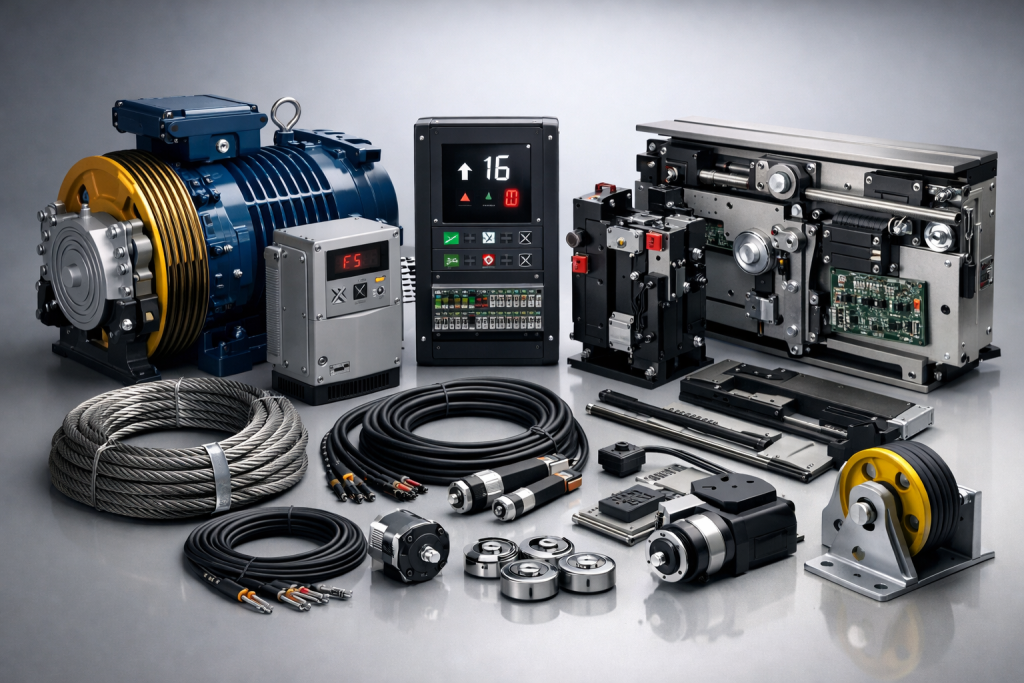
Elevator Modernization: The process of upgrading the critical parts of an elevator to improve its safety, performance, and aesthetics. This typically involves replacing the controller, the hoisting machine, the wiring, and the door operators with modern, energy-efficient components while retaining the existing structural shaft and car frame.
When these signs appear, it indicates that the system’s “Mean Time Between Failures” (MTBF) has dropped significantly. It suggests that the original engineering design can no longer handle the current building traffic or that spare parts for its legacy components are no longer in production, making the unit a liability.
Common Causes of Elevator Performance Decline
In the specific context of Hyderabad’s urban environment, several factors accelerate the need for modernization.
1. Technological Obsolescence
Many buildings constructed in the early 2000s utilize relay-logic controllers. These systems are prone to carbon buildup and mechanical wear. Modern microprocessor systems are solid-state, meaning they have no moving parts to wear out, offering much higher reliability.
2. Environmental and Power Stress
Hyderabad’s intense heat and occasional voltage fluctuations take a toll on older Variable Voltage Variable Frequency (VVVF) drives. Over time, heat fatigue causes capacitors in the controller to leak or fail, leading to erratic floor leveling and “ghost” calls.
3. Increased Building Occupancy
As independent floors are converted into multi-unit apartments or commercial spaces see higher footfall, the original “duty cycle” of the lift is exceeded. A motor designed for 50 starts an hour cannot sustain 150 starts an hour without overheating and degrading.
Step-by-Step Troubleshooting: Identifying the Red Flags
Before committing to a full modernization, property owners can perform a basic audit to categorize the severity of the issues.
Step 1: Monitor Floor Leveling Accuracy
Observe if the elevator car stops perfectly flush with the landing sill. If there is a gap of more than 5mm to 10mm, the leveling sensors or the brake assembly are failing. This is a major tripping hazard and a primary sign that the control system can no longer manage precise deceleration.
Step 2: Track Wait Times and Travel Speed
Use a stopwatch to measure how long it takes for the doors to respond and the car to move. If wait times have increased despite regular maintenance, the dispatching logic is likely inefficient. Modern systems use “Destination Dispatch” to group passengers, reducing travel time by up to 30%.
Step 3: Listen for Unusual Auditory Cues
Grinding, squealing, or heavy vibrations indicate mechanical fatigue in the traction sheave or guide shoes. While lubrication might solve this temporarily, persistent noise often points to a motor that has reached the end of its reliable service life.
When Professional Modernization is Necessary
While routine maintenance can fix a broken door lock, certain issues require a structural upgrade. Professional modernization is required if:
- The “Obsolescence” Gap: Your service provider informs you that parts for your controller or motor are no longer available in the Hyderabad market.
- Frequent Entrapments: If the lift has trapped passengers more than twice in a six-month period, the safety circuits are compromised.
- High Energy Bills: Older geared systems consume massive amounts of power. If your electricity costs are spiking, the motor is likely drawing excessive current to overcome internal friction.
The Safety Risks of Ignoring the Issue
Ignoring the signs your building needs elevator modernization creates significant liabilities for property owners and facility managers.
1. Unintended Car Movement
A failing controller might allow the car to move while the doors are still open. Modern systems include Unintended Car Movement Protection (UCMP) which is a mandatory safety feature in 2026.
2. Fire Safety Vulnerabilities
Older lifts often lack the sophisticated “Fireman’s Drive” which integrates with a building’s smoke detectors. Modernization ensures that in the event of a fire, the lift automatically returns to the ground floor and stays there with doors open.
3. Liability and Insurance
In the event of an accident, insurance companies often investigate the maintenance and modernization history of the lift. Operating an obsolete system can lead to the denial of claims and legal action under the Telangana Lifts Act.
Estimated Modernization Cost Range in Hyderabad
Modernization costs vary based on whether you are doing a “Mini Mod” (just the controller and sensors) or a “Full Mod” (controller, machine, and doors).
- Controller and Wiring Upgrade: Generally ranges from ₹2,50,000 to ₹4,00,000. This fixes the “brain” of the lift.
- Machine/Motor Replacement (Gearless): Costs between ₹1,50,000 and ₹3,00,000. This improves speed and energy efficiency.
- Complete Modernization Package: For a standard G+5 building in Hyderabad, a full modernization typically costs between ₹5,00,000 and ₹8,50,000.
While this seems significant, it is roughly 50% cheaper than a full replacement and adds more than its cost to the property’s resale value.
Prevention and Prolonging System Life
To delay the need for a full modernization, property owners should:
- Ensure Voltage Stabilization: Use industrial-grade stabilizers to protect the lift’s electronics from Hyderabad’s grid fluctuations.
- Optimize Machine Room Temperature: Install exhaust fans or small air conditioning units in the machine room to keep the controller cool during summers.
- Stick to a Strict AMC: Never skip a monthly service. Clean sensors and lubricated rails reduce the strain on the motor.
Frequently Asked Questions
1. How long does elevator modernization take?
Depending on the scope, a modernization project in Hyderabad typically takes 2 to 4 weeks. We work in phases to minimize building downtime.
2. Is modernization better than full replacement?
Yes, in most cases. Modernization is faster and more cost-effective because it utilizes the existing shaft and guide rails, avoiding major civil work.
3. Will modernization reduce my electricity bill?
Absolutely. Switching from a geared motor to a gearless PMSM motor with a VVVF drive can reduce your lift’s power consumption by 35% to 50%.
4. How often should an elevator be modernized?
In the Indian market, an elevator typically requires a major modernization every 15 to 20 years to stay compliant with safety norms and technology.
5. My lift is noisy but fast. Do I still need to modernize?
Noise is a precursor to mechanical failure. If the noise is coming from the motor or the controller cabinet, it’s a sign that components are overheating or grinding.
6. Does modernization include new cabin interiors?
It can. While the mechanical upgrade is the priority, many owners choose to upgrade the cabin aesthetics (LED lighting, SS finishes) simultaneously.
7. What is the most important part of modernization?
The controller. It is the “brain” that manages safety, speed, and floor leveling. Replacing an old relay controller with a microprocessor system is the biggest improvement you can make.
8. Will I need a new license after modernization?
Yes. In Telangana, significant changes to the lift’s drive or control system require a fresh inspection by the Electrical Inspectorate.
Conclusion: Engineering Peace of Mind
Recognizing the signs your building needs elevator modernization is the first step toward securing the safety of your residents and the efficiency of your building. A modernized lift is a silent, smooth, and safe partner in your property’s daily operation. At Exfol Friends Elevators, we believe that vertical mobility should never be a source of anxiety.
Is your elevator showing signs of age? Don’t wait for a breakdown that leaves your residents stranded. Contact Exfol Friends Elevators Pvt. Ltd. today for a professional modernization audit. We provide the technical expertise to bring your lift into the modern era safely and efficiently.


Leave a Comment