

Table of Contents
How do elevator service contracts work?
Navigating the Complexity of Elevator Service Contracts
For property owners, builders, and facility managers, the elevator is often the most significant mechanical investment in a building. However, the purchase and installation are only the beginning. To ensure the long-term safety, reliability, and legal compliance of the system, a structured service contract—commonly referred to in India as an Annual Maintenance Contract (AMC)—is essential.
Understanding how elevator service contracts work is critical for avoiding unexpected financial liabilities and operational downtime. These contracts are legally binding agreements between a building owner and a specialized maintenance provider. They dictate the frequency of inspections, the scope of part replacements, and the priority of emergency responses.
In a rapidly developing city like Hyderabad, where high-rise residential complexes and commercial IT hubs are the norm, these contracts also ensure compliance with the Telangana Lifts Act. A well-drafted contract transforms a reactive repair cycle into a proactive asset management strategy, protecting both the passengers and the building owner’s bottom line.
At Exfol Friends Elevators Pvt. Ltd., we believe that transparency in these agreements is the foundation of a successful partnership. This guide breaks down the technical and financial architecture of elevator service contracts to help you make an informed decision for your property.
What is an Elevator Service Contract?
Elevator Service Contract: A formal agreement between a property owner and an elevator maintenance company that outlines the professional obligations for routine inspections, lubrication, safety testing, and repairs. It defines the service scope, including labor, spare parts coverage, emergency response times, and compliance with national safety standards like IS 1860.
Why is a Service Contract Important?
The importance of a service contract extends beyond simple mechanical upkeep. In the specific context of Hyderabad’s urban environment, several factors make these agreements indispensable.
Legal and Regulatory Compliance
In Telangana, it is a statutory requirement to maintain elevators in safe working condition. A service contract provides the documentation necessary to pass annual safety inspections conducted by the Electrical Inspectorate. Without a valid maintenance record, building owners risk losing their “License to Run” the lift.
Mitigation of Liability
Elevators are high-risk machinery. In the event of an accident, the first document scrutinized by legal authorities and insurance providers is the service contract. A robust agreement proves that the owner took all reasonable steps to ensure passenger safety through professional maintenance.
Preserving Capital Investment
An elevator in a high-traffic area like Madhapur or Banjara Hills performs thousands of cycles a month. Without the systematic lubrication and calibration provided under a contract, major components like the traction machine or the controller will suffer premature failure, leading to massive replacement costs.
How Does an Elevator Service Contract Work?
A service contract functions as a roadmap for the elevator’s lifecycle. It generally follows a structured operational flow that begins the moment the warranty period ends.
1. The On-Boarding health Audit
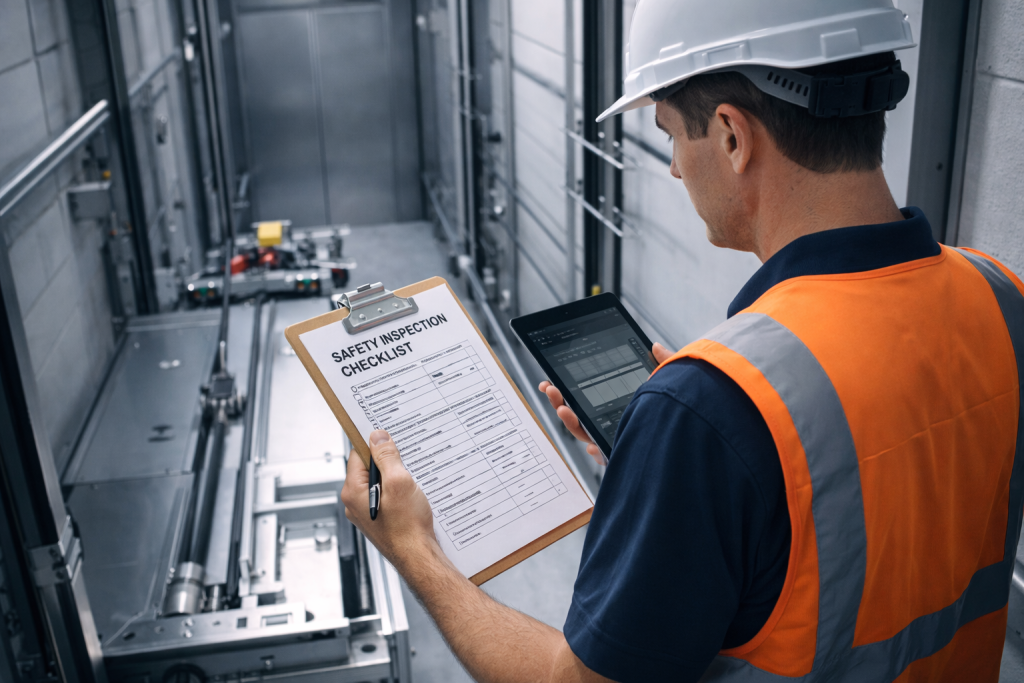
Before a contract begins, a professional provider like Exfol Friends Elevators conducts a baseline audit. This identifies existing wear and ensures the system is in a maintainable state. Any pre-existing defects are usually documented to establish a clear starting point for the new agreement.
2. Scheduled Preventative Maintenance
This is the core of the contract. Technicians visit the site at fixed intervals—usually monthly. They follow a technical checklist that includes cleaning the controller, checking brake clearances, and lubricating guide rails. These visits are designed to catch “minor” issues before they become “major” breakdowns.
3. Breakdown and Emergency Support
The contract specifies how the company handles unexpected failures. It defines “Call-back” services. If a passenger is trapped or the lift stops working, the contract dictates the guaranteed response time, which is typically much faster for contract holders than for one-off repair requests.
4. Documentation and Reporting
After every visit, the technician fills out a service log. This becomes a permanent record of the building’s infrastructure health. Modern contracts often include digital reporting, giving facility managers real-time insights into their elevator’s uptime and performance history.
Types of Elevator Service Contracts
In the Indian market, there are two primary variations of these agreements. Choosing between them depends on your building’s budget and risk appetite.
1. Comprehensive AMC (All-Inclusive)
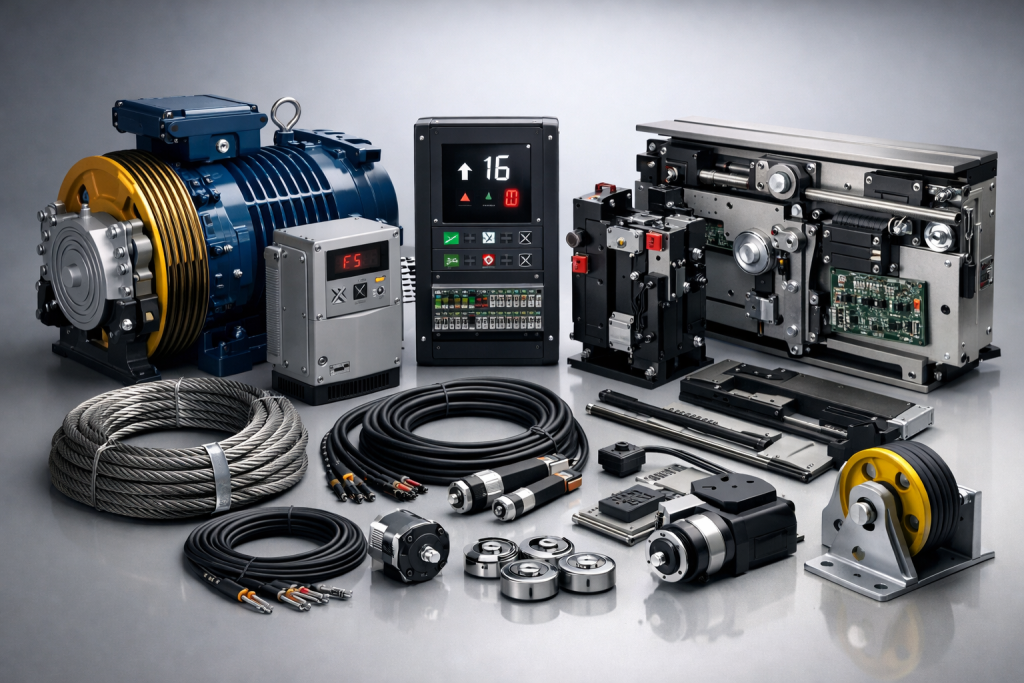
This is essentially an “insurance” model. The annual fee covers both the labor for routine service and the cost of most major spare parts (such as rollers, sensors, and even some controller components).
- Pros: Fixed annual costs, no surprise bills, faster repairs since part approvals are pre-cleared.
- Cons: Higher annual premium compared to other models.
2. Non-Comprehensive AMC (Labor Only)
This covers the labor for monthly inspections and emergency call-outs, but any spare parts required are billed separately at the prevailing market rate.
- Pros: Lower upfront annual cost.
- Cons: Unpredictable budgeting; a single major part failure (like a motor) can lead to a significant unbudgeted expense.
Benefits of a Structured Service Contract
Enhanced Safety and Peace of Mind
Knowing that safety circuits, governor ropes, and door interlocks are being tested by a professional provides a level of security that “on-call” repairs simply cannot match. It ensures that the elevator’s safety systems are never bypassed or neglected.
Extended Equipment Lifespan
Regular maintenance prevents the “domino effect” where one worn component puts extra strain on others. For example, keeping guide rails lubricated reduces the load on the motor, extending the life of the most expensive part of the system.
Optimized Energy Consumption
A well-maintained elevator runs more efficiently. Friction in the rails or a poorly calibrated VVVF (Variable Voltage Variable Frequency) drive can increase electricity consumption. In Hyderabad’s commercial sector, this can lead to noticeable savings on monthly utility bills.
Common Mistakes and Misconceptions
“Our Lift is New, So We Don’t Need a Contract”
Most new elevators come with a one-year warranty. However, many owners fail to realize that this warranty often only covers manufacturing defects, not routine cleaning or the adjustments required by high usage. Transitioning to a service contract immediately after the warranty expires is vital.
Overlooking the “Exclusions” Clause
No contract covers everything. Typically, “Acts of God,” vandalism, and cosmetic issues like cabin glass or flooring are excluded. It is a common mistake not to read the fine print regarding what specific parts (like the main traction machine or ropes) are included in a comprehensive plan.
Focusing Solely on the Lowest Quote
In elevator maintenance, you get what you pay for. A low-cost provider may cut corners by sending untrained staff or reducing the time spent on-site. In the long run, this leads to higher “hidden costs” in the form of frequent breakdowns and shorter equipment life.
Real-World Scenarios
Commercial IT Park in Gachibowli
A large IT hub opted for a Comprehensive AMC. When a major power surge damaged the elevator’s control board, the replacement—costing over ₹50,000—was covered entirely by the contract. The lift was back in service within 24 hours without any financial negotiations between the manager and the service provider.
Residential Villa in Jubilee Hills
A homeowner chose a Non-Comprehensive AMC for their private lift. Since the usage was low, they preferred to pay for parts only when needed. This allowed them to keep their fixed annual costs low while still ensuring a professional technician checked the safety systems every month.
Frequently Asked Questions
1. How often should a lift be serviced under a contract?
In Hyderabad, monthly service is the industry standard. High-traffic buildings may require more frequent checks to ensure door operators and leveling sensors remain accurate.
2. Can I switch my service provider if I am unhappy?
Yes, but you must check the “Termination Clause” in your current contract. Usually, a 30-day notice period is required. Ensure your new provider can source parts for your specific elevator brand.
3. Does a service contract guarantee 100% uptime?
No contract can prevent all failures, but it significantly reduces the probability of a breakdown and ensures a prioritized response when one does occur.
4. Are spare parts always genuine in a contract?
Reputable companies like Exfol Friends Elevators always use genuine or high-quality equivalent parts. Always ensure your contract specifies the use of approved components.
5. What is a “Call-Back” in a service contract?
A call-back is an unscheduled service visit requested by the customer due to a malfunction or breakdown between regular monthly inspections.
6. Do contracts cover the “License to Run” renewal?
Most professional providers assist with the documentation and safety testing required for the renewal, though the government fees are usually paid directly by the building owner.
7. What happens if I don’t have a service contract?
Aside from safety risks, you will likely face significantly higher costs for “emergency only” repairs and will struggle to find a reliable company to attend to your lift on short notice.
Conclusion: Securing Your Building’s Future
An elevator service contract is more than a recurring expense; it is an essential management tool for any modern building. It provides a structured framework for safety, protects your financial interests, and ensures that your vertical transportation remains an asset rather than a liability.
At Exfol Friends Elevators Pvt. Ltd., we pride ourselves on delivering service contracts that are built on technical excellence and local accountability. Whether you manage a single residential lift or a fleet of commercial elevators across Hyderabad, we provide the expertise needed to keep your systems moving safely and efficiently.
Is your elevator currently covered by a professional maintenance plan? Contact Exfol Friends Elevators today for a transparent, comprehensive audit of your service needs.


Leave a Comment